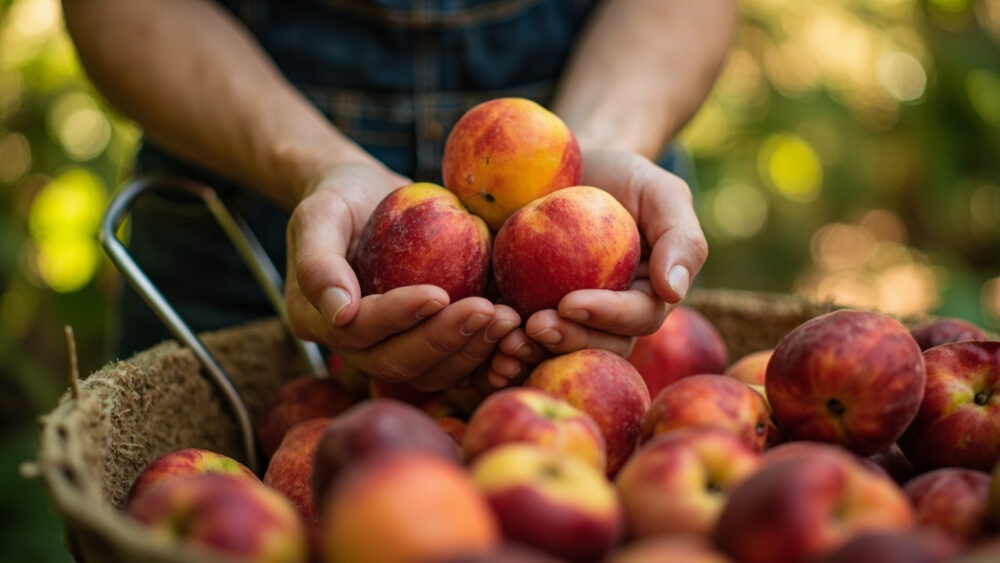
Here is how to store nectarines the right way: keep hard, unripe fruit on the counter out of direct sun until it gives slightly to a gentle squeeze, then move ripe nectarines to the fridge, where they hold for about 5 to 7 days. Never refrigerate a nectarine that is still hard. That single move, cold fruit before it ripens, is the mistake that ruins more nectarines than any bug or bruise ever will.
There is more to get right here than that one rule, though. Most people also misread the signs of ripeness, wash the fruit at the wrong time, and have no idea what a nectarine looks like a day before it actually spoils versus a day after.
We will cover all of it: the counter-to-fridge method step by step, how long nectarines actually last each way including frozen and dried, the prep that either extends their life or shortens it, and the exact signs that tell you a nectarine is done. Save the “Nectarines at a Glance” card at the bottom for your phone, you will want it the next time you come home with a bag of them.
The Right Way to Store Nectarines, Step by Step
Start by checking firmness, not color. Color tells you almost nothing reliable about ripeness in nectarines, since background color varies by variety. Firmness does. A ripe nectarine yields slightly under gentle thumb pressure near the stem end, the way a ripe peach does.
If the fruit is still firm, leave it on the counter, stem side down, out of direct sunlight, at normal room temperature. Check it once a day. This usually takes one to three days depending on how ripe it was at purchase.
Once it gives slightly and smells sweet at the stem end, it is ripe. Move it to the fridge, ideally in the crisper drawer, unwashed and loose rather than sealed in a bag.
That single switch from counter to fridge at the right moment is most of the job done correctly.
How Long Nectarines Actually Keep, Each Way
On the counter, an unripe nectarine takes one to three days to ripen and should not sit out much longer than that once it’s soft, or it will overshoot into mush and fermentation.
In the fridge, a ripe nectarine holds its quality for about 5 to 7 days. Past that, texture turns mealy even if it hasn’t visibly spoiled yet.
Frozen, sliced nectarines keep well for 8 to 12 months, though quality is best in the first 6. Dried nectarines, properly cured and stored airtight, last 6 to 12 months at room temperature or over a year in the freezer.
Here’s the honest answer to the question you’re probably about to ask: no, refrigeration does not “pause” ripening indefinitely, it just slows it while quietly wrecking the texture if the fruit went in too early.
That texture damage is exactly the mistake most people don’t realize they’re making, and it happens before the fruit ever looks bad.
The Mistake That Ruins Most Batches
If you assumed refrigerating a nectarine the day you bring it home is the safe, cautious move, that guess is what causes mealy, flavorless fruit more often than actual spoilage does.
Cold temperatures below about 40°F stop the ripening enzymes in a still-firm nectarine before they finish their job. The fruit will never fully ripen after that, even once it warms back up. It goes soft eventually, but the flesh turns grainy and the flavor stays flat and starchy.
This is called chilling injury, and it’s permanent. There’s no fix once it’s happened, only prevention.
So the rule is simple: hard nectarine, counter. Soft nectarine, fridge. Never the reverse.
Once you’ve got that timing right, the next thing that matters is what you do with your hands and a sink before any of that even starts.
Prep That Makes or Breaks Storage
Do not wash nectarines until you’re ready to eat or use them. Washing early adds moisture that speeds mold growth, especially once fruit goes into the fridge. A quick rinse under cool water right before eating is all you need, no soap, no produce wash required.
For freezing, prep matters more. Wash, halve, and pit the nectarines, then slice. Skins can stay on, they soften fine after freezing and thawing.
A quick dip in a light lemon water solution, about a tablespoon of lemon juice per cup of water, for 30 seconds before freezing keeps slices from browning. Skip it and they’ll still be safe to eat, just visually duller.
Lay slices in a single layer on a tray to freeze before bagging them, or they’ll clump into one solid block.
Get that freezing prep wrong and you’ll open the bag in January to a brick instead of usable fruit, so let’s talk about how to tell when fruit has gone from fine to finished.
The Signs a Nectarine Has Actually Turned
Everyone assumes soft equals spoiled, but soft is just ripe. Spoiled looks and smells different, and once you’ve seen it once you won’t confuse the two again.
Look for wrinkled or shriveled skin, especially near the stem, and any soft, sunken, or leaking spots rather than an even give across the whole fruit. Those sunken patches often turn brown or develop fuzzy white or gray mold within a day or two.
A fermented, boozy, or sharply sour smell is another clear sign, ripe nectarines smell sweet and floral, not sharp.
- Wrinkled, shriveled, or leathery skin
- Soft, sunken, or weepy spots rather than uniform softness
- Visible mold, fuzzy white or gray patches
- A sour, fermented, or alcohol-like smell
- Juice pooling in the storage container
One or two of these means cut around the bad spot and use the rest that day. Several at once means the whole nectarine goes in the compost, not the fruit bowl.
Knowing what ruins one nectorine is different from knowing what ruins a whole bag at once, and that’s usually a storage habit, not bad luck.
Mistakes That Cost You the Whole Batch
Storing nectarines in a sealed plastic bag on the counter traps ethylene gas and humidity, speeding both ripening and rot. Loose in a bowl, or in a paper bag if you’re trying to speed up a hard fruit, works better.
Piling ripe nectarines on top of each other is another quiet killer. Bruised spots from the weight above turn into soft rot spots within a day, and one rotting nectorine speeds up decay in everything touching it.
Leaving them near bananas or apples, which give off heavy ethylene, over-ripens them fast if you’re not watching daily.
And don’t store nectarines in the fridge’s coldest back corner near the vents, that’s often just cold enough to cause the same chilling injury as putting them in too early.
Get the placement and timing right and a bag of nectarines becomes genuinely low-maintenance, which brings us to the card worth saving.
Nectarines at a Glance
- When to refrigerate: only after the nectarine yields slightly to gentle thumb pressure, never while still hard.
- Counter ripening time: one to three days, stem side down, out of direct sun.
- Fridge storage life: about 5 to 7 days once ripe, unwashed and loose in the crisper drawer.
- Freezer storage life: 8 to 12 months, sliced, frozen flat on a tray before bagging.
- Dried storage life: 6 to 12 months airtight at room temperature, longer in the freezer.
- Washing rule: rinse right before eating or using, never before storage.
- Spoilage signs: wrinkled skin, sunken wet spots, visible mold, or a sour fermented smell.
The whole method comes down to one habit: check firmness before you open the fridge door, not after.
Get that timing right and everything else about storing nectarines takes care of itself.