The single fact that narrows this list fastest: fast growing vegetables split into two totally different games, ones you harvest as a whole plant in 20 to 40 days like radishes and lettuce, and ones that produce a steady crop over months but start feeding you fast, like zucchini and bush beans. Pick the wrong category for your goal and you either run out of food after one cutting or wait too long for your first meal.
Most people default to fast growing vegetables meaning radishes, because that is the one everyone’s grandmother grew, but that is often the wrong pick if what you actually want is a summer of continuous harvest instead of one quick win. Experienced gardeners quietly lean on a couple of unglamorous greens that nobody mentions first, and one bean variety that outproduces the popular pole types most beginners reach for.
Number 13 on this list is the one gardeners consistently underestimate, and it is not the one you are picturing right now.
The last few entries below, plus a short method for choosing between all of them based on your space and patience, are waiting at the bottom of this page.
Roots You Pull in Under a Month
These give you the fastest possible payoff from seed to plate, and they forgive a late start better than almost anything else in the garden.
1. Cherry Belle Radish
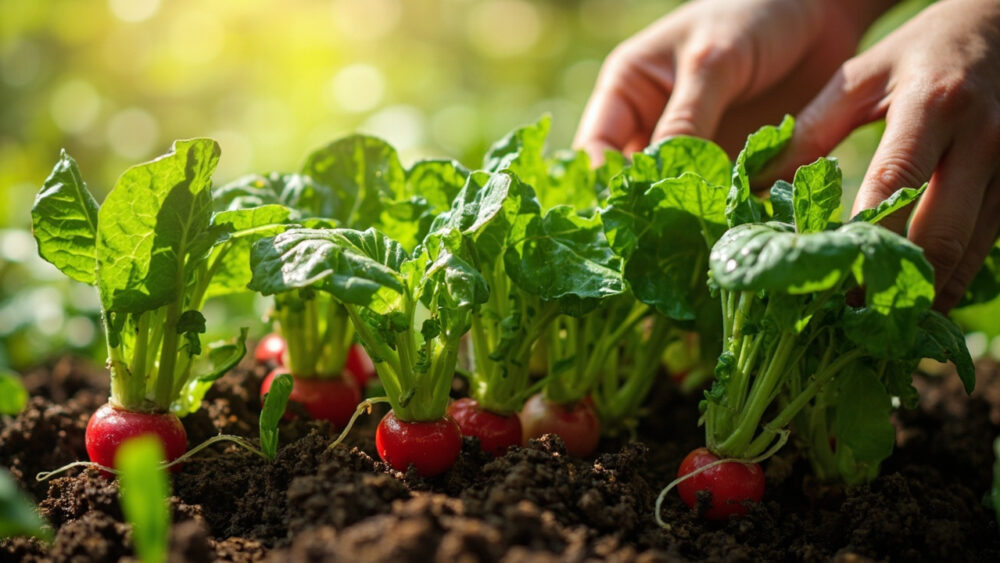
Ready in as little as 22 to 28 days, this is the benchmark fast crop. It wants full sun, loose soil, and consistent moisture, since dry spells make the roots go woody and hollow. Sow every two weeks for a steady supply instead of one big batch that bolts.
2. French Breakfast Radish
A milder, slightly sweeter cousin of the standard round radish, ready in about 25 to 30 days. Its elongated shape holds texture a few days longer past maturity than round types, which forgives a missed harvest window. Good in partial shade too, making it useful for gardeners without a full-sun bed.
3. Baby Turnips (Tokyo Market or Hakurei type)
Often overlooked because people picture tough winter turnips, but the baby types are ready in 35 to 45 days and eaten raw, sliced thin, or roasted whole. The greens are edible too, which most new gardeners do not realize until they have already composted them once. Cool soil, around 60 to 65°F, gives the sweetest roots.
Roots get you fed fast, but leafy greens are where the real repeat harvests start.
Greens That Regrow After Cutting
Cut these instead of pulling them and most will push a second, sometimes third, flush of leaves.
4. Loose-Leaf Lettuce
Baby leaves in 25 to 30 days, full heads closer to 45. Cutting an inch above the crown lets it regrow two or three more times before bolting in heat. It struggles above about 80°F, so it is a spring and fall crop in most zones, not a midsummer one.
5. Arugula
The fastest green most gardeners never try, ready to cut in as little as 20 days. It bolts fast in heat and turns sharply peppery once it does, so treat it as a cool-season crop and reseed often rather than expecting one planting to carry you all season. Full sun to light shade, tolerant of poor soil.
6. Spinach
Quietly preferred by experienced gardeners over lettuce because it is more cold-tolerant and packs more nutrition per square foot, ready in 35 to 45 days. It bolts even faster than lettuce once temperatures climb past the mid-70s, so early spring and fall are its windows. Bolt-resistant varieties buy you a couple extra weeks in marginal weather.
7. Mizuna and Other Asian Mustard Greens
The underrated pick nobody mentions first, ready in as little as 21 days for baby leaves. It handles both cold and mild heat better than lettuce or spinach, making it one of the few greens that bridges spring into early summer without bolting immediately. Mild, slightly peppery flavor works raw or quickly sautéed.
Once the greens are rolling, the vining crops start catching up fast.
Fruiting Vegetables That Produce Fast, Then Keep Producing
These take a few more weeks to first harvest than a radish, but then they do not stop.
8. Bush Zucchini
First squash in as little as 40 to 50 days from seed, and then it does not let up. One or two plants overwhelms most households by midsummer, so plant less than you think you need. Needs full sun and consistent water, and powdery mildew shows up on the leaves late in the season on most varieties, which is cosmetic more than fatal if caught early.
9. Bush Beans
The bean most beginners skip in favor of pole varieties, but bush beans produce in 50 to 55 days versus 60 or more for pole types, and need no trellis at all. The tradeoff is a shorter overall harvest window, so stagger plantings two to three weeks apart if you want beans all summer instead of one heavy flush.
10. Cucumbers (bush or compact vining types)
Ready in 50 to 60 days, and the compact bush varieties do well in containers where a full vine would sprawl too far. Consistent moisture matters more than almost anything else here, since irregular watering is what causes the bitter taste and misshapen fruit gardeners blame on the variety instead of the watering can.
11. Bok Choy
Full-size heads in about 45 days, baby bok choy in as little as 30. It bolts quickly once heat arrives, same as its mustard-green relatives, so treat it as a cool-weather crop with a hard stop once temperatures settle above 75°F. Grows well in containers and tolerates light shade better than most fruiting vegetables on this list.
That covers the reliable producers, but the next few entries are where the real surprises live.
The Ones Gardeners Underestimate
These get skipped over for flashier crops, which is exactly why they are worth knowing.
12. Green Onions (Scallions)
Ready in as little as 21 days if you are only after the green tops, and they regrow from the cut base in water or soil almost indefinitely. Almost no gardener treats them as a real crop, which is a mistake, since they take up barely any space and never really stop producing.
13. Beets
The one most gardeners get completely wrong by assuming beets are a slow root crop like carrots. In reality, baby beets for greens and small roots are ready in as little as 35 to 40 days, and the leafy tops are edible and taste like a milder Swiss chard, something most people throw away without ever tasting. Full-size roots take closer to 55 to 70 days, but you are eating something off this plant well before that.
14. Snap Peas
First pods in as little as 55 to 65 days, and they are one of the few fast crops that actually prefer cold soil, going in the ground two to four weeks before your last frost. Heat above the low 80s stops production hard, so this is a spring and fall crop in most regions, not a summer one.
15. Kohlrabi
The genuinely strangest vegetable on this list, a swollen stem that tastes like a cross between broccoli stalk and apple, ready in 45 to 60 days. It takes up little space, tolerates light frost on both ends of the season, and almost nobody grows it, which is more about unfamiliarity than any real difficulty.
How to Choose the Right One
Run any candidate through this before you buy seed.
- Space: containers and small beds favor bush beans, bush zucchini, radishes, and green onions over anything that vines or spreads wide.
- Climate and timing: cool-season greens like spinach, arugula, and snap peas go in near your last frost date, while zucchini, cucumbers, and beans want soil that has warmed past 60°F.
- Purpose: pick roots and greens if you want one fast payoff, pick fruiting crops if you want a long season of repeat harvests.
- Care appetite: greens and radishes need almost no attention beyond water, while zucchini and cucumbers reward consistent watering and occasional pest checks.
- Bolt risk: anything in the mustard, spinach, or lettuce family will turn bitter and go to seed fast once real heat hits, so plan your planting date around your local warm-up, not the calendar.
- Succession: stagger plantings of radishes, lettuce, and bush beans every two to three weeks instead of sowing everything at once, so the harvest spreads out instead of arriving all in one week.
Start with one fast root, one green, and one fruiting vine, and you will have something ready to eat within a month while the slower crops catch up behind them.