The fastest way to narrow fifteen good orchid varieties down to one is light. Some orchids want the bright, near-direct light of an east or south window, and some will scorch there and need to sit further back. Get that one distinction right before you fall for a flower shape, and everything else about growing orchid varieties gets a lot easier.
Most beginners buy the same grocery store moth orchid for the wrong reason, because it was blooming and cheap, not because it fits their windowsill. Meanwhile plenty of experienced growers have quietly moved on to a tougher, less fussy group that blooms just as well with half the drama. There is also one orchid on this list, number 13, that people buy constantly and almost always kill within a year because they misread what it needs after the flowers drop.
The last few entries below, plus a short method for actually picking the right one for your house, are worth waiting for. Scroll through all four groups and you will end up choosing better than if you just grabbed whatever was blooming at the shop.
Easiest Orchids for Beginners
These forgive missed waterings and inconsistent light, which is exactly what a first orchid needs to survive.
1. Moth Orchid (Phalaenopsis)
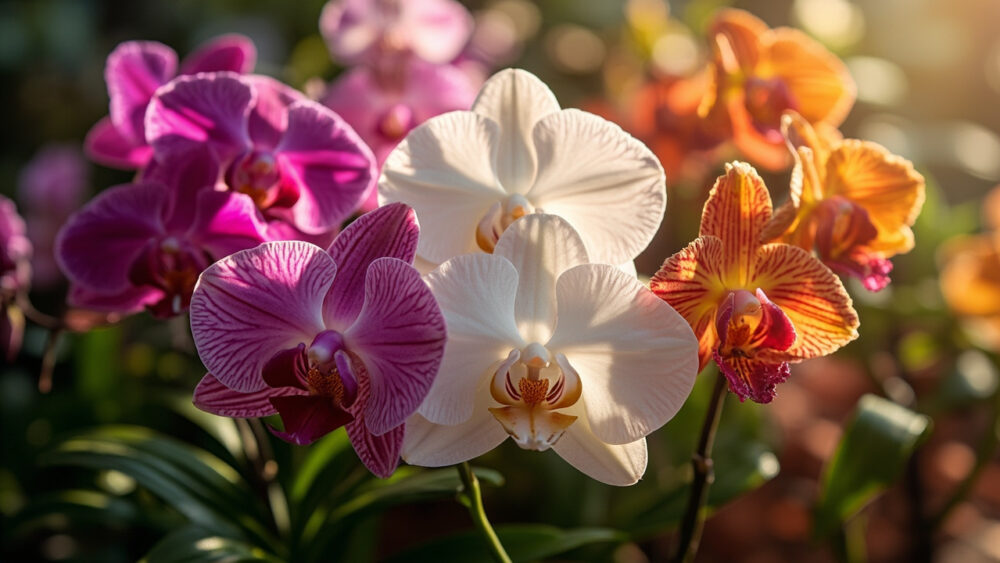
Tolerant of low, indirect light, this is the orchid sold at every grocery store for a reason. It blooms for two to three months at a stretch, wants water only when the roots look silvery-white and dry, and rots quickly if left sitting in a saucer of water.
2. Lady’s Slipper Orchid (Paphiopedilum)
Happy in the same low light as an African violet, this one has a pouch-shaped bloom instead of the flat moth orchid face. It prefers consistently moist, never soggy, bark mix and dislikes direct sun on its mottled leaves.
3. Jewel Orchid (Ludisia discolor)
Grown mainly for its foliage, not the small white flower spikes, this terrestrial orchid actually grows in regular potting soil instead of bark. It tolerates the dim corners other orchids sulk in, making it the one to hand a renter with a north-facing apartment.
4. Dancing Lady Orchid (Oncidium)
Covered in dozens of small yellow or brown blooms per spike, this one rewards bright light with a genuinely showy display. It needs to dry out noticeably between waterings, and soggy roots are the single fastest way to lose it.
Once you have gotten one of these to rebloom, the next group is where growers with a little more confidence tend to go.
Fragrant and Showy Types Worth the Extra Attention
These ask for more light or more precise watering, but they pay it back with scent or sheer bloom size.
5. Cattleya Orchid
The classic corsage orchid, with flowers three to six inches across and a scent that can fill a room. It wants bright light, close to what a tomato seedling gets on a sunny sill, and a real dry-down between waterings or the thick roots rot.
6. Vanda Orchid
Grown bare-root in a basket instead of a pot, this is the orchid you see hanging with roots exposed to open air. It needs daily watering or misting in most homes, very bright light, and warmth, which makes it a poor fit for a cool, dim hallway.
7. Brassia Orchid (Spider Orchid)
Named for its long, spidery petals, this one is grown as much for its odd shape as for its light citrus scent. It shares Cattleya’s light and watering needs and makes a good next step once you have kept one Cattleya alive through a full year.
8. Zygopetalum
Heavily fragrant with mottled purple and green blooms, this one prefers cooler nights than most orchids on this list, ideally down around 55 to 60 degrees. It suits a grower with an unheated sunroom or a cool porch more than a warm apartment.
If those still feel too demanding, the next group is built for people who travel or forget to water.
Low-Fuss Orchids for Neglectful Growers
Every plant in this group survives real gaps between care, not just the occasional missed weekend.
9. Cymbidium Orchid
Blooming on tall spikes with 10 to 20 flowers each, this orchid actually prefers cooler nighttime temperatures, which makes it one of the few that does well outdoors on a porch in mild climates during spring and fall. It tolerates being slightly potbound and rewards a cool autumn night drop with heavier spring bloom.
10. Dendrobium Orchid
Producing long canes lined with flowers, this one wants bright light and a distinct dry rest after blooming, which is the opposite of what most people assume. Skip that dry rest and it will grow leaves happily but refuse to flower again.
11. Encyclia Orchid
Native to hot, dry regions of Mexico and Central America, this genus handles neglect better than almost anything else on this list. It stores water in thickened pseudobulbs at the base of each leaf, so an occasional forgotten watering does far less damage than it would to a moth orchid.
12. Epidendrum Orchid
Reblooming almost continuously under bright light, this reed-stemmed orchid is one of the few that can live outdoors year-round in warm, frost-free climates. It handles more direct sun and rougher treatment than most of its relatives, and clusters of small flowers form at the cane tips for months at a time.
Number 13 is next, and it is the one most people buy without understanding what happens after the first bloom fades.
The Orchid Most Beginners Misjudge, Plus Two Reliable Rebloomers
These three get bought constantly and either thrown out too soon or babied in exactly the wrong way.
13. Moth Orchid After Its First Bloom Drops
If you assumed a bare, flowerless moth orchid spike is dead, that assumption is why so many end up in the trash within a year of purchase. The green spike often still has life in it, and cutting it back to just above a node, rather than cutting it off entirely, frequently triggers a second, smaller bloom. The plant itself is fine sitting flowerless for months; it is not failing, it is resting.
14. Miltoniopsis (Pansy Orchid)
Named for flowers that genuinely resemble pansies, this one is pickier about water quality and humidity than most on this list, disliking both dry air and chlorinated tap water. It rewards a humidifier or a pebble tray and steady, cool conditions with some of the most striking flat blooms in the entire family.
15. Ascocenda Orchid
A Vanda hybrid bred for smaller size and more compact growth, this one gives much of the Vanda look and vivid color range without needing a basket hung from the ceiling. It still wants strong light and frequent watering, but fits a standard pot and a bright windowsill in a way a full-size Vanda never will.
How to Choose the Right One
Match the plant to your actual house, not the flower photo on the tag.
- Check your light first: weak, indirect light points to moth orchid, lady’s slipper, or jewel orchid, while strong direct light opens up Cattleya, Vanda, and Ascocenda.
- Match your climate: cool nights favor Cymbidium and Zygopetalum, warm stable rooms favor Vanda and Epidendrum.
- Decide if you want scent, size, or color range, since fragrance points toward Cattleya or Zygopetalum, and sheer bloom count points toward Dendrobium or Oncidium.
- Be honest about your watering habits: frequent forgetting suits Encyclia or Epidendrum, daily attention suits Vanda.
- Consider whether you can offer a dry rest period, which Dendrobium needs to rebloom well and moth orchids do not require at all.
- Start with one plant from your best-fit category before buying a second variety with different needs.
Pick based on your actual windowsill and your actual habits, and almost any orchid on this list will bloom again for you.
Get that match right once, and you will stop losing orchids and start collecting them.