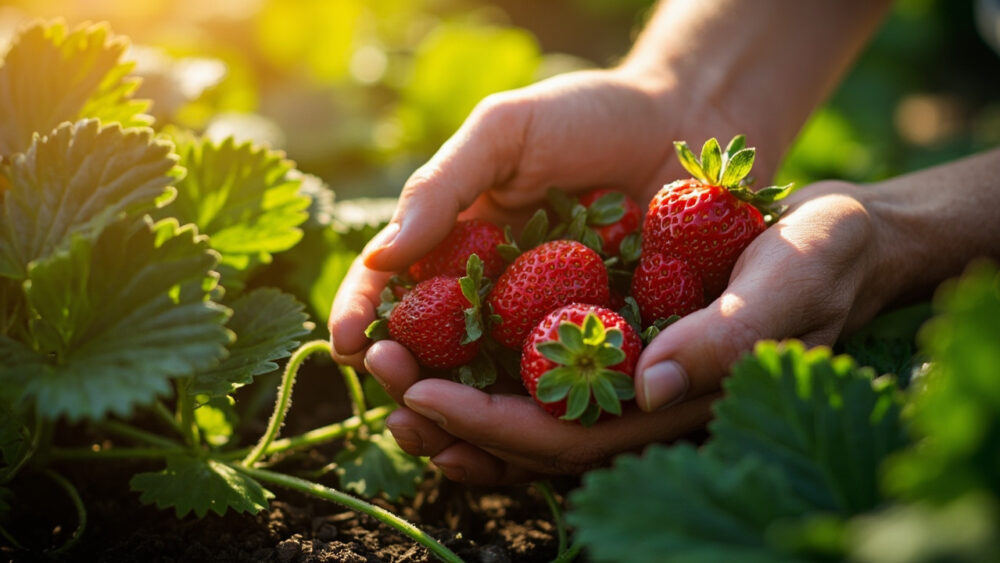
Pick strawberries when they are fully red from tip to shoulder, not just on the bottom. That full color has to show for at least a day, sometimes two, with the fruit still firm. Knowing when to harvest strawberries comes down to color, not size and not the calendar, and most people pick a full day or two too early.
That early pick is the single mistake that ruins most people’s strawberry season, and it is not fixable once the berry is off the vine. A strawberry does not ripen after picking the way a tomato or peach will. Whatever sugar and color it had at the moment you pulled it is all it will ever have.
There is also a sign nearly everyone misreads, a texture cue that matters more than color once you know to check it, and an honest answer to the question you are probably about to ask about how long this harvest window actually lasts. All of it, plus the save-able Strawberries at a Glance card with every number in one place, is waiting at the bottom of this page.
The Real Ready Signs
Color is the first check, but it has to be complete. A berry that is red on the shoulders and still pale or white near the leafy cap is not ready, even if the rest looks glossy and perfect. Wait until the color runs solid all the way to that cap.
The color test
Look at the whole berry, not just the side facing the sun. Strawberries ripen unevenly, and the shaded side often lags a day behind. If you see any white, pink-white, or pale green near the cap, leave it.
The texture test everyone skips
Here is the sign most people miss. A ripe strawberry should feel slightly firm with a little give, not hard and not squishy. If it feels soft all the way through when you press gently, it is overripe, and if it feels rock hard it needs another day or two even if the color looks close.
Color gets you in the neighborhood, but your fingers make the final call.
The Timing Window, and What Guessing Wrong Costs You
Most strawberry varieties go from full bloom to ripe fruit in about four to six weeks, depending on the variety and how warm the weather has been. Once a berry starts turning color, it usually finishes ripening in two to four days in warm weather, slower if temperatures are cool.
If you assumed picking early just means a slightly less sweet berry, that guess is the expensive one. Underripe strawberries do not sweeten in the bowl. They stay tart, pale in flavor, and mealy no matter how long they sit on the counter. You get one shot at peak flavor, and it happens on the plant.
Go too late and the cost shows up fast in a different way. Overripe berries turn dull, soften into mush, and attract slugs, birds, and fruit flies almost overnight in warm weather. In humid conditions they can develop gray mold within a day or two of passing peak ripeness.
In practice that means checking your patch every one to two days once berries start turning color, not once a week.
How to Pick a Strawberry Without Wrecking the Plant
Pinch or snip the stem, never pull on the berry itself. Strawberry fruit tears easily, and yanking it off the plant bruises the flesh and can damage the crown, the part of the plant that produces next year’s runners and flowers.
- Hold the berry gently in one hand.
- Use your other hand to pinch the stem about a quarter inch above the cap, or snip it with small scissors or garden snips.
- Let the berry rest in your palm, do not squeeze.
- Set it directly into a shallow container, one layer deep if possible.
Piling berries deep in a bucket crushes the ones on the bottom before you even get inside. Strawberries bruise under their own weight faster than almost any other fruit you will grow.
Getting the berry off cleanly is only half the job, what you do in the next hour matters almost as much.
What to Do in the First Hour After Picking
Get strawberries out of the sun and into the shade or indoors as soon as you finish picking. Field heat, meaning the warmth the berry absorbed while sitting in sunlight, speeds up softening and spoilage fast.
Sort as you go if you can. Set aside any berry with a soft spot, a crack, or mold to eat or use that same day, and keep the perfect ones separate for storage. One moldy berry left in with the others will spread mold to its neighbors within a day.
Do not wash strawberries until you are ready to eat or use them. Washing early adds moisture that speeds up rot in storage.
Handled this way, unwashed strawberries in the refrigerator hold reasonably well for about three to five days, but they are never quite as good as they were the hour you picked them.
Keeping the Harvest Coming
Pick every ripe berry you find, every time, even the small or oddly shaped ones. Leaving overripe fruit on the plant signals the plant to slow down and also invites rot and pests that can spread to fruit still ripening nearby.
June-bearing varieties give you one concentrated harvest lasting two to three weeks, so during that window checking every one to two days is non-negotiable if you want peak flavor from most of the crop.
Everbearing and day-neutral varieties spread smaller harvests across the whole season instead of one big flush. They still need the same frequent checks, just for longer.
Either way, consistent picking is what keeps the plant producing at its best instead of stalling out.
Strawberries at a Glance
- When to harvest: when color is fully red from tip to cap with no white or pale patches, and the berry feels slightly firm with a little give.
- Time from bloom to ripe fruit: about four to six weeks, faster in warm weather, slower in cool conditions.
- How often to check: every one to two days once berries start turning color, daily in hot weather.
- How to pick: pinch or snip the stem about a quarter inch above the cap, never pull the berry itself.
- Right after picking: move berries out of the sun immediately, sort out any damaged or moldy fruit, and leave them unwashed until use.
- Storage life: about three to five days refrigerated and unwashed, best eaten within a day or two for peak flavor.
- To keep production strong: pick every ripe berry on schedule, even imperfect ones, so the plant keeps setting new fruit instead of slowing down.
Color gets a strawberry close, but firmness with a little give is what tells you it is actually ready.
Pick on that signal, handle it gently, and get it out of the sun fast, and every berry you grow this season will taste like it should.