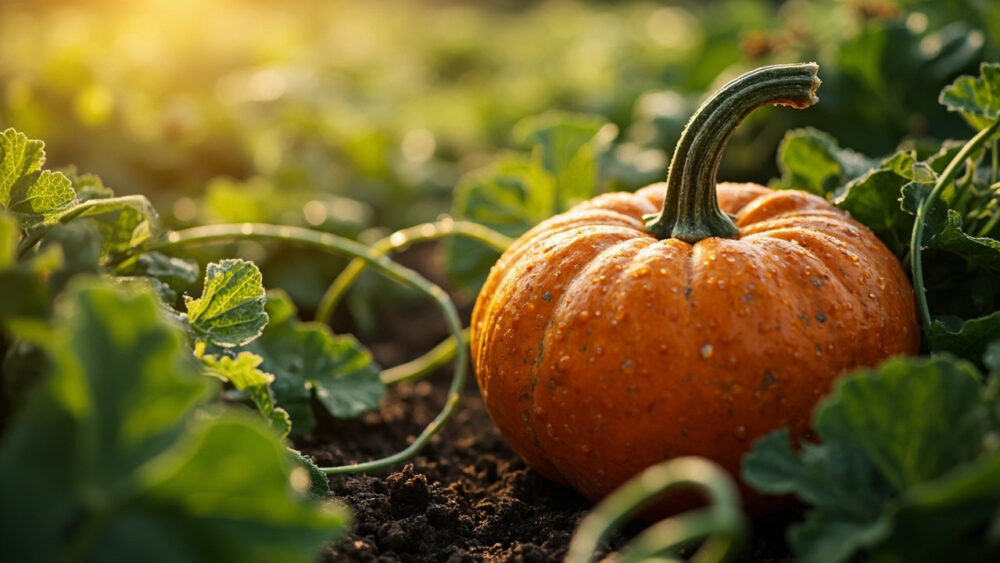
Most pumpkins take 90 to 120 days from seed to harvest, depending on the variety. Small sugar pumpkins and pie types can finish in as few as 90 to 100 days, while the big carving jack-o-lantern types and giant show pumpkins need 110 to 120 days or more of warm weather to fully mature.
That range is honest but it hides a lot. Two people can plant the same seed packet on the same day and get vines that fruit weeks apart, because soil temperature, sun, and water do most of the driving, not the calendar. There is also one guess almost everyone makes about slow pumpkins that is wrong, and it is not a lack of fertilizer.
Stick around and you will know exactly what stage your vine should be at right now, what actually speeds things up versus what just wastes your time, and how to tell a normal lull from a plant in real trouble. There is a save-able quick-reference card at the very bottom with the whole timeline at a glance.
The Realistic Timeline, Start to Finish
Count from the day seeds go in the ground, not the day you plant a transplant. Germination takes 5 to 10 days in soil that has warmed to at least 65 to 70 F. From there, expect roughly 2 to 3 weeks of seedling and early vine growth before the plant really starts running.
Flowering usually begins 6 to 8 weeks after planting, with male flowers showing up first and female flowers, the ones with the tiny swollen pumpkin at the base, following a week or two later. Once a female flower gets pollinated, the fruit itself takes about 45 to 55 days to size up and turn from green to its mature color.
Add it up and you land at that 90 to 120 day window, but only if nothing stalls along the way.
What Actually Controls the Speed
Variety matters more than almost anything else you control. A miniature or pie pumpkin like Small Sugar or Baby Pam is bred to finish fast. A 50 pound Atlantic Giant or a big Dill’s Atlantic type is bred for size, not speed, and will happily use every day of a long season and then some.
Climate and soil temperature come next. Pumpkins are heat lovers. Cool nights below 50 F slow root growth and flowering, and a cold, wet spring can add two or three weeks to the whole process before the plant ever gets going.
Sun exposure and water consistency finish the list. Pumpkins want 6 to 8 hours of direct sun and steady moisture, about an inch a week. Inconsistent watering does not just slow growth, it also causes blossom end rot and stunted fruit.
Get the variety and conditions right and the rest of the timeline mostly takes care of itself.
Reading the Stages on Your Own Vine
Here is what you should be seeing at each point, so you can tell if your plant is on schedule.
- Weeks 1 to 2: a seedling with one or two true leaves past the initial seed leaves, root system still shallow.
- Weeks 3 to 5: the vine starts running, putting out feet of growth a week in good heat.
- Weeks 6 to 8: male flowers open first, often for a week or two with no fruit set, which is normal and not a failure.
- Weeks 8 to 10: female flowers open, bees or hand pollination set the fruit, and you will see a small green pumpkin swelling behind the spent bloom.
- Weeks 10 to 17: the fruit sizes up fast at first, then slows as it hardens and colors up in the final two to three weeks.
If your vine matches this timing within a week or two either way, you are in good shape.
How to Legitimately Speed Things Up
Start seeds indoors 2 to 3 weeks before your last frost in biodegradable pots, since pumpkin roots hate disturbance. This buys real time without risking a cold-soil setback outdoors. Black plastic or landscape fabric over the planting area warms soil several degrees faster in spring, which matters more than almost any other trick.
Hand pollinating female flowers in the morning with a small paintbrush or the male flower itself guarantees fruit set and skips the days lost waiting on bee activity. Pruning off extra vines and limiting each plant to 2 to 4 fruits redirects energy so the pumpkins you keep size up faster.
What does not work: extra nitrogen fertilizer. It pushes leafy vine growth at the expense of flowering and fruit, which is the opposite of what you want once the plant is established. Rushing the transplant date into cold soil backfires too, stunting roots for weeks.
Speed comes from warmth, sun, and fewer fruits competing, not from more feeding.
Slow Growth: Normal Pause or Real Problem?
If you assumed a stalled-looking vine means something is wrong, that guess causes more panic than it should. A week or two of all-male flowers before female flowers show up is completely normal, not a failure to fruit.
A genuine problem looks different: wilting vines in cool, moist soil point to vine borers or bacterial wilt, not slow timing. Yellowing lower leaves with a fine webbing suggest spider mites. Fruit that sets, then yellows and drops at golf-ball size usually means poor pollination, which hand pollinating fixes going forward.
True cold damage, a hard frost that blackens leaves, is the one thing that cannot be timed around. A young vine can sometimes push new growth from the crown, but a mature vine hit by hard frost is usually done for the season.
Most slow patches sort themselves out with warmth and patience, and knowing the difference is what keeps you from ripping out a perfectly good plant.
Pumpkins: Quick Reference
- Total time: 90 to 120 days from seed to harvest, depending on variety.
- Fast varieties: pie and mini types like Small Sugar, roughly 90 to 100 days.
- Slow varieties: large carving and giant types, 110 to 120+ days.
- Germination: 5 to 10 days in soil at least 65 to 70 F.
- Flowering: begins 6 to 8 weeks after planting, males first, females a week or two later.
- Fruit development: about 45 to 55 days from pollination to mature color.
- Harvest sign: deep, solid color, hard rind that resists a thumbnail, and a dry, woody stem.
Match your planting date to your last frost and your variety to your patience, and the timeline above will hold true almost every season.
Everything after that is just sun, water, and letting the vine do its work.