Here is how to care for majesty palm without losing it by month three: bright, indirect light, soil kept lightly moist but never soggy or bone dry, high humidity, and temperatures that stay above 55°F. Get those four things right and the fronds stay deep green from base to tip. Get any one of them wrong and this plant tells you fast, usually with brown tips that show up before you’ve even noticed a problem.
Most majesty palms don’t die of neglect. They die of a well-meaning owner overwatering because the leaves looked a little sad, or plunking the pot next to a heat vent and calling it “bright light.” There’s also a sign almost everyone misreads: brown leaf tips look like a watering problem, and it usually isn’t.
Stick around and I’ll walk you through light, watering, feeding, the maintenance rhythm this palm actually needs, the specific problems that show up on nine out of ten struggling plants, and the real signs of a thriving one. There’s a save-able Majesty Palm at a Glance card waiting at the bottom for the fridge or your phone’s photo roll.
Light, Placement, and Temperature
Majesty palm wants bright, indirect lightideally several hours of it a day. A spot a few feet back from an east or south-facing window works well. Direct, hot afternoon sun through glass will scorch the fronds; deep shade will thin the plant out and slow new growth to almost nothing.
In its native habitat this palm grows along riverbanks in Madagascar, so it’s used to warmth and humidity, not drafts. Keep it away from heating vents, cold windowsills, and air conditioner blasts. It wants temperatures between 65 and 80°F during the day, and it will sulk hard below 55°F.
If you can move it outdoors for summer, dappled shade on a porch or under a tree canopy is ideal, never full sun straight from indoors.
Get the light right and you’ve solved maybe half of what usually goes wrong with this plant.
Watering: How Much, How Often, and How to Tell
Water when the top inch of soil feels dry to a finger poked in, then water thoroughly until it runs from the drainage holes. Depending on light, pot size, and season, that usually lands somewhere between once every 5 and 10 days. Let the pot drain completely and never let it sit in standing water.
Here’s the guess almost everyone makes: brown, crispy tips must mean the plant is thirsty, so they water more. That guess is backwards more often than not. Brown tips are usually a humidity problem, a chemical sensitivity to tap water, or a root system sitting in wet, airless soil, not underwatering.
Majesty palms are notably sensitive to fluoride and chlorine in municipal tap water and to the salt buildup from fertilizer. If tips are browning steadily despite consistent watering, switch to distilled water or rainwater for a few weeks and watch for improvement.
Consistency matters more than volume here, this plant hates swinging between drought and flood.
Humidity is the other half of that browning-tip mystery, and it’s next.
Soil, Humidity, and Feeding
Use a well-draining, peat-based potting mix, the kind sold for palms or general houseplants, and make sure the pot has real drainage holes. Heavy, water-retentive soil is one of the fastest ways to rot the roots on this plant.
Humidity is non-negotiable for majesty palm, and dry indoor air, especially in winter with the heat running, is the single biggest reason fronds crisp up at the tips even when watering is perfect. Aim for 50% humidity or higher. A pebble tray, a humidifier nearby, or grouping it with other plants all help; misting gives a brief boost but doesn’t hold.
Feed monthly during spring and summer with a balanced liquid houseplant fertilizer diluted to about half strength, and skip feeding entirely in fall and winter when growth slows. This palm is a light feeder. Over-fertilizing shows up as the same brown tips and edges you’re already watching for.
Once the soil and air are right, the rest of the care routine is mostly maintenance, and that’s worth doing on a real schedule.
Pruning, Repotting, and Cleaning: The Routine Tasks
Prune only fully brown or dead fronds, cutting them at the base near the trunk. Never cut a frond that’s still partly green, it’s still feeding the plant, and premature pruning slows overall growth.
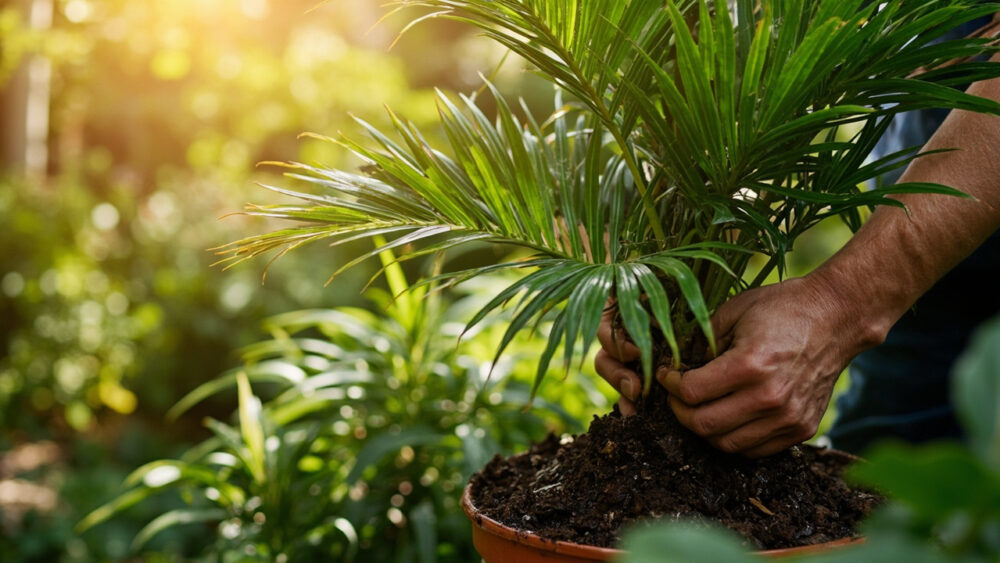
Repot every 2 to 3 years in spring, moving up one pot size when roots start circling the bottom or poking through drainage holes. Majesty palms actually prefer being slightly snug in their pot, so resist the urge to upsize dramatically.
Wipe the fronds down with a damp cloth every few weeks. Dust blocks light absorption more than people realize, and clean leaves are also your first line of defense for spotting pests early.
That pest check matters, because a couple of specific problems account for most majesty palm complaints.
The Problems Most Likely to Strike (And Their Fixes)
Spider mites are the top pest threat, especially in dry indoor air. Look for fine webbing between fronds and a stippled, dusty look on the leaflets. Raise humidity, rinse the foliage under lukewarm water, and treat with insecticidal soap or neem oil following the product label exactly if the infestation persists.
Root rot from overwatering or poor drainage shows up as yellowing lower fronds, a mushy base, or a sour smell from the soil. Pull the plant and check the roots: healthy ones are firm and pale, rotten ones are dark, soft, and slimy. Trim away the rot, repot into fresh dry mix, and cut back watering.
Brown, crispy frond tips, the complaint that brings most people to this plant’s care sheet, almost always trace back to low humidity, mineral-heavy tap water, or fertilizer salt buildup, not thirst. Flush the soil occasionally with plain water to clear excess salts.
Yellowing fronds across the whole plant, rather than just the tips, usually point to overwatering or a nutrient deficiency, so check soil moisture before reaching for fertilizer.
Once you’ve ruled those out, it helps to know what success actually looks like, because it’s not “no brown ever.”
How to Tell It’s Genuinely Thriving
A healthy majesty palm pushes new fronds from the crown every few months during the growing season, unfurling a fresh, lighter green frond that darkens as it matures. That steady new growth is the clearest sign everything is right.
Some minor tip browning on older, lower fronds is normal and not a red flag on an otherwise thriving plant. What you want to see is the newest growth staying clean, full, and deep green, with no webbing, no mushy base, and no sudden mass yellowing.
A thriving majesty palm also tends to stay upright and full rather than leaning hard toward the light source or dropping fronds faster than it replaces them.
If your plant is doing that, you’ve already solved the puzzle, and the quick reference below is there so you don’t have to relearn it next season.
Majesty Palm at a Glance
- Light: bright, indirect light for several hours a day, no direct hot sun through glass.
- Temperature: 65 to 80°F during the day, never below 55°F, no cold drafts or heat vents.
- Watering: water thoroughly when the top inch of soil is dry, roughly every 5 to 10 days, always let it drain fully.
- Humidity: 50% or higher, use a humidifier or pebble tray, this fixes most brown-tip complaints.
- Soil and feeding: well-draining peat-based mix, feed monthly at half strength in spring and summer only.
- Repotting: every 2 to 3 years in spring, one size up, this palm likes being a bit snug.
- Watch for: spider mites in dry air, root rot from overwatering, tip browning from tap water minerals or salt buildup.
If you remember one thing, remember this: brown tips are a humidity and water-quality problem far more often than a thirst problem.
Fix the air around the plant before you touch the watering can, and this palm will reward you with new fronds for years.