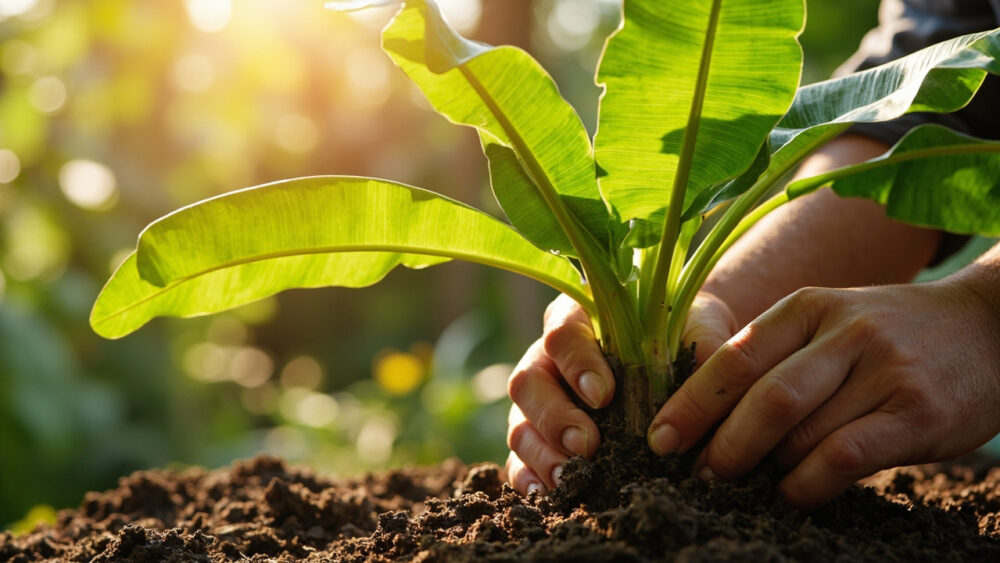
Growing banana trees comes down to three things: heat, water, and patience. Plant a sucker or potted banana after all frost danger has passed and soil has warmed past 65°F, give it full sun, constant moisture, and heavy feeding, and a healthy plant can produce a stalk of fruit in 9 to 15 months depending on the variety and your climate. Outside the tropics, that timeline gets a lot less forgiving.
Here is what trips up almost everyone growing banana trees for the first time: they plant a cold-tender variety in ground that never gets warm enough, then blame themselves when nothing happens. There is also a sign on the trunk that tells you a harvest is finally coming, and most people miss it completely until the fruit is already forming. And if you are wondering whether that banana tree will actually survive winter where you live, the honest answer is more complicated than the plant tag suggests.
Stick around to the end and you will find the Banana Trees at a Glance card, the saveable version of everything below with the exact numbers on planting depth, spacing, feeding, and harvest timing.
When to Plant Banana Trees
Wait until nighttime temperatures stay reliably above 55°F and soil has warmed to at least 65°F before planting outdoors. Bananas are tropical grasses at heart, not trees, and cold soil stalls growth completely even if the air feels warm enough to you.
In USDA zones 8 and below, banana trees are grown as die-back perennials or container plants brought indoors for winter. Zones 9 and 10 can leave hardy types like Musa basjoo in the ground year round. True tropical eating bananas need zone 10 or 11, or a greenhouse, to reliably fruit.
If you started with a potted nursery plant, harden it off over a week before it goes in the ground.
Choosing the Spot and Prepping the Soil
Bananas want full sun, at least 6 to 8 hours a day, and shelter from strong wind, which shreds the broad leaves and stresses the plant. A spot against a south-facing wall or fence is close to ideal.
Soil should be rich, loose, and fast-draining but able to hold moisture, think of the texture of a well-made compost pile. Work in several inches of compost or aged manure before planting, and check drainage by digging a hole and filling it with water. If it is still standing after an hour, raise the bed or pick another spot.
Bananas are heavy feeders from day one, so this is not a spot to skimp on soil prep.
Planting a Banana Sucker or Potted Plant, Step by Step
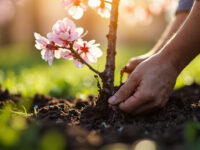
- Dig the hole: twice as wide as the root ball and just as deep, so the crown sits at the same soil level it was growing at before.
- Space plants: 6 to 10 feet apart depending on the variety, since dwarf types need less room than standard-size bananas that can reach 15 to 20 feet.
- Set the plant: backfill halfway, water it in to settle the soil, then finish filling and water again.
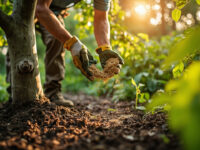
- Mulch heavily: 2 to 4 inches of mulch around the base, kept a few inches off the stem itself, to hold moisture and moderate soil temperature.
- Stake if needed: a young plant in a windy spot benefits from a loose stake until roots establish.
Getting the plant in the ground is the easy part, keeping it fed and watered through summer is where most plants either thrive or stall.
Watering and Feeding Through the Season
If you assumed banana trees like swampy, soggy soil because they are tropical, that guess drowns more of them than drought ever does. They want consistently moist soil, not standing water. Check by feeling the top 2 inches of soil; water deeply when it starts to dry, which in hot weather can mean two to three times a week.
Feed aggressively. Bananas are among the hungriest plants you will grow. A balanced fertilizer with extra potassium every 3 to 4 weeks through the growing season keeps leaf production and fruiting on track. Potassium deficiency shows up as yellowing along leaf edges, a common and fixable problem.
Slow down watering and feeding once nights cool in fall, since the plant is heading toward dormancy either way.
Problems That Actually Show Up
The most common early failure is cold shock, not pests. A plant set out too early sits there sulking, leaves browning at the tips, and never catches up that season. There is no fixing a banana that got planted three weeks too soon except waiting for warmth and feeding hard once it arrives.
Once established, watch for these:
- Yellowing, streaked leaves: often Panama disease or simple nutrient stress, improve drainage and feeding before assuming the worst.
- Torn, ragged leaves: wind damage, mostly cosmetic, add windbreak protection.
- Chewed leaf edges or small holes: banana aphids or beetles, treat with an appropriately labeled insecticidal soap or pesticide, following the product label exactly.
- Rot at the base: almost always overwatering or poor drainage, cut back water immediately.
Bananas are not fragile plants, but they punish inconsistency, and that pattern shows up most clearly right before fruiting.
The Sign Everyone Misses Before Harvest
A banana plant flowers and fruits only after it has produced roughly 12 to 15 new leaves from a single growing point, called the pseudostem. When that stem finally sends up a tall flower spike with a large purple-red bract at the tip, that is the sign harvest is genuinely on the way, usually 9 to 15 months after planting depending on variety and climate. Most first-time growers see the bract and think something is wrong with the plant, when actually it is doing exactly what it is supposed to do.
The bract peels back over several weeks to reveal rows of small flowers, which swell into fingers, which form full hands, which stack into the bunch. Cut back on nitrogen and lean into potassium once you see that bract, it directly supports fruit fill.
Once the fruit is set, the countdown to harvest is shorter than most people expect.
When and How to Harvest
Harvest when the fingers have filled out and rounded, losing their sharp angles, while still fully green. Bananas ripen best off the plant, not on it; letting them yellow on the stalk invites birds, splitting, and rot.
Cut the entire hand or the whole bunch with a sharp knife or machete, then hang it in a warm, shaded spot to ripen over several days to a couple of weeks. Once harvested, the pseudostem that fruited will not fruit again. Cut it down to about a foot, and a new sucker from the base will take over as the next producer.
That cycle, one stem fruiting once then handing off to the next, is the whole rhythm of growing bananas long term.
Banana Trees at a Glance
- When to plant: after nights stay above 55°F and soil hits at least 65°F, never on a whim just because the air feels warm.
- Planting depth and spacing: crown level with original soil line, plants spaced 6 to 10 feet apart depending on variety size.
- Light and soil: full sun 6 to 8 hours daily, rich fast-draining soil amended with compost.
- Watering: consistently moist, never soggy, deep watering two to three times weekly in heat.
- Feeding: balanced fertilizer with extra potassium every 3 to 4 weeks through the growing season.
- Hardiness: true eating bananas need zone 10 or 11, hardy ornamental types survive outdoors in zones 9 and 10.
- Time to harvest: 9 to 15 months from planting, signaled by a large purple flower bract, fruit picked green and ripened off the plant.
Get the timing right at planting and the feeding right through summer, and the plant does most of the rest of the work itself.
Everything after that bract appears is just patience.