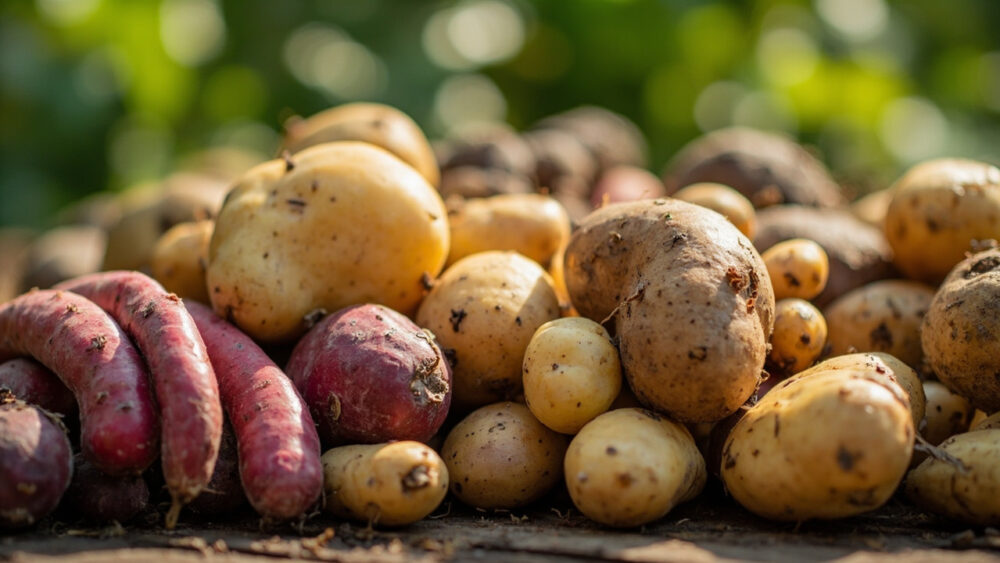
The fastest way to narrow fifteen potato varieties down to one is to decide what you’re doing with them before harvest: mashing and baking want a starchy, dry-fleshed potato, salads and roasting want a waxy one that holds its shape, and everything in between is a compromise variety that does both jobs decently. Get that one distinction right and half this list disqualifies itself immediately. Among the dozens of potato varieties sold as seed potatoes each spring, most home gardeners default to the same two or three names out of habit, not because those are actually the best fit for their kitchen.
There’s a popular type most people pick for the wrong reason (its skin color, not its starch content), and there’s an underrated storage potato that experienced growers plant every year and rarely talk about because it’s not exciting to look at. Number 13 on this list is the one gardeners most consistently misjudge, usually planting it for the wrong season entirely.
The last few entries below, plus a straightforward method for choosing your own, are worth the scroll to the bottom. Everything in between is grouped by how the potato actually performs, not just its name.
Classic All-Purpose Potatoes
These are the workhorses: forgiving to grow, decent in storage, and flexible enough in the kitchen that you won’t regret planting them even if you change your mind about dinner.
1. Yukon Gold
Buttery yellow flesh that stays creamy whether you boil, roast, or mash it, which is exactly why it became the default potato for so many gardeners. It matures in 80 to 90 days, tolerates average soil, and its thin skin means less peeling. The downside is mediocre storage life compared to true storage types, so plan to eat these within a few months of harvest.
2. Kennebec
The one serious growers keep coming back to for sheer reliability. It’s a high-yielding white potato with dry, mealy flesh that fries and bakes well, resists common blight pressure better than most, and stores for months in a cool, dark spot. If you want one variety that does almost everything without drama, this is it.
3. Red Pontiac
Red skin, white flesh, and a reputation for producing heavily even in less-than-perfect soil. It’s moderately waxy, good for boiling and potato salad, and matures around 90 to 100 days. Gardeners in heavier clay soils lean on this one because it tolerates wet ground better than most.
Those three cover most kitchens, but the real flavor differences show up in the fingerlings.
Fingerling and Specialty Shapes
Fingerlings trade yield for texture and looks, small elongated tubers with dense, waxy flesh that holds together no matter how you cook them.
4. Russian Banana
The fingerling most often copied but rarely matched for flavor. It’s a slender, banana-shaped tuber with pale yellow, waxy flesh that’s excellent roasted whole or sliced into salads. Yields are lower than a standard potato, so give it a little extra space and patience.
5. French Fingerling
Rose-blushed skin with a yellow interior streaked pink near the surface, this one is as much about presentation as taste. The flesh is firm and nutty, holding its shape through roasting and grilling. It stores reasonably well for a fingerling, which is not something you can say about most of them.
6. Rose Finn Apple
An old heirloom fingerling with rosy skin and buttery yellow flesh, prized for a sweeter, almost hazelnut flavor when roasted. It’s not a heavy producer and it’s slower to mature, closer to 100 to 110 days, but the flavor is why people keep growing it anyway.
If shape and flavor are what you’re after, fingerlings deliver, but the biggest yields still come from the classic russets.
Russets and Baking Potatoes
This is the starchy, dry-fleshed category built for baking, mashing, and frying, the potatoes that fall apart in a good way.
7. Russet Burbank
The potato behind most restaurant french fries, and for good reason: high starch, low moisture, and a fluffy interior once baked. It needs a longer season, 100 to 130 days, consistent moisture, and loose, well-drained soil to size up properly. Skimp on water during tuber set and you’ll get small, misshapen potatoes.
8. Norkotah
A shorter-season alternative to Burbank that still delivers that classic dry, russet texture in about 90 to 100 days. It’s more forgiving of inconsistent watering and sets tubers earlier, which makes it a better fit for gardeners with a shorter frost-free window.
9. All Blue
Deep blue-purple skin and flesh all the way through, holding its color even after cooking. The starch content sits in the middle, good for baking or roasting, and the anthocyanin pigment that makes it blue is the same class of antioxidant compound found in blueberries. It’s a conversation starter as much as a staple, with moderate yields and a 90 to 110 day maturity.
Starchy potatoes get the glory, but the waxy types are what actually survive a pot of boiling water intact.
Waxy Potatoes for Salads and Roasting
Low starch, high moisture, and a texture that holds together under heat, this is the category that never turns to mush.
10. La Ratte
The potato French chefs reach for when a recipe calls for something small, nutty, and firm. It’s a slow grower, often 100 to 110 days, with modest yields, but the dense, waxy flesh is unmatched in a simple roasted or pan-fried preparation.
11. Carola
A German waxy variety with smooth yellow skin and flesh that stays firm through boiling, making it a reliable salad potato. It matures in about 90 days, yields well, and tolerates a wider range of soils than most specialty types.
12. Purple Viking
Purple-red skin over bright white, waxy flesh that holds its shape well for roasting and salads. It’s a heavier yielder than most specialty potatoes and stores better than average, splitting the difference between a novelty potato and a genuine kitchen workhorse.
The waxy types hold their shape, but the next group is where timing actually matters more than technique.
Early and Storage Specialists
Some potatoes exist for speed, others for the long haul in a root cellar. Confusing the two is the single most common mistake on this list.
13. Norland
Planted for the wrong season more often than any potato on this list. Norland is an early variety, ready in as few as 65 to 75 days, bred for quick harvest and fresh eating, not for storing through winter. Gardeners who plant it expecting a cellar potato end up with soft, shriveled tubers by midwinter because Norland simply doesn’t have the thick skin or dormancy for long storage. Plant it if you want new potatoes in early summer, not if you want potatoes in February.
14. Kerr’s Pink
The quiet storage potato experienced growers plant every year without much fanfare. It’s a floury, all-purpose potato with pink-tinged skin that cures well and holds in storage for months longer than most early varieties, making it a genuine root-cellar staple in cool climates. It’s not flashy, it just works, which is exactly why it gets overlooked.
15. Elba
A late-season storage variety bred specifically for resistance to late blight, the disease that can wipe out a potato patch in wet years. It matures in 110 to 130 days, yields large white tubers, and stores exceptionally well, making it a smart choice for gardeners in humid or rainy climates who’ve lost a crop to blight before.
How to Choose the Right One
Run any variety through this order and the right choice usually becomes obvious fast.
- Space: figure on 12 inches between plants and 30 to 36 inches between rows, so decide how many square feet you actually have before picking a heavy yielder.
- Climate and season length: count the days from your last frost to your first fall frost, then match that number against the variety’s maturity range, early types for short seasons, russets and storage types for longer ones.
- Purpose in the kitchen: starchy for baking and mashing, waxy for salads and roasting, all-purpose if you can’t commit to one.
- Storage needs: if you want potatoes past midwinter, choose a true storage variety with thick skin, not an early type bred for fast, fresh eating.
- Disease pressure: in wet or humid climates with a history of blight, favor resistant varieties over flavor-first heirlooms.
- Care appetite: heirlooms and fingerlings reward attention with flavor but yield less; classic varieties like Kennebec forgive an inconsistent gardener.
Match those six factors to your yard and your kitchen, and you’ll end up with a potato you actually use, not just one that looked interesting on the seed rack.