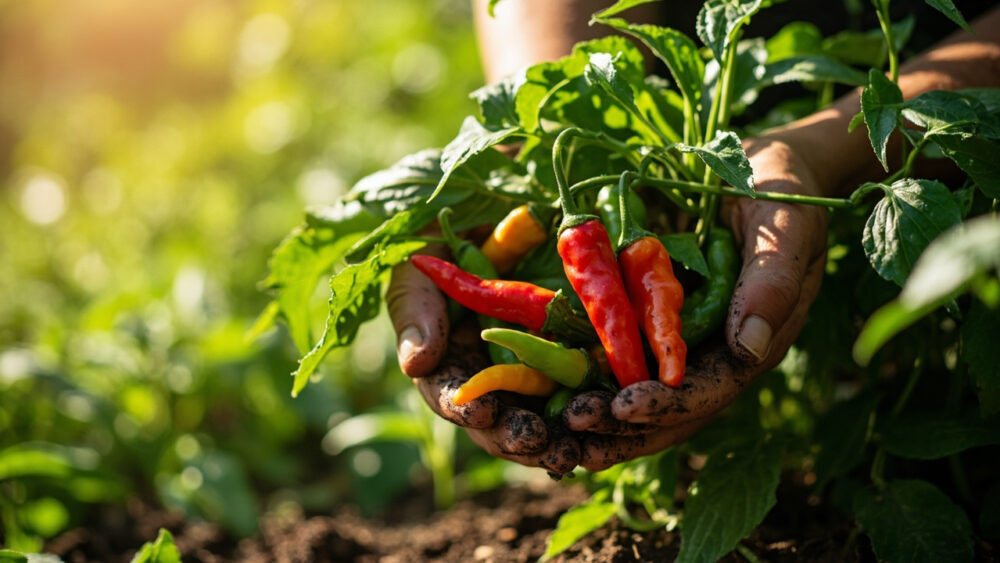
Growing serrano peppers means giving them warm soil, full sun, and a long runway to mature, usually 75 to 90 days from transplant to first harvest. They need soil at least 65 to 70°F to root well, so most gardeners start seed indoors 8 to 10 weeks before their last frost and set out transplants only after nights stay reliably above 55°F. Get that timing right and the rest is mostly patience.
Here is what trips people up. Most stunted serrano plants were not sick, they were planted too early into cold soil and never recovered their stride.
The sign most people misread is a serrano that flowers heavily but drops every bloom, which everyone blames on pests when it is almost always heat stress or irregular water. And the question you are probably about to ask, how hot will these actually get, has a real answer that depends on stress and timing, not luck.
Stick with me through the growing season and you will get the full “Serrano Peppers at a Glance” card at the bottom, worth saving to your phone before you head out to the garden.
When to Plant Serrano Peppers
Serranos are tender perennials grown as annuals, and they will not tolerate any frost at all. Wait until soil temperature holds steady at 65°F or warmer, checked a couple inches down, and nighttime air temps stay above 55°F.
That usually lands 2 to 3 weeks after your last spring frost date. In cooler climates, warming the soil with black plastic or waiting an extra week costs you nothing and saves weeks of sulking transplants later.
If you’re starting from seed, sow indoors 8 to 10 weeks before that outdoor planting window, under grow lights, with a heat mat holding soil around 80°F for fastest germination. Zone 9 and warmer can often get a fall crop too, started in mid to late summer.
Rushing this step is the single most common reason a serrano plant never catches up all season.
Choosing the Spot and Prepping the Soil
Serranos want at least 6 to 8 hours of direct sun and soil that drains well but holds a little moisture. Heavy clay or soggy low spots will rot the roots before the plant ever sets fruit.
Work in 2 to 3 inches of compost before planting, and aim for a soil pH between 6.0 and 6.8. If your soil is thin or sandy, raised beds or large containers, 5-gallon minimum, give you more control over moisture and warmth.
Avoid planting where tomatoes, potatoes, or other peppers grew the previous year. Shared soilborne diseases build up fast in that family.
Good soil prep now means less firefighting with fertilizer and disease later in the season.
Planting Serrano Peppers Step by Step
Hardening Off
Before transplanting, spend 5 to 7 days acclimating seedlings outdoors, starting with an hour in filtered shade and building up to a full day of sun. Skip this and you’ll see bleached, scorched leaves within days of transplanting.
Depth and Spacing
Set transplants at the same depth they were growing in their pots, or up to an inch deeper if they’ve gotten leggy. Space plants 18 to 24 inches apart in rows 24 to 30 inches apart, giving each one room for airflow.
Technique
Water the transplant well an hour before moving it, to reduce shock. Backfill gently, water in immediately, and add 2 inches of mulch around the base, keeping it an inch away from the stem itself.
Once they’re in the ground, the plant’s needs shift from surviving the move to actually producing.
Watering and Feeding Through the Season
Serranos want consistent moisture, roughly 1 to 1.5 inches of water a week, delivered steadily rather than in one soaking. If you assumed more water always fixes a struggling pepper plant, that habit is exactly what causes root rot and blossom drop in wet years.
Check soil an inch or two down. If it’s dry there, water. If it’s still damp, wait.
Feed lightly at planting with a balanced fertilizer, then switch to something lower in nitrogen and higher in phosphorus and potassium once flowering starts. Too much nitrogen late in the season buys you a bushy plant with few peppers.
Now for that flower drop everyone blames on bugs.
The Problems Most Likely to Strike
Blossom drop is usually caused by temperature swings, daytime highs above 90°F or nights below 60°F, or by inconsistent watering, not pests. There’s no fix beyond stabilizing conditions and waiting for a cooler stretch, mulch and steady watering help most.
Aphids and spider mites show up in hot, dry weeks and cluster on new growth and leaf undersides. A strong water spray knocks most off, and insecticidal soap applied per the label handles the rest.
Blossom end rot, dark sunken patches on the fruit, comes from inconsistent calcium uptake, almost always tied to uneven watering rather than a soil calcium shortage. Even watering solves it more reliably than added calcium products.
Watch for leaf curling and yellowing that doesn’t respond to watering, which can signal a virus spread by aphids. There is no cure for a viral infection. Remove and discard the affected plant rather than composting it, to protect the rest of your patch.
Handle the environment well and most of this never becomes a real problem, which brings us to the part everyone’s waiting for.
When and How to Harvest Serrano Peppers
Serranos are ready to pick 75 to 90 days after transplanting, once they reach 2 to 4 inches long and turn firm and glossy. You can harvest them green for a brighter, grassier heat, or wait for them to ripen to red, orange, or brown for a fruitier flavor and noticeably more heat.
Use scissors or pruning snips rather than pulling by hand, since yanking can tear the branch and set the plant back. Peppers snap off easily with a clean angled cut just above the cap.
Regular picking, every few days once fruiting starts, actually pushes the plant to set more flowers. Letting fruit sit and fully ripen on the vine slows down new production.
Serranos carry real heat, generally 10,000 to 23,000 Scoville units, hotter than a jalapeño, so handle them with gloves if your skin is sensitive, and never touch your eyes after cutting one open.
Here’s everything you just read, condensed to what actually matters at planting time.
Serrano Peppers at a Glance
- When to plant: 2 to 3 weeks after last frost, once soil holds at 65°F or warmer and nights stay above 55°F.
- Spacing and depth: 18 to 24 inches apart, planted at the same depth as the nursery pot or slightly deeper.
- Sun and soil: 6 to 8 hours direct sun, well drained soil with 2 to 3 inches of compost worked in, pH 6.0 to 6.8.
- Watering: 1 to 1.5 inches per week, steady rather than heavy and infrequent, checked by feel an inch down.
- Feeding: balanced fertilizer at planting, then lower nitrogen once flowers appear.
- Days to harvest: 75 to 90 days from transplant, picked at 2 to 4 inches long, firm and glossy.
- Heat level: roughly 10,000 to 23,000 Scoville units, hotter than jalapeño, handle with gloves if sensitive.
Get the timing and water right and serranos mostly grow themselves. Everything else on this list is just protecting that steady, unstressed growth.