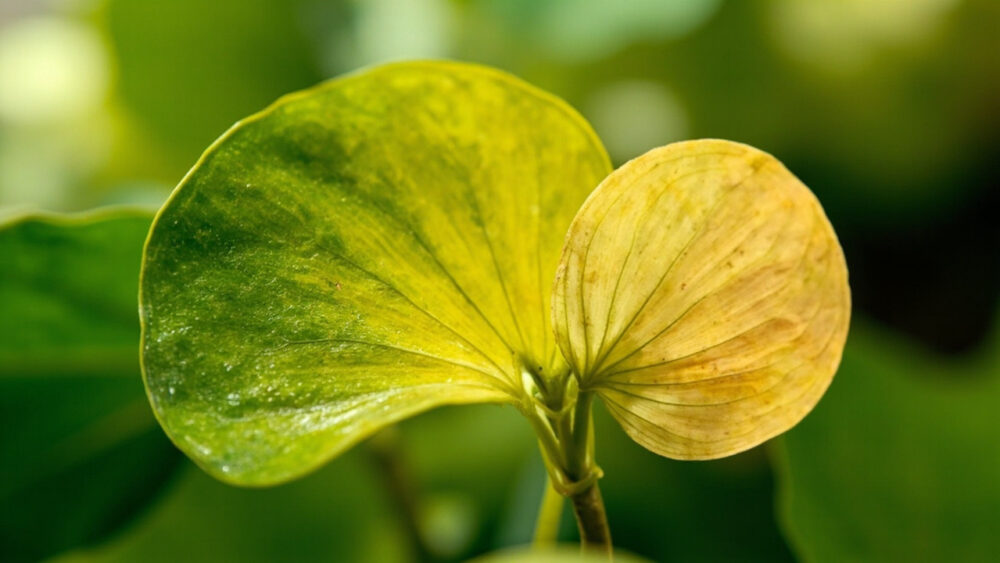
Nine times out of ten, a yellowing pothos means overwatering, specifically roots sitting in soggy soil that’s suffocating and starting to rot. The fix is to stop watering on a schedule, let the pot get properly light before you water again, and check the roots if more than a leaf or two has gone yellow. That’s the short answer.
But there’s a wrinkle. Most people blame low light the second they see yellow, and low light is almost never the actual cause, it just makes an already-stressed plant show symptoms faster. The real tell is not the color itself but exactly where on the vine it’s happening and whether the yellow leaf is soft and mushy or dry and thin, and that one detail points you straight at the cause.
Below is every real cause ranked by how often it’s the culprit, how to confirm each one in about thirty seconds, the honest odds your pothos bounces back, and the save-able diagnosis checklist at the very bottom you can run right now standing next to the plant.
Most Likely Causes, Ranked
1. Overwatering and root rot
Confirm it: pull the plant from its pot. Roots should be firm and light tan to white. Black, brown, or mushy roots with a sour smell mean rot. Soil that’s been wet for days and never dried an inch down is the giveaway even before you check roots.
Yellow leaves from this cause tend to feel soft, sometimes almost translucent, and often show up on older, lower leaves first, though a bad enough case yellows leaves anywhere.
Fix it: trim off any black or mushy roots with clean scissors, repot into fresh, fast-draining potting mix, and size the new pot only slightly larger than the root ball. Water only when the top 1 to 2 inches of soil are dry.
Get the roots right and everything else about care gets easier to judge.
2. Underwatering
Confirm it: soil is pulling away from the pot’s edges, feels bone dry more than an inch down, and leaves are yellow but crispy or curling at the edges rather than limp.
This one is easy to fix and easy to over-correct, so don’t panic-water it back to soggy.
Fix it: water thoroughly until it runs from the drainage holes, let the excess drain fully, and go back to checking soil with your finger every 5 to 7 days rather than watching the calendar.
If the soil test doesn’t match either of these, the cause is probably about light, not water at all.
3. Too much direct sun
Confirm it: yellowing shows up on the leaves facing the window, often with bleached, papery patches rather than uniform color loss, and it’s usually the newer growth closest to the glass.
Pothos naturally lives under a forest canopy, so several hours of direct summer sun through an unfiltered window will scorch it.
Fix it: move the plant a few feet back from the window or filter the light with a sheer curtain. Bright, indirect light is the target, not full sun and not a dim corner either.
Light problems are common, but there’s a more common one that gets skipped entirely.
4. Normal old-leaf shedding
Confirm it: only one or two of the oldest leaves near the base or bottom of a long vine have gone yellow, the rest of the plant looks full and healthy, and it’s happening slowly, not all at once.
This is not a problem. Pothos sheds its oldest leaves as it grows new ones, the same way any plant renews itself.
Fix it: just snip the yellow leaf off at the stem. No watering change, no repotting, nothing to correct.
If more than a couple of leaves are involved, or new growth is affected too, keep looking further down this list.
5. Nutrient deficiency
Confirm it: the plant hasn’t been fed in 6 months or more, it’s been in the same soil for over a year, and yellowing appears as a general pale, washed-out look across older leaves rather than sharp edges or mushiness.
This is a slow-motion cause, so it’s usually paired with a plant that’s stopped putting out new leaves too.
Fix it: feed with a balanced houseplant fertilizer at quarter to half strength during active growth, roughly every 4 to 6 weeks, and consider fresh soil if it’s been more than a year since repotting.
Cold air is the last common cause, and it’s the one most people never think to check.
6. Cold drafts or temperature swings
Confirm it: the pot sits near an exterior door, a drafty window, or an AC vent, and yellowing appeared suddenly after a cold snap or a blast of air conditioning, often with some leaf droop alongside the color change.
Pothos is a tropical plant and sulks hard below about 50°F, even briefly.
Fix it: relocate away from drafts and keep it in a spot that stays above 60°F consistently. Damaged leaves won’t green back up, but new growth will be fine once the temperature stabilizes.
Once you’ve got a suspect, the next step is confirming it against the others so you don’t guess wrong.
How to Tell the Causes Apart
Location on the plant is your fastest clue. Old, lower leaves going yellow points to overwatering, underwatering, natural shedding, or nutrient deficiency. New growth or leaves near a window going yellow points to sun scorch or cold drafts.
Leaf texture narrows it further. Soft, mushy, or translucent yellow means water and roots. Crispy, dry, or curled yellow means underwatering or too much sun.
Speed and pattern matter too. One or two leaves slowly over weeks is normal shedding. Many leaves at once, or yellowing spreading fast, means water stress or root rot and needs action today.
Once you know which bucket you’re in, the next honest question is whether the plant actually comes back from it.
Will It Recover?
Overwatering without rot recovers fully within a few weeks once watering is corrected. If rot has taken more than half the roots, recovery is possible but slow, and severe cases sometimes don’t make it, so don’t be surprised if you lose the plant even after a good repot.
Underwatering almost always bounces back fast, often within a week of consistent watering, since the roots usually aren’t damaged.
Sun scorch and cold damage are permanent on the leaves already affected, they will not turn green again, but new growth comes in normal once you fix the location.
Nutrient deficiency resolves over a month or two of regular feeding, and existing yellow leaves can be trimmed off rather than waited out.
Natural shedding was never a problem to begin with.
Whichever cause you’re dealing with, a few habits keep you from doing this diagnosis again next season.
How to Keep It From Happening Again
Water by feel, not by schedule. Stick a finger 1 to 2 inches into the soil before every watering and only water when it’s dry at that depth.
Use a pot with drainage holes, always, and a potting mix that drains freely rather than staying soggy for days.
Match the light to the plant, bright indirect light, a few feet back from strong direct sun, and away from cold glass in winter.
Feed lightly during spring and summer and repot every 1 to 2 years as roots fill the pot.
Get those four things consistent and yellow leaves become rare instead of routine.
Diagnosis Checklist
- Check the soil 2 inches down: if wet and heavy, suspect overwatering, if bone dry, suspect underwatering.
- Pull the plant and inspect the roots: firm and tan is healthy, black and mushy means rot, repot immediately.
- Note where the yellow leaves are: old and lower means water, nutrients, or normal aging, new and near the window means sun or cold.
- Feel the yellow leaf itself: soft and mushy points to water and roots, dry and crispy points to sun or underwatering.
- Count affected leaves: one or two slowly over weeks is normal shedding, many at once needs immediate action.
- Check the plant’s location: within a few feet of direct sun, a cold window, or an AC vent is a strong clue on its own.
- Recall your last feeding: if it’s been over 6 months with no fertilizer, add nutrient deficiency to your list.
- Match your findings to the cause above and apply that fix today, not next week.
Yellow leaves are pothos telling you something specific, not a random sign of doom.
Read the leaf, check the roots, and you’ll almost always know exactly what to do next.