The right time to prune oakleaf hydrangeas is right after they finish flowering, typically mid to late summer, before late July or so in most zones. Prune any later and you risk cutting into next year’s flower buds, which form on old wood by late summer and sit dormant through winter. Prune in late winter or early spring like you would a panicle or smooth hydrangea, and you will get a tidy shrub with almost no blooms.
That timing rule trips up more gardeners than any other part of hydrangea care, and it is the reason so many oakleafs sit there green and leafy with nothing to show for it come June. There is also a second mistake that costs people just as many flowers, one that has nothing to do with the calendar and everything to do with where on the plant you actually make the cut.
Stick around and you will get the exact window, the tool prep that matters more than people think, a step by step for where to cut and how much to remove, and what a freshly pruned oakleaf looks like the following spring so you know it worked. There’s an at-a-glance card at the bottom you can save to your phone before you walk out to the shrub.
When to Prune, and the Window You Actually Have
Oakleaf hydrangeas bloom on old woodmeaning the flower buds for next year form during the current growing season, usually by late summer to early fall. That gives you a narrow window right after flowering, generally within four to six weeks of the blooms fading, to do any real shaping.
Miss that window and the buds have already set. Cut after that and you are removing next year’s flowers along with this year’s stems.
If your region gets hard frosts, aim to finish major cuts a good six to eight weeks before your first expected frost. That gives new growth time to harden off before cold weather hits.
Light, minor cleanup, dead stems, broken branches, spent flower heads, can happen almost any time without costing you blooms.
Get the timing wrong once and you will spend a whole season staring at a leafy shrub wondering where the flowers went.
The One Prep Step Most People Skip
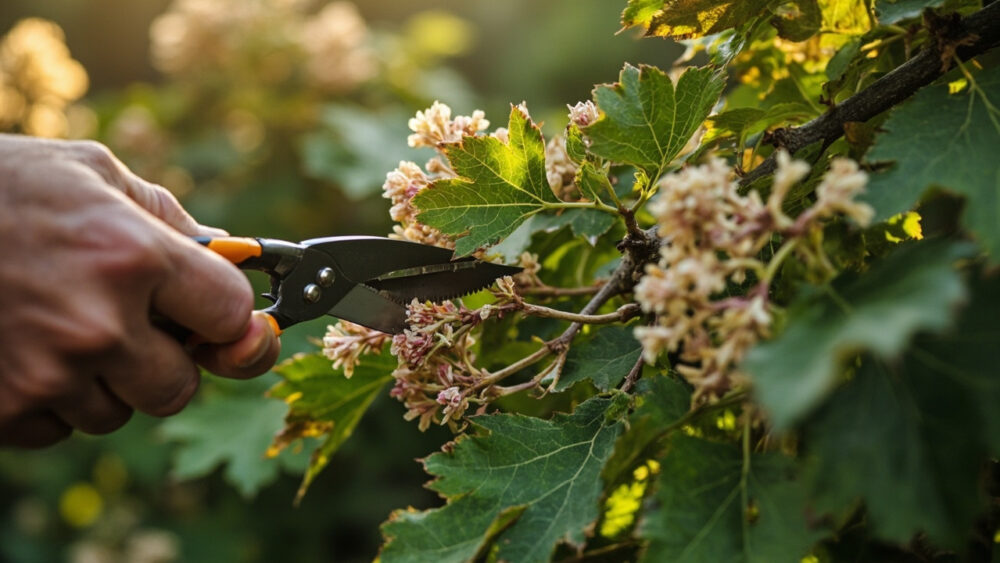
You need bypass pruners for anything pencil-thick or smaller, and loppers for anything thicker at the base of an old, overgrown plant. Clean the blades first. Wipe them with rubbing alcohol or a disinfecting wipe before you start, especially if you’ve used them on any other shrub this season.
Hydrangeas are not especially disease-prone, but stem and root diseases spread on dirty blades faster than most gardeners assume, and there is no upside to skipping a thirty-second wipe-down.
The other prep step: actually look at the plant before you cut anything. Walk around it. Identify dead wood, which will be gray, brittle, and bark-cracked, versus live wood, which bends slightly and shows green or tan under a light scratch test with your thumbnail.
Once you know what you’re looking at, the actual cutting takes ten minutes.
How to Prune an Oakleaf Hydrangea, Step by Step
Step 1: Remove the dead and damaged wood first
Cut dead, broken, or diseased stems all the way back to the ground or to a healthy junction. This alone often opens up the shrub enough that you barely need to do anything else.
Step 2: Cut spent flower heads back to the first strong bud
Just below each faded bloom you’ll find a pair of fat leaf buds. Cut about half an inch above that bud pair, at a slight angle.
This is deadheading, and it’s the safest cut on the plant since you’re removing spent flowers, not future ones.
Step 3: Shape lightly, not hard
Take no more than a quarter to a third of the plant’s total volume in any single year, even on an overgrown shrub. Oakleafs do not respond well to hard rejuvenation pruning the way some shrubs do; whack one back by half and you’ll get a slow, sulky recovery over two or three seasons.
If you assumed a badly overgrown plant needs one big hard cut to fix it, that’s the instinct to resist here.
Stagger the correction over two or three years instead, taking a modest amount each time right after bloom.
Step 4: Thin from the base on mature plants
Every few years, remove one or two of the oldest, thickest stems at ground level to encourage fresh growth from the crown. This keeps an established oakleaf from turning into a woody, hollow-centered mess over a decade of neglect.
Once you’ve made your cuts, the plant needs a little patience, and that’s where expectations usually go sideways.
What to Expect in the Weeks and Months After
Right after a proper post-bloom prune, you’ll likely see minimal visible change for a few weeks. The shrub is putting energy into setting next year’s buds along the remaining stems, not into new top growth.
By fall, the exposed cinnamon-colored bark on older stems becomes more visible, which is a nice bonus of oakleaf hydrangeas and one reason not to over-thin a mature plant that’s developed good winter structure.
The following springexpect the leaf buds you pruned above to push out first, followed by flower buds a bit later. If you pruned within the right window and didn’t overdo it, you should see a normal to full bloom set.
A plant that was pruned too late, or too hard, will leaf out fine but bloom sparsely or not at all. That’s not a disease and not a sign the plant is dying; it simply lost its buds for that one year.
Which brings us to the mistakes worth naming plainly, because most of them are avoidable and cost you a full season each time.
The Mistakes That Cost You a Season of Blooms
- Pruning in late winter or early spring: this is the single most common mistake, and it removes the dormant buds that were going to become this year’s flowers.
- Cutting too hard in one year: oakleafs recover slowly from severe cuts, sometimes taking two to three seasons to bloom normally again.
- Confusing it with panicle or smooth hydrangeas: those bloom on new wood and get pruned in late winter. Oakleaf rules are the opposite, and mixing up the advice is an easy trap.
- Shearing it into a ball: oakleaf hydrangeas have a naturally loose, upright habit and large leaves. Hedge shears ruin both the shape and the bud count.
- Pruning stressed or newly planted shrubs hard: give a plant its first full year in the ground before doing anything beyond light deadheading and dead-wood removal.
Get the timing and the restraint right, and this becomes one of the easiest hydrangeas to keep looking good year after year.
Oakleaf Hydrangeas at a Glance
- When to prune: right after flowering fades, typically mid to late summer, and finished at least six to eight weeks before your first fall frost.
- When not to prune: late winter or early spring, since that removes the dormant flower buds already set for the coming season.
- How much to remove: no more than a quarter to a third of total volume in any one year.
- Where to cut: spent blooms back to the first strong bud pair below the flower, dead wood back to the ground or a healthy junction.
- Tools needed: bypass pruners for thin stems, loppers for thick old wood, blades wiped down with rubbing alcohol before you start.
- First year in the ground: skip hard pruning entirely, just remove dead or broken stems.
- Mature plant upkeep: thin one or two of the oldest stems at the base every few years to refresh growth.
If you remember one thing, remember this: prune right after the flowers fade, not in spring.
Everything else on this list is refinement, that single timing rule is what actually saves your blooms.