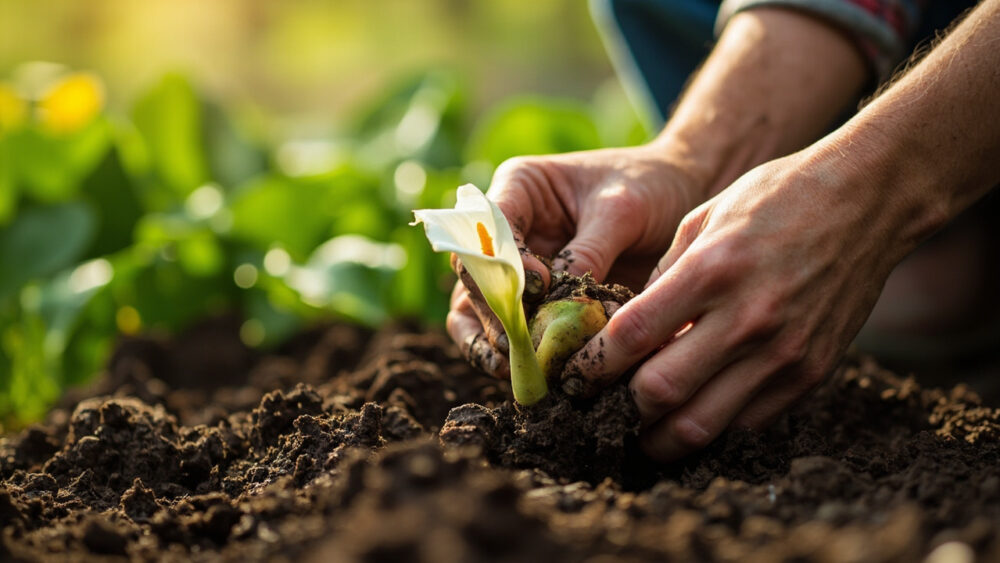
The window for planting calla lilies opens two to three weeks after your last frost date, once the soil has warmed to at least 60°F, and it stays open for roughly four to six weeks after that. Plant the rhizomes too early into cold, wet soil and they rot before they ever sprout. That single mistake, jumping the gun because the garden centers stocked them in early spring, is what kills more calla lily attempts than any pest or disease ever will.
There is also a sign most people misread completely once the plant is up and growing, and it has nothing to do with yellow leaves. And if you are wondering whether you can still plant now, mid-season, there is an honest answer to that too, not just a hopeful one.
Stick with me through the how-to-tell-your-yard section and the too-early/too-late breakdown below, because the save-and-forget Calla Lilies at a Glance card is waiting at the bottom with every number in one place.
The Real Planting Window, Anchored to Frost and Soil
Calla lily rhizomes are tropical natives at heart, even though they have naturalized into plenty of temperate gardens. They will not tolerate frost, and they resent cold soil almost as much.
The rule of thumb is two to three weeks after your average last frost date, once soil temperature at planting depth is consistently 60°F or warmer. In much of the country that lands somewhere in mid to late spring, but the calendar date matters far less than what the soil is actually doing.
If you garden somewhere with a long, warm growing season, you have flexibility that colder-climate gardeners do not. Everyone else is working with a firmer window.
Knowing the target is one thing. Reading your own yard is a different skill, and it is the one that actually keeps rhizomes alive.
How to Tell Your Actual Window, Not the Textbook One
Forget the calendar for a minute. Push a soil thermometer four inches down in the bed where you plan to plant. Do this in the morning, several days in a row, not once after an unusually warm afternoon.
You want a steady reading of 60°F or higher, not a fluke. Soil that swings from 50 to 65 and back down again is still too unstable for a rhizome that will sit dormant in the ground for a week or two before it shows any growth.
Feel matters too. Squeeze a handful. It should crumble, not compress into a mudball. Calla rhizomes planted into soggy soil rot from the outside in, and you will not see it happening until the leaves that should have emerged simply never do.
South-facing beds against a wall, raised beds, and anything with sandy drainage will hit that 60°F mark days to weeks before an open, low-lying, clay-heavy spot. Test the actual bed, not the general neighborhood.
Once your soil reading is right, the timing question turns into a different one: what actually goes wrong if you get it wrong.
What Happens If You Plant Too Early
Too early is the costlier mistake by far. A rhizome sitting in cold, damp soil does not just wait patiently for warmth. It sits there absorbing moisture it cannot use, and rot sets in at the base before a single root forms.
You will not know this happened for two or three weeks. You will just notice nothing came up, dig to check, and find a soft, mushy, foul-smelling rhizome where a firm one used to be. There is no reviving that. It is a start-over situation, not a wait-and-see one.
This is the honest answer to the follow-up question a lot of readers are already forming: no, a calla lily rhizome planted too early does not just “sit tight” until conditions improve. Cold wet soil is actively hostile to it, not neutral.
Late planting has consequences too, just gentler ones.
What Happens If You Plant Too Late
If you assumed a late planting mostly costs you a few weeks of bloom time, that guess is only half right. It costs you bloom time, yes, but it can also cost you blooms entirely in shorter-season climates.
Calla lilies take roughly 60 to 90 days from planting to first flower depending on variety and conditions. Push planting into early summer in a region with a short season, and the plant may spend its whole first year just building foliage and rhizome mass with no flowers at all.
That is not a failure, exactly. The plant is still alive and building strength for next year. But if you clicked this article hoping for a summer full of blooms, a very late planting date is the honest reason that might not happen this season.
The sign everyone misreads once the plant is finally growing is slow, stalled top growth in the first two to three weeks. Most people assume that means the plant is dying or needs water. It almost always just means the soil is still on the cool side of ideal, and growth will pick up once it warms further. Resist the urge to drown it in sympathy watering.
Getting the timing right matters less if the ground itself is not ready, so let’s fix that next.
Prep to Do Before the Window Opens
Do this work while you are still waiting on soil temperature, not the week you plant.
- Work the bed: loosen soil 8 to 10 inches deep and mix in a couple inches of compost. Calla lilies want rich, well-drained soil, and heavy clay left unamended is a rot risk regardless of timing.
- Check drainage: dig a hole a foot deep, fill it with water, and see how fast it drains. If water is still standing after an hour, raise the bed or pick a different spot.
- Inspect the rhizomes: firm and plump is good. Soft, moldy, or shriveled rhizomes will not turn into good plants no matter how well you time the planting.
- Pre-sprout indoors if your season is short: pot rhizomes in slightly damp potting mix indoors 4 to 6 weeks before your outdoor window, then transplant once soil warms. This buys real time in cold-summer climates.
Plant rhizomes pointed side up, 4 inches deep, spaced 12 to 18 inches apart depending on variety size. Water in once at planting, then hold off until you see growth, since the soil should stay just barely moist, not saturated, during that dormant stretch.
Prep done, timing understood, there is still one more variable worth naming plainly: where you actually garden.
Zone and Region Notes That Actually Change the Plan
Calla lilies are reliably winter-hardy outdoors roughly in USDA zones 8 through 10. In those zones, rhizomes can often stay in the ground year-round, and the “planting window” mostly matters for new plantings or divisions.
In zones 7 and colder, calla lilies are grown as annuals or lifted and stored over winter like dahlias. Your outdoor planting window is tighter and later, since the ground takes longer to warm and any frost risk in fall means digging rhizomes up before the first hard freeze.
Hot, dry-summer climates need the opposite adjustment. Plant into partial afternoon shade rather than full baking sun, and expect to water more often once temperatures climb, since calla lilies are thirstier than their elegant, drought-tolerant looks suggest.
One more honest note before the recap: calla lilies (Zantedeschia) are toxic to dogs, cats, and people if chewed or eaten, due to calcium oxalate crystals in the plant tissue. Signs of exposure include mouth irritation, drooling, and swelling. If you suspect a pet or child has eaten any part of the plant, contact a veterinarian or poison control right away rather than waiting to see what happens.
All of that adds up to one simple card worth keeping on your phone this weekend.
Calla Lilies at a Glance
- When to plant: two to three weeks after your last frost, once soil is consistently 60°F or warmer.
- Planting depth and spacing: rhizomes 4 inches deep, pointed side up, spaced 12 to 18 inches apart.
- Soil check: should crumble in your hand, not compress into mud, with drainage that clears standing water within an hour.
- Time to bloom: roughly 60 to 90 days from planting, depending on variety and conditions.
- Biggest mistake: planting too early into cold, wet soil, which rots the rhizome before it sprouts.
- Hardiness: reliably perennial outdoors in zones 8 through 10, grown as an annual or lifted for winter storage in zone 7 and colder.
- Toxicity: toxic to pets and people if ingested, contact a veterinarian or poison control for any suspected exposure.
Get the soil temperature right and everything else about calla lilies falls into place on its own.
When in doubt, wait one more week for the soil, not the calendar.