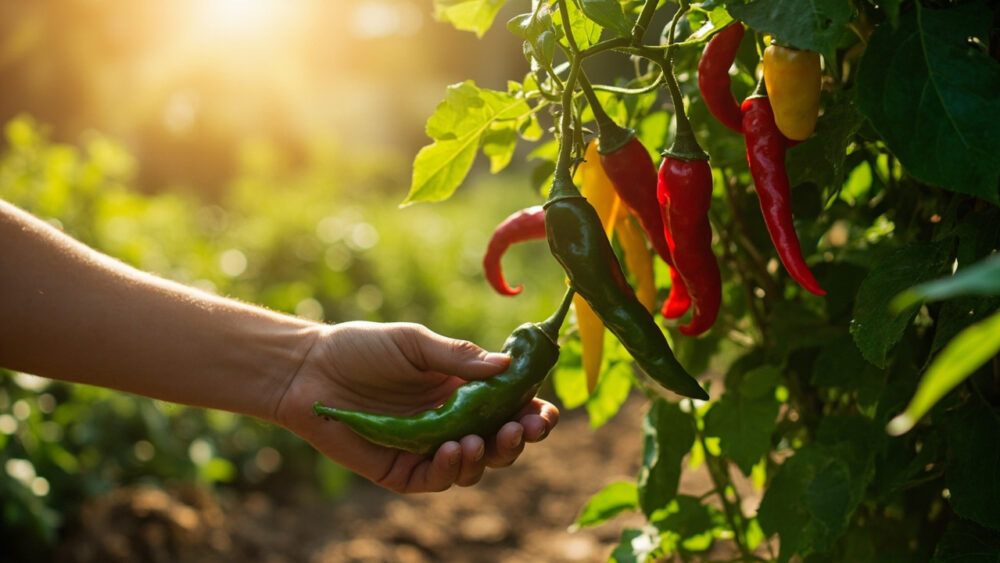
The short answer: pick serrano peppers when they’re firm, glossy, and at least 2 to 3 inches long, usually 65 to 75 days after transplanting. You can harvest them green for a sharper, grassier heat, or leave them another 2 to 3 weeks to turn red or orange for a sweeter, hotter pepper. Both are correctly timed harvests, they just taste different.
Most people ruin their first serrano harvest in one of two ways: they yank pods off and tear the branch, or they wait for the pepper to look like a store-bought jalapeno and let half the plant go to waste on the vine. There’s also a color myth that trips up a lot of new growers, and it’s not the one you’d expect.
Stick around, because the timing window, the exact hand motion that protects the plant, and the storage mistake that turns a good harvest to mush in three days are all coming up. There’s a save-able Serrano Peppers at a Glance card at the very bottom with every number in one place.
The Real Ready Signs
Size and firmness
A serrano pepper is ready once it hits 2 to 4 inches long and about half an inch thick, and it should feel firm and snap-crisp, not soft or rubbery. Give one a gentle squeeze. If it dents like a ripe tomato, it’s overripe and heading toward mushy.
Skin and sheen
Ready pods have tight, glossy skin. If you see fine white streaking or a slightly wrinkled surface, that’s not damage, that’s usually a sign the pepper is a few days past its prime, still edible but losing crunch fast.
Firmness tells you more than color ever will.
The Color Myth Everyone Falls For
If you assumed a serrano has to turn red before it’s “really” ripe, that guess costs a lot of growers their whole harvest window. Serranos are fully mature and full flavored while still green, the same way a bell pepper is edible green even though it’ll eventually blush red if left alone.
Green serranos have a brighter, more vegetal heat. Red or orange serranos, left on the plant an extra 2 to 3 weeks past green-ripe, convert more of their capsaicin and sugars, so they taste hotter and slightly sweeter. Neither is more “done” than the other, it’s a flavor choice, not a maturity requirement.
What actually happens if you leave it on too long is the part nobody warns you about.
The Timing Window, and What Early or Late Costs You
Too early (under 2 inches, thin walls, dull skin) means a pepper with almost no heat and a bitter, unfinished flavor. It also signals the plant to keep pouring energy into that pod instead of setting new flowers.
Too late is the costlier mistake. Left on the plant past red-ripe, serranos start to soften, the skin can split, and the plant reads a fully mature, seed-filled pod as “job done” and slows down flowering elsewhere.
The honest tradeoff: a plant left to fully ripen a few pods to red will generally produce fewer total peppers over the season than one picked steadily while green. If you want maximum yield, harvest young and often. If you want a handful of hotter, sweeter red serranos for a specific recipe, let a few pods ride it out and pick the rest green as usual.
That tradeoff is exactly why harvest technique matters more than people think.
How to Harvest Without Wrecking the Plant
Serrano branches are brittle, and pulling on a pod is the single most common way people snap a stem or strip next season’s flower buds along with it.
- Hold the stem, not the pepper. Pinch the thin stem about a quarter inch above the pod with your thumbnail and forefinger.
- Snap or snip cleanly. A quick twist-and-pull works on younger plants, but garden snips or scissors are safer once the plant is loaded with pods and the stems get woody.
- Support the branch with your other hand so the weight of your pull doesn’t bend or crack it.
- Harvest in the cool part of the day, morning or evening, when the pods are firmest and the plant is least stressed.
Get this part right and the plant keeps flowering instead of sulking for a week.
Right After You Pick: What to Do in the First Hour
Sort as you go. Set aside any pods with soft spots, splits, or insect holes to use first, they won’t hold.
Skip the wash until you’re ready to use them. Rinsing peppers before storage traps moisture against the skin and speeds up rot, which is the storage mistake that turns a good haul to mush in a few days.
Store unwashed serranos loose in a perforated bag or open container in the crisper drawer. They’ll hold firm for 1 to 2 weeks that way.
If you picked more than you can eat this week, curing and preserving is where the real payoff is.
Keeping the Harvest Coming, and What to Do With Extra
Pick often to keep production up. Checking plants every 2 to 3 days and harvesting anything at size, rather than letting pods stack up, is what pushes a serrano plant to keep flowering through summer into early fall.
For a glut, you’ve got real options beyond the fridge:
- Freezing: whole or sliced, straight into a freezer bag, no blanching needed.
- Drying: string whole red pods and hang them somewhere dry and airy, or use a dehydrator on a low setting.
- Pickling or fermenting: a classic move for a heavy serrano year and it keeps the heat for months.
All of that only works, though, if you knew what you were looking for in the first place, which is exactly what the card below is for.
Serrano Peppers at a Glance
- When to plant: set transplants out 2 to 3 weeks after your last frost, once nighttime temps stay above 55°F and soil is at least 65°F.
- Days to first harvest: 65 to 75 days from transplant, or 25 to 35 days after the plant starts flowering.
- Ready size: 2 to 4 inches long, firm and glossy, no wrinkling or dents.
- Color choice: pick green for a brighter, milder heat, or leave 2 to 3 more weeks for red or orange, hotter and slightly sweeter.
- How to pick: pinch or snip the stem just above the pod, never pull the pepper itself.
- Storage: unwashed, in a perforated bag in the crisper, lasts 1 to 2 weeks; freeze, dry, or pickle for longer.
- Keep it producing: harvest every 2 to 3 days, don’t let pods sit and fully ripen unless that’s the flavor you want.
Firmness and size tell you when, your taste tells you what color. Pick regularly, handle the stem not the pod, and the plant will keep feeding you until frost shuts it down.