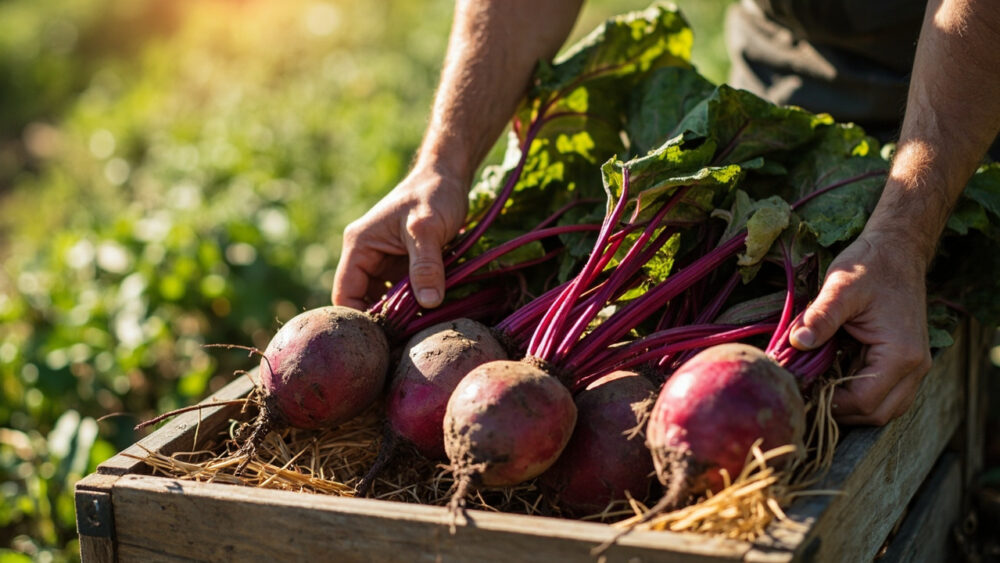
The right way to store beets is also the simplest: cut the tops off, leave the roots unwashed, and pack them loose in damp sand or in a perforated bag in the fridge, where they will hold for two to five months. Skip that step and treat beets like a tomato you just leave on the counter, and you will get a soft, rubbery root inside two weeks. How to store beets really comes down to one decision made at harvest, not something you fix later.
Most people ruin a batch before it ever sees the crisper drawer. There is a specific mistake, almost everyone makes it once, and it has to do with what you do to the leafy tops the moment you pull the roots.
There is also a sign of spoilage that looks harmless at first and fools people every year. And if you are wondering whether canning or freezing beats the fridge for the long haul, the honest answer is not what most guides tell you. Stick around for the full breakdown, plus a save-able Beets at a Glance card at the very bottom with every number in one place.
The Mistake That Ruins Most Beets Before Storage Even Starts
Here is the mistake: leaving the greens attached. Beet tops keep pulling moisture out of the root even after harvest, and a beet that loses its moisture goes limp and leathery fast.
Twist or cut the greens off within an hour of pulling the roots, leaving about half an inch of stem. Don’t cut into the root itself, a fresh wound there is an invitation for rot.
The greens themselves are good eating, sauteed like chard, but they need their own separate, quick trip to the fridge in a bag, used within a few days.
Get the tops off fast and you have already solved the problem that kills most people’s beets.
The Best Way to Store Beets Long Term
For beets you want to keep for months, not days, sand storage in a cool basement or root cellar is the classic method and it still works better than anything else. Layer trimmed, unwashed beets in a box of slightly damp sand, sawdust, or peat moss, roots not touching each other, and keep the box somewhere around 32 to 40 F with high humidity.
Done right, beets stored this way hold for four to five months, sometimes longer.
No root cellar is not a dealbreaker. A perforated plastic bag in the crisper drawer of a regular fridge, set as cold and humid as it goes, gets you two to three months, which covers most home gardeners just fine.
Either way, the setup takes ten minutes and the payoff is beets in March that still taste like beets.
Do You Wash Beets Before Storing Them
No, and this is where a lot of well-meaning people go wrong. If you assumed a good rinse before storage keeps things clean, that instinct is backwards here.
Washing beets before storage introduces moisture to the skin, and that moisture is exactly what invites mold and soft rot in storage. Field dirt, brushed off gently by hand, is protective, not dirty in the way that matters.
Save the wash for the day you actually plan to cook them. A quick scrub under running water right before peeling or roasting is all they need, and by then a little rot risk does not matter anymore.
Get the dirt-versus-clean instinct backwards and you will wonder why your “clean” beets went slimy in half the time.
How Long Beets Actually Keep, Method by Method
The timeline changes a lot depending on where you put them, so match the method to how soon you will eat them.
- Counter, tops removed: only about 5 to 7 days before they start softening.
- Fridge, unwashed in a perforated bag: 2 to 3 months, sometimes a bit more in a very cold, humid crisper.
- Damp sand in a cool cellar, 32 to 40 F: 4 to 5 months, the best option if you grow a lot of beets.
- Cooked and refrigerated: 3 to 5 days, they do not hold as well once cooked.
- Frozen, blanched and cut: 8 to 10 months with little quality loss.
- Canned, pickled by a tested recipe: 12 to 18 months shelf stable, unopened.
Notice that raw and unblanched is never on the freezer list, and that is not an accident.
Freezing Beets Without Blanching Is the Second Big Mistake
People assume freezing is freezing, toss raw beet chunks in a bag, and end up with mushy, grayish beets six months later. Skipping the blanch is the second most common way a beet stash gets wasted.
Blanch beets first: boil whole or halved beets until just tender, 25 to 40 minutes depending on size, cool them, peel off the skins, which slip right off after cooking, then cube or slice.
Spread the pieces on a tray to freeze solid before bagging, so they do not clump into one brick.
That extra half hour at the stove is the difference between beets that taste like beets in December and beets that taste like wet cardboard.
Signs Your Stored Beets Have Turned
A beet going bad does not always announce itself with an obvious smell right away, and that is the sign that fools people.
Soft spots that give under light thumb pressure are the earliest real warning, even if the beet still looks fine on the outside. Wrinkled, shriveled skin means it has dried out and lost quality, though it is usually still safe to trim and use.
A slimy surface, a sour or fermented smell, or visible white or black fuzzy growth means it is done, into the compost it goes. Don’t taste-test a questionable beet to find out, trust the texture and smell.
One soft beet left in a bag of good ones will often take its neighbors down with it, so check the whole batch every few weeks.
Curing Beets: Do You Actually Need To
Unlike winter squash or onions, beets do not need a curing period in the sun to toughen their skin before storage. That is a step borrowed from other root crops and it does not apply here.
What beets do need is a quick air-dry, no more than an hour or two, just enough for surface moisture from harvest to evaporate before they go into sand or a bag. Leave them out longer than that, especially in sun or wind, and you are back to the moisture-loss problem that ruins texture.
So the honest answer to “should I cure my beets” is: barely, and not the way you cure a pumpkin.
Get that timing right and everything else about storage gets easier.
Storage Mistakes That Cost People a Whole Batch
- Leaving greens attached: pulls moisture from the root and shrivels it within days.
- Washing before storage: invites rot, wait until you are ready to cook.
- Storing bruised or nicked beets long term: any broken skin is a rot entry point, eat those first.
- Packing them tightly touching: one rotting beet spreads to its neighbors fast.
- Skipping the blanch before freezing: raw frozen beets turn mushy and gray.
- Storing in a warm, dry spot: beets want cold and humid, a dry pantry shelf is the wrong environment entirely.
Most of these mistakes trace back to treating beets like a shelf-stable vegetable instead of the moisture-hungry root they actually are.
Beets at a Glance
- Before storing: trim tops to half an inch, skip washing, air dry an hour, don’t cure like winter squash.
- Best short term method: perforated bag in the fridge crisper, unwashed, holds 2 to 3 months.
- Best long term method: layered in damp sand at 32 to 40 F, holds 4 to 5 months.
- Freezing: blanch 25 to 40 minutes, peel, cube, freeze on a tray first, keeps 8 to 10 months.
- Canning or pickling: use a tested recipe, shelf stable 12 to 18 months unopened.
- Signs of spoilage: soft spots under thumb pressure, slimy skin, sour smell, visible mold.
- Biggest mistakes: leaving greens on, washing before storage, skipping the blanch before freezing.
Get the tops off fast, keep them unwashed and cold, and beets will outlast almost anything else in your crisper.
Check the batch every couple of weeks and pull any soft ones before they take down the rest.