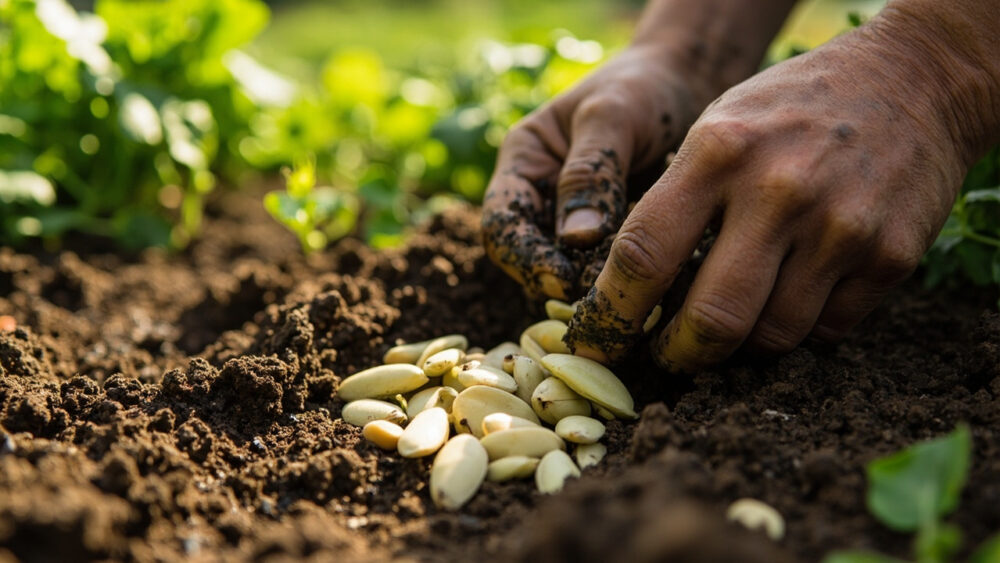
Growing lima beans from seed comes down to warm soil, patience, and not rushing the calendar. Direct sow them about 1 inch deep once soil hits at least 65 F, roughly two to three weeks after your last frost, and you will see sprouts in seven to fourteen days. Skip transplants if you can. Lima beans hate having their roots disturbed, and that single fact trips up more gardeners than anything else on this list.
There is a second mistake almost as common, and it has nothing to do with timing. It is planting them at the same depth and spacing you’d use for green beans, then wondering why half the seeds rot in the ground.
You are probably also wondering why some years lima beans load the vines with pods and other years they flower for weeks and give you almost nothing. That answer surprises most people, and it is not about fertilizer. Stick around for the Lima Beans at a Glance card at the bottom. It is the exact planting depth, spacing, timing, and troubleshooting cheat sheet worth screenshotting before you touch a trowel.
When to Start Lima Bean Seeds
Lima beans are a warm-season crop through and through, more sensitive to cold than snap beans. Direct sowing outdoors is the standard approach and the one that works best, timed for two to three weeks after your last spring frost, once nighttime lows are reliably staying above 55 F.
Soil temperature matters more than the date on the calendar. Push a thermometer 2 inches down. You want a steady 65 F or warmer, ideally closer to 70 to 75 F for the fastest, most even germination.
Starting indoors is possible in short-season climates, using biodegradable pots you can plant whole so roots are never exposed. Anywhere with a season longer than about 75 days for bush types or 90 for pole types, direct sowing is simpler and gives you a stronger plant.
Get the timing right and the next question is how deep and how far apart to actually put the seed.
Sowing Lima Beans Step by Step
This is where the spacing mistake happens. Lima bean seeds are large and the plants sprawl more than you expect, even the bush types, so crowding them costs you yield all season.
1. Prep the bed
Work compost into full-sun soil that drains well. Lima beans sulk in heavy, wet clay and are more prone to rot there than most beans.
2. Set the depth
Sow seeds 1 to 1.5 inches deep. Any shallower and they dry out before roots establish; any deeper in cool soil and they struggle to push through.
3. Space them generously
Bush varieties: 3 to 4 inches apart in rows spaced 24 to 30 inches apart. Pole varieties: 4 to 6 inches apart at the base of a trellis or pole, with rows or supports 30 to 36 inches apart.
4. Water in, then back off
Water at planting to settle soil around the seed, then let the top inch dry slightly between waterings until sprouts appear. Soggy, cold soil is the number one cause of seed rot.
Once the seed is in the ground, the waiting game starts, and this is where most people start second-guessing themselves.
Germination: What’s Normal and What’s a Warning Sign
Expect sprouts in 7 to 14 days in warm soil. In cooler soil, closer to 65 F, it can stretch to 18 days, and that is still normal, not a failure.
If nothing has emerged after three full weeks, dig up a seed. A firm, intact seed that just hasn’t cracked means keep waiting. A soft, mushy, or moldy seed means it rotted, almost always from soil that was too cold or too wet, and you should reseed that spot.
Lima beans germinate by pushing the whole seed up through the soil before the first true leaves unfold, so the sprout looks clumsy and bent at first. That is normal, not a sign of a weak plant.
Uneven germination across a row is common with lima beans specifically, more so than with snap beans, so do not panic if half your seeds are up before the rest even crack the surface.
Once seedlings are standing upright with their first true leaves, the plant’s real work begins above ground.
Hardening Off and Transplanting, If You Started Indoors
If you started seedlings indoors in biodegradable pots, this step protects weeks of work. Lima beans have thin, easily damaged roots, and a rough transplant can stall a plant for two weeks or kill it outright.
Harden off over 5 to 7 days, setting seedlings outside in a sheltered, partly shaded spot for a couple of hours the first day and adding an hour or two daily until they’re outside full time.
Transplant on an overcast day or in early evening to reduce shock, planting the entire biodegradable pot so roots are never exposed to open air. Set them at the same depth they were growing at indoors, no deeper.
Water immediately after transplanting and expect a few days of sulking leaves before new growth signals the plant has settled in.
Whether you direct sowed or transplanted, the plant’s needs from here on are the same.
Care Through the Growing Season
Lima beans want consistent moisture, about 1 inch of water a week, but they are genuinely more heat-tolerant and more drought-tolerant once established than most other beans. The plant you need to worry about is the one sitting in wet feet, not the one going a few dry days.
Pole varieties need support in place before they start climbing, ideally set at planting time so you never disturb roots later trying to jam in a trellis.
Skip high-nitrogen fertilizer. Lima beans fix their own nitrogen through root nodules, and too much nitrogen fertilizer gives you huge leafy vines and disappointing pod counts.
Mulch to keep soil temperature steady and moisture even, and watch for aphids and Mexican bean beetles. Both are manageable with regular inspection and an insecticidal soap or neem product applied according to the label.
All that vine growth is building toward one thing, and it takes longer than you’d think.
Flowering, the Real Reason Pods Don’t Set
Here is the answer to that heavy-flowers-no-pods problem, and it is not about fertilizer or pollination in most cases. Lima bean flowers drop without setting pods when daytime temperatures climb above roughly 90 F or nighttime lows stay above 70 F, especially combined with dry soil.
The plant is not broken. It is protecting itself, and pod set typically resumes once temperatures moderate.
If you assumed a lack of bees was the problem, that is the guess almost everyone makes, and it is rarely the real cause. Lima beans are self-pollinating and don’t need much insect help at all.
Keep soil evenly moist during flowering, especially through hot stretches, since drought stress at bloom time is what actually compounds the heat problem into a real yield loss.
Get through a hot spell without losing all your blooms and harvest is only a matter of weeks away.
Reaching Harvest
Bush lima beans mature in about 60 to 75 days from sowing; pole types run longer, typically 85 to 90 days. Pods are ready when they’ve filled out and feel firm, not flat, and before the pod itself turns yellow or leathery.
Pick a test pod and open it if you’re unsure. Beans should be plump and fully rounded, still green or cream depending on variety, not shriveled or hard.
Harvest regularly. Pods left too long toughen fast and the plant slows new pod production once it thinks its job is done.
For dry beans instead of fresh shelling beans, leave pods on the vine until they rattle and the pod itself has dried and browned, then shell and let the beans cure another week indoors before storage.
That is the full arc from seed to harvest, and here is the whole thing condensed for your phone.
Lima Beans at a Glance
- When to plant: direct sow two to three weeks after last frost, once soil is at least 65 F, ideally 70 to 75 F.
- Depth and spacing: 1 to 1.5 inches deep, bush types 3 to 4 inches apart in rows 24 to 30 inches apart, pole types 4 to 6 inches apart with support.
- Germination window: 7 to 14 days in warm soil, up to 18 days in cooler soil, check a dug-up seed after three weeks with no sprout.
- Water needs: about 1 inch per week, evenly moist, never soggy, especially critical during flowering.
- Fertilizer: skip high-nitrogen feeds, lima beans fix their own nitrogen and excess feeds cost you pods.
- Pod drop cause: heat above roughly 90 F daytime or 70 F nighttime, not pollination, resolves as temperatures moderate.
- Time to harvest: bush types 60 to 75 days, pole types 85 to 90 days, pods firm and plump, picked regularly.
Get the soil temperature and spacing right at planting, and lima beans mostly take care of themselves.
The only real threat after that is a bad heat wave at bloom time, and even that usually passes.