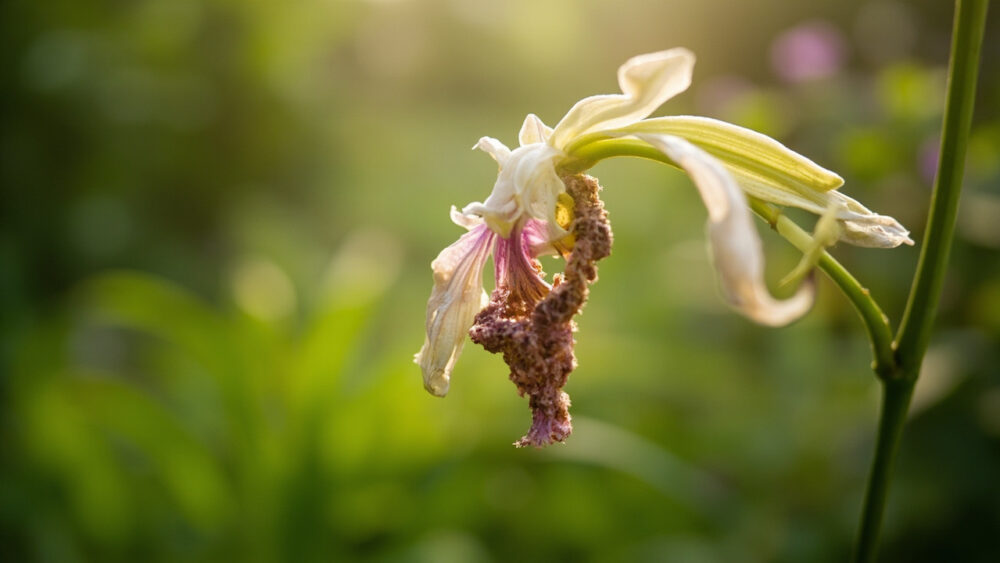
Drooping leaves or a flopping flower spike on an orchid almost always comes down to the roots, not the leaves you’re staring at. Dead or rotted roots can no longer pull up water, so the plant wilts even if you’ve been watering it faithfully, sometimes especially if you’ve been watering it faithfully. Pull the plant gently from its pot and look at the roots before you do anything else, because that single look tells you more than any amount of staring at the leaves.
Most people blame the drooping on underwatering and pour on more water, which is usually the wrong move and can finish off a plant that was already struggling with soggy, suffocated roots. The real story is almost always written in the roots and in exactly which leaves are going soft first.
By the end of this you’ll know which cause fits your plant, whether it’s coming back, and how to keep this from happening again. There’s a two-minute diagnosis checklist waiting at the bottom so you can run through it right at the plant with the pot in your hands.
Causes of Orchid Drooping, Most to Least Likely
1. Root Rot from Overwatering
This is the cause behind most drooping orchids, especially phalaenopsis grown in bark or moss that’s stayed wet too long. Confirm it by sliding the plant out of its pot and squeezing the roots. Healthy roots are firm and plump, green or white. Rotted roots are brown or black, mushy, and the outer layer slides off like a wet sock, leaving a thin wiry core.
The fix is to cut away every rotted root with clean scissors, dust the cuts with cinnamon or leave them to callus a few hours, and repot into fresh, dry orchid bark. Water only when the remaining roots and bark are fully dry.
If you’re not sure whether this is your plant, the next section will settle it fast.
2. Underwatering and Bone-Dry Roots
Less common than rot, but real, especially with orchids mounted or potted in fast-draining bark that’s gone completely dry for weeks. Confirm it by checking the roots. Healthy but thirsty roots look silvery-gray instead of green, and they’re still firm, not mushy.
The pseudobulbs (the swollen stem bases on some orchids) may look shriveled or wrinkled like a raisin instead of plump.
The fix is a thorough soak, 10 to 15 minutes in room-temperature water, then resume a regular watering rhythm, typically once a week for bark mixes when the top inch is dry, sometimes every 5 to 7 days in warm, dry rooms.
Dry roots recover fast once watered, but a different kind of neglect takes much longer to undo.
3. Temperature Shock or Cold Draft
Orchids near a drafty window, an AC vent, or an exterior door that opens to winter air often droop suddenly, sometimes overnight. Confirm it by thinking back to recent changes: a cold snap, a door left open, a plant that got moved near a vent or an unheated sunporch. The roots usually still look fine on this one, which is the tell that separates it from rot.
The fix is simply relocating the plant to a spot that stays between about 60 and 80°F, away from direct drafts and away from touching cold window glass.
Move the orchid and most of the time it perks back up within a few days, but there’s a fourth possibility that mimics this one closely.
4. Too Much Direct Sun or Heat Stress
An orchid that’s been moved to a brighter windowsill or a spot that gets hot afternoon sun can droop from leaf-level moisture loss even with healthy roots. Confirm it by checking the leaves for bleached, yellow, or reddish patches, particularly on the side facing the window, along with soil that’s actually still moist.
The fix is moving it back a foot or two from the glass or into bright, indirect light, the kind where you can comfortably read a book but the plant isn’t casting a hard-edged shadow.
Sun stress and drafts both leave the roots alone, which is exactly why root-first diagnosis matters more than leaf color.
5. Old Age on a Flower Spike (Not a Problem at All)
If it’s only the flower spike drooping and the leaves and roots look completely normal, this is often just the natural end of the bloom cycle, nothing wrong with the plant. Confirm it by checking if the flowers themselves are also fading, yellowing, or dropping, and whether this orchid has been blooming for 6 to 10 weeks already, which is a typical bloom span for phalaenopsis.
The fix is to cut the spent spike back to just above a node if you want a chance at a second bloom, or down near the base if the whole spike has yellowed.
None of that explains a wilting spike with green healthy flowers still attached, so don’t stop here if that’s what you’re seeing.
6. Fertilizer Burn or Salt Buildup
Heavy or frequent feeding without flushing can burn root tips, especially in bark mixes where salts concentrate over months. Confirm it by looking for a white or gray crust on the bark surface or pot rim, plus root tips that look burnt and brown specifically at the very ends rather than rotted throughout.
The fix is flushing the pot thoroughly with plain water, letting it run through for a full minute or two, and cutting fertilizer strength to about a quarter of what the label recommends, applied only when the plant is actively growing.
Once you’ve got a working theory, lining the causes up side by side confirms it.
How to Tell the Causes Apart
Root check first, always. Mushy brown roots mean rot. Silvery, firm, shriveled-looking roots mean drought. Normal firm green or white roots with fine, healthy leaves mean the problem is environmental, not below the soil line.
Where the drooping starts matters too. Rot tends to affect the whole plant, older leaves going soft and yellow first. Cold draft and sun stress often show up on just the side of the plant nearest the window or vent. A single drooping flower spike with everything else looking fine is usually just the bloom cycle ending.
Once you know which category you’re in, the next question is the one everyone actually wants answered.
Will It Recover?
Root rot has an honest, mixed outlook. If you caught it with at least a few healthy roots remaining, the plant usually rebounds over the next several months, though it may not rebloom for a year or more while it rebuilds its root system. If every root is mush and there’s no firm green tissue left at all, the plant is not coming back, and that’s a hard truth worth naming plainly rather than stringing along.
Dry, drafty, or sun-stressed orchids recover well, often within one to three weeks of correcting the issue.
A spent flower spike was never a problem to recover from in the first place.
Prevention is genuinely simpler than the diagnosis, and it’s where most of your success actually gets decided.
How to Keep It From Happening Again
Water by weight and root color, not by schedule. Lift the pot. A dry orchid feels noticeably light. Water thoroughly, let it drain completely, and don’t let the pot sit in standing water in a saucer or decorative cover pot.
Keep orchids away from cold glass, heating vents, and drafty doors, and give them bright, indirect light rather than harsh direct sun.
Repot every 1 to 2 years, since old bark breaks down, holds too much moisture, and stops draining the way it should.
Feed lightly and flush the pot with plain water every third or fourth watering to prevent salt buildup.
Get those habits right and you’ll rarely see this problem again, but when you do, here’s the fast way to work through it.
Diagnosis Checklist
- Slide the orchid out of its pot and look at the roots before touching the leaves.
- If roots are brown, mushy, or sliding off in a wet layer, diagnose root rot and trim to healthy tissue.
- If roots are silvery-gray, firm, and shriveled, diagnose underwatering and give a thorough soak.
- If roots look green, white, and firm, move on to checking the environment instead.
- Check for recent moves near cold windows, doors, or AC vents, and relocate if found.
- Check leaves for bleached or reddish patches facing a sunny window, and pull the plant back from direct light if present.
- Check for white or gray crust on the bark or pot rim, and flush thoroughly if you spot it.
- If only the flower spike droops and leaves and roots look normal, treat it as a finished bloom cycle, not a problem.
- Repot if the bark is dark, compacted, or breaking down, since old medium causes most of the root rot you’ll ever see.
Run through that list once and you’ll know exactly what you’re dealing with, not just guessing at it.
Fix the roots and the environment, and the leaves take care of themselves.