Repot pothos when roots start circling the pot or poking out the drainage holes, moving up just one pot size (about 2 inches wider) into fresh, well-draining mix. The best time is spring through mid-summer, while the plant is actively putting out new growth and can recover fast. Do it right and you will not touch that pot again for a year or two, but knowing how to repot pothos wrong is easy, and it is the reason so many people end up with a plant that sulks for months afterward.
Here is what almost nobody tells you upfront. The mistake that stalls most repots is not timing or soil, it is going too big, too fast. There is also a root sign everyone misreads as “needs bigger pot” when it actually means something else entirely, and a very honest answer waiting for the question you are about to ask next: how often you really need to do this at all.
Stick around to the end for the Pothos at a Glance card, the kind of thing worth saving to your phone before you forget half of it.
When Pothos Actually Needs a New Pot
Roots showing through the drainage holes or circling tightly at the surface are the real signal, not how big the leaves look. A pothos will happily vine for years in a modest pot if the roots have room to breathe.
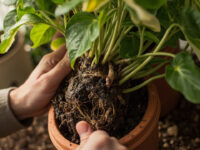
Check by sliding the plant out. If you see a dense wall of roots and barely any visible soil, it is time. If you still see soil between roots, it can wait another season.
Water running straight through without the pot feeling heavier afterward is another tell. That is the misread sign, though, and it belongs in the watering section, not here.
Get the timing right and the rest of the job gets a lot more forgiving.
Light, Placement, and Temperature
Pothos tolerates low light but grows fastest in bright, indirect light, a few feet back from an east or west window. Direct hot afternoon sun will bleach or scorch the leaves, especially variegated types like ‘Marble Queen’ or ‘Pearls and Jade,’ which need brighter light than solid green pothos to hold their pattern.
Temperatures between 65 and 85°F keep it happy. Below 50°F growth stalls and the leaves can go soft and dark, a cold-damage look people often mistake for a watering problem.
Keep it away from heater vents and cold drafty windowsills alike. Both stress the plant in ways that show up weeks later as unexplained leaf drop.
None of that matters much, though, if the watering routine underneath it is off.
Watering Pothos Without Guessing
Water when the top 1 to 2 inches of soil feel dry to a finger poked in, roughly every 7 to 10 days indoors, less in winter. Pothos would rather run slightly dry than sit wet, and overwatering is the single most common killer of this plant.
Yellow leaves are usually not a sign to water more. That is the guessable answer, and it is backwards. Yellowing, especially paired with soft brown stems near the soil, points to root rot from staying wet too long, not thirst.
Now, back to that fast-draining water sign from the repotting section. Water rushing straight through and the pot feeling light afterward usually means the roots have filled the pot and there is no soil left to hold moisture, which is your real cue to size up.
Get the mix right and watering stops being a guessing game entirely.
Soil, Feeding, and the Repotting Steps Themselves
Use a well-draining potting mix, a standard indoal potting soil with some perlite or orchid bark mixed in works well. Straight garden soil or anything that stays heavy and wet will suffocate the roots fast.
Feed monthly during spring and summer with a balanced liquid houseplant fertilizer diluted to half strength, and skip feeding in fall and winter when growth naturally slows.
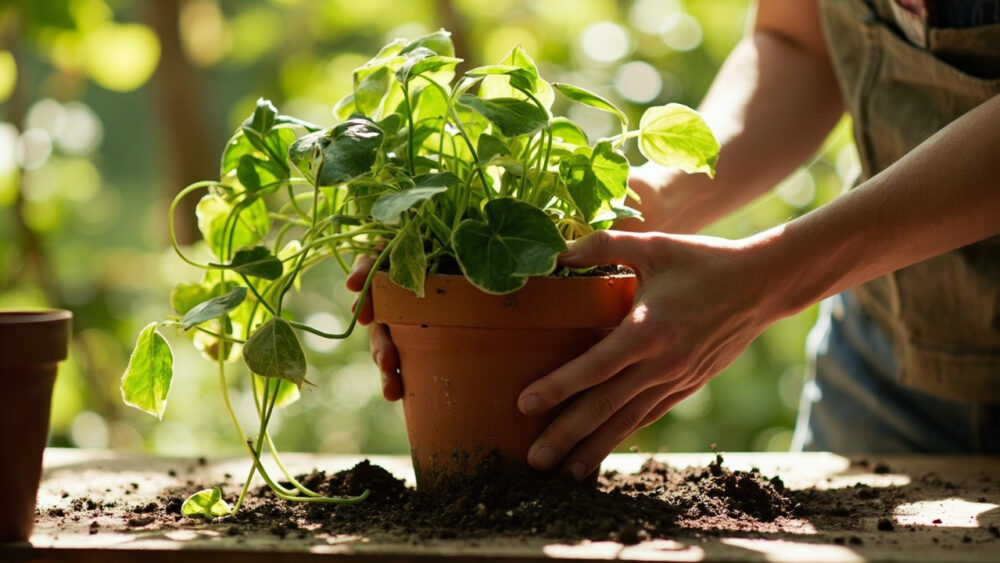
To repot, water the plant a day ahead so the rootball slides out clean. Loosen any tightly circling roots with your fingers, set it in a pot just one size up with fresh mix underneath and around the sides, and water it in well.
- Choose a pot 2 inches wider than the current one, with drainage holes, no bigger.
- Add an inch of fresh mix to the new pot’s bottom.
- Loosen the rootball and trim any mushy or blackened roots.
- Set the plant at the same depth it was growing before.
- Backfill, firm gently, and water thoroughly.
That is genuinely the whole job, but a few routine habits keep you from needing to do it more than necessary.
Pruning, Cleaning, and How Often You Really Need to Repot
Here is the honest answer to the question forming in your head right now: pothos does not need repotting every year. Most healthy plants are fine every 1 to 2 years, sometimes longer if growth is slow.
Pruning matters more than repotting for keeping pothos full and attractive. Snip vines back just below a node whenever they get leggy or bare, any time of year, and use the cuttings to root new plants in water.
Wipe dusty leaves down every few weeks with a damp cloth. Dust blocks light and slows the very growth you are trying to encourage.
Even with good care, a couple of problems show up often enough that you should know them by sight.
Problems That Actually Show Up on Pothos
Brown crispy leaf edges usually mean low humidity or a buildup of fertilizer salts, not underwatering. Flush the pot with plain water occasionally to clear excess salts.
Mushy black stems and yellowing lower leaves point to root rot from overwatering or poor drainage. Pull the plant, trim any black roots, and repot into fresh dry mix, and be honest with yourself that recovery is not guaranteed once rot has spread far up the stems.
Small webbing or sticky residue on leaves usually means spider mites or mealybugs. Wipe leaves down and treat with insecticidal soap or neem, following the product label exactly, repeating every week or two until they are gone.
One more honest note before you plan anything more ambitious with this plant.
Pothos Toxicity, and How to Tell It Is Thriving
Pothos is toxic to cats, dogs, and people if chewed or eaten, causing mouth and throat irritation, drooling, and vomiting. If you suspect a pet or child has eaten any part of it, contact a veterinarian or poison control right away rather than waiting to see what happens.
A thriving pothos pushes out new leaves every couple of weeks in the growing season, with vines that lengthen visibly month to month. Leaves stay glossy, firm, and hold their variegation pattern instead of fading to solid green, which happens when light is too low.
New growth that comes in smaller than the leaves below it is a sign to bump up light or start feeding, not a sign of a bigger pot needed. Save that move for when the roots actually ask for it.
Everything above boils down to a handful of numbers worth keeping on hand.
Pothos at a Glance
- When to repot: spring through mid-summer, roughly every 1 to 2 years, only when roots circle the pot or show through drainage holes.
- Pot size increase: go up about 2 inches in diameter, never more, to avoid waterlogged excess soil.
- Soil mix: well-draining potting soil with added perlite or orchid bark, never straight garden soil.
- Watering: every 7 to 10 days, only when the top 1 to 2 inches of soil are dry to the touch.
- Light: bright, indirect light for best growth and variegation, tolerates low light but grows slower.
- Feeding: balanced liquid fertilizer at half strength, monthly in spring and summer, none in fall and winter.
- Toxicity: toxic to pets and people if ingested, contact a veterinarian or poison control for any suspected ingestion.
Get the pot size and the dry-soil check right and pothos more or less takes care of itself.
Everything else on this page is just fine-tuning around those two habits.