If you’re seeing tiny webs, sticky residue, or small bugs on your money tree, the most likely culprit is spider mites, especially if the air near the plant is dry and the webbing is concentrated on the undersides of leaves and in the leaf joints. The fix is a thorough rinse in the shower or sink followed by insecticidal soap or neem oil applied to every leaf surface, repeated weekly for two to three weeks. Money tree pests almost always trace back to one thing: stressed conditions that pests exploit, usually low humidity, overwatering, or a plant that’s been sitting in the same stale soil for a year or two too long.
Most people blame the pests themselves, as if bugs just showed up out of nowhere and picked their plant at random. That’s rarely the real story. Pests find weak plants, they don’t create weak plants, and figuring out what weakened yours is half the fix.
There’s one detail on the plant right now that tells you exactly which pest you’re dealing with, and I’ll walk you through it section by section. I’ll also give you an honest answer on recovery, because some infestations bounce back in a month and others mean starting over with cuttings. Stick around for the two-minute diagnosis checklist at the bottom, save it, and run it right at the plant before you treat anything.
Most Likely Causes, Ranked
1. Spider Mites
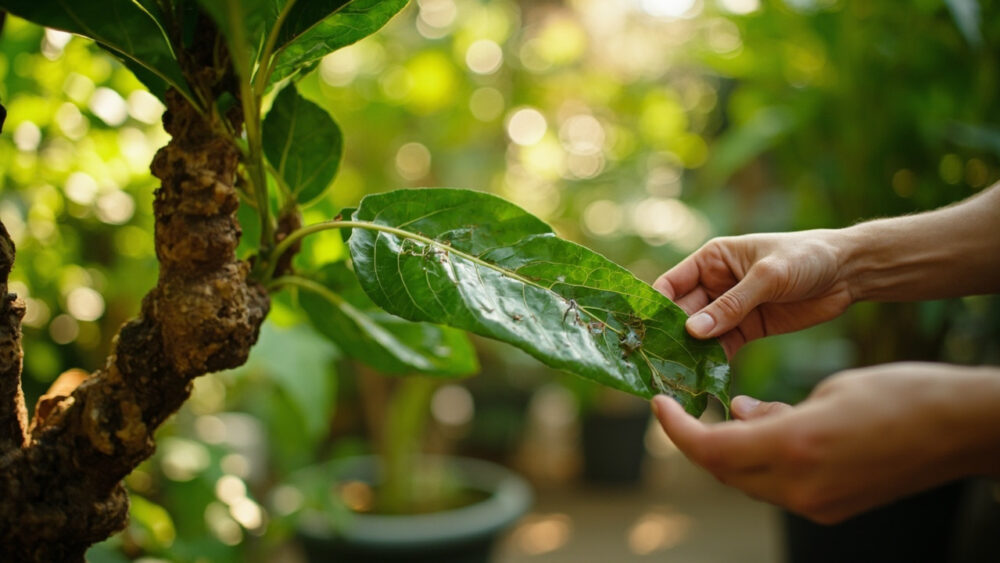
Confirm it: hold a white sheet of paper under a leaf and tap the leaf hard. If you see tiny moving specks, or find fine webbing between leaflets and where leaves meet the stem, that’s mites. Leaves often show a stippled, dusty, pale speckling before they yellow and drop.
Mites thrive in dry indoor air, especially near heating vents in winter.
Fix it: rinse the whole plant under lukewarm running water, working leaves between your fingers to break up webbing. Follow with insecticidal soap or neem oil, coating leaf undersides completely, and repeat every 5 to 7 days for three treatments minimum since mite eggs survive the first round. Raising humidity with a pebble tray or humidifier makes it much harder for them to come back.
If the webbing test came back clean, the next suspect leaves a stickier calling card.
2. Scale
Confirm it: look for small, brown or tan bumps stuck along stems and leaf midribs that don’t brush off easily with a finger. They look more like part of the plant than a bug, which is exactly why people miss them for weeks. A sticky film on nearby leaves or the windowsill below is a strong secondary clue.
Fix it: scrape off what you can with a fingernail or an old toothbrush, then treat with neem oil or insecticidal soap, focusing on stems and leaf joints. Scale has a waxy shell that shields it, so plan on repeat treatments every 1 to 2 weeks for a month rather than a single pass.
Scale is sneaky because it barely moves, but the next pest moves constantly and is easy to spot once you know where to look.
3. Mealybugs
Confirm it: check leaf joints, the crotches where stems branch, and the soil surface for small white, cottony clumps. They look like bits of lint stuck to the plant. Sticky residue on leaves below an infested spot is common here too.
Fix it: dab visible clusters directly with a cotton swab dipped in isopropyl alcohol, which kills them on contact, then follow with a full neem oil or insecticidal soap application. Check the soil line and roots at the pot’s edge, since mealybugs hide there and reinfest the plant if ignored.
If you’re not finding cottony clumps but the plant is still sticky, the next cause explains the mess without an obvious bug in sight.
4. Aphids
Confirm it: look at new growth and stem tips for small green, black, or brown soft-bodied insects clustered tightly together. Unlike mites and scale, aphids are easy to see with the naked eye and tend to swarm the newest, most tender leaves first.
Fix it: a strong rinse in the sink knocks most of them off immediately. Follow with insecticidal soap on remaining clusters, repeating after a week to catch anything that survived. Aphids reproduce fast, so don’t skip the second treatment even if the plant looks clear.
Fungus gnats are often confused with a real pest problem, so here’s how to tell the difference.
5. Fungus Gnats
Confirm it: small dark flies hovering near the soil surface or bumping against a nearby window are fungus gnats, not a leaf pest at all. They’re a symptom of consistently damp soil, not the cause of leaf damage, and they rarely hurt an established money tree.
Fix it: let the top 1 to 2 inches of soil dry out between waterings, top-dress with a layer of sand or fine gravel to disrupt egg-laying, and use yellow sticky traps to knock down the adult population while the soil dries. This is more a watering fix than a pest fix.
Once you’ve ruled out gnats, it’s worth stepping back and comparing all the real pests side by side.
How to Tell the Causes Apart
Location on the plant is your fastest clue. Mites start on lower, older leaves and work upward, with stippling and webbing. Scale and mealybugs cluster at stem joints and leaf midribs, staying put rather than spreading evenly.
Aphids go straight for new growth at the tips, ignoring older leaves almost entirely. Stickiness without a visible bug on leaves usually points to scale or mealybugs feeding higher up and dripping residue down.
Once you’ve matched the visual pattern to a cause, the next question is what kind of shape the plant is really in.
Will It Recover?
Mite damage reverses well if caught before heavy leaf drop, usually within 3 to 4 weeks of consistent treatment. Leaves that are already crisp and stippled brown won’t green back up, but new growth comes in clean.
Scale and mealybug infestations take longer, often 6 to 8 weeks of repeated treatment, because of their protective coatings and hiding spots. Recovery is realistic but slower than people expect.
Aphids clear fastest, often within 2 weeks, since they have no protective shell and die easily from soap or a hard rinse.
Cut your losses if more than half the leaves are damaged, growth has stalled for over two months despite treatment, or the trunk itself shows soft, mushy spots, since that usually points to root rot working alongside the pest problem.
A full recovery is common, but only if you treat prevention as seriously as the cure.
How to Keep It From Happening Again
Humidity matters more than most people think for spider mites specifically, so a pebble tray or humidifier near the plant cuts risk significantly in dry winter air.
Inspect leaf undersides and joints every time you water, not just when something looks obviously wrong. New pest problems are far easier to stop at five bugs than five hundred.
Wipe dusty leaves occasionally with a damp cloth, since dust buildup stresses the plant and makes it more attractive to mites.
Quarantine any new plant for two weeks before it sits near your money tree, since most infestations actually arrive on a new purchase.
Good prevention makes the next section almost unnecessary, but here’s the fast version anyway.
Diagnosis Checklist
- Tap a leaf over white paper: tiny moving specks mean spider mites, go straight to the rinse and neem treatment.
- Check stems and leaf midribs for hard brown bumps that don’t brush off: that’s scale, plan on scraping plus repeat treatments over several weeks.
- Look in leaf joints and along the soil surface for white cottony clumps: that’s mealybugs, spot-treat with alcohol first, then neem oil.
- Scan new growth at the stem tips for clustered soft-bodied bugs: that’s aphids, a hard rinse plus one follow-up treatment usually clears them.
- Watch for small dark flies near the soil with no visible leaf damage: that’s fungus gnats, fix by letting soil dry out more between waterings.
- Feel the top inch of soil: if it’s constantly damp, address watering habits alongside any pest treatment or the problem returns.
- Count damaged leaves: under half damaged means treat and expect recovery, over half with stalled growth for months means weigh starting fresh from a cutting.
Run this checklist once, treat the cause it points to, and stay consistent with follow-up applications.
Most money trees pull through pest problems just fine once you match the fix to the actual bug in front of you.