The method that actually works for schefflera is a stem cutting rooted in damp perlite or a perlite-and-peat mix, taken just below a leaf node, kept warm and humid until roots form. Water alone works occasionally, but it rots more cuttings than it roots. If you want reliable results, skip the glass of water on the windowsill entirely.
Here is what nobody tells you upfront: the cutting that looks best on day one is often the one that fails by week three, and the sign that you actually have roots is not new leaf growth, it is resistance when you tug gently on the stem. Most people also butcher the timing, taking cuttings from a stressed or actively pushing-new-growth plant when neither is right. Stick around, because the exact week-by-week rooting timeline and a save-able Schefflera at a Glance card are waiting at the bottom of this guide.
Why Stem Cuttings Beat Every Other Method
Schefflera can technically be propagated by air layering or by division if you have a multi-stem plant with separate root masses, but for the average houseplant on your shelf, a stem cutting is faster, cheaper, and far more forgiving. Air layering works but takes months and requires a mature, leggy plant with bark-like stems. Division only works if the plant already has multiple independent crowns, which most nursery scheffleras do not.
A stem cutting with two or three leaves and a few inches of stem roots in perlite in four to eight weeks under good conditions. That is a real, repeatable timeline, not a maybe.
The medium matters as much as the cutting itself.
Taking the Cutting the Right Way
Choosing the stem
Pick a stem that is semi-hardwood, meaning it has some firmness but is not fully woody and brown. Bright green, floppy new growth rots before it roots. Old woody stems root slowly and unreliably. Look one or two nodes back from the growing tip for that in-between texture.
Making the cut
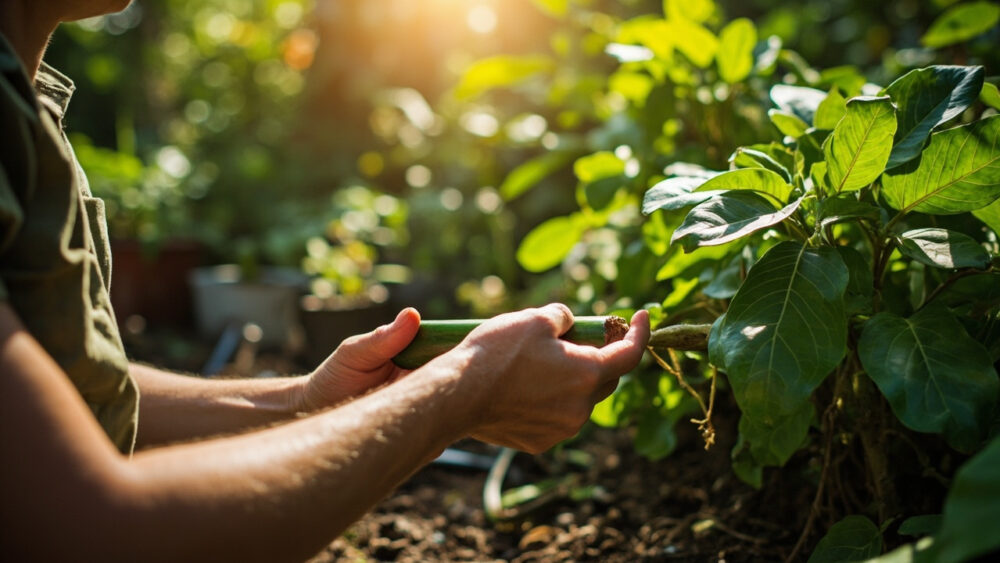
Cut a 4 to 6 inch section just below a leaf node using clean, sharp pruners. Remove the lowest one or two leaves so you have bare stem to bury, but leave at least two leaves up top. If the remaining leaves are huge, cut each one in half across the width to cut down on water loss while roots are absent.
The cut everyone gets wrong
Cutting mid-internode instead of just below a node is the single biggest reason cuttings stall. Roots form from node tissue, not random stem tissue, so a cut in the wrong spot can sit for months doing nothing.
Get the cut right and the rest is mostly patience.
Rooting Medium and Conditions That Actually Work
Skip plain water. It grows weak, glassy roots that struggle when transplanted into soil, and stems sitting in standing water are prone to rot before roots ever start. Perlite, or a 50/50 mix of perlite and peat or coco coir, drains fast enough to prevent rot while holding enough moisture around the stem to trigger rooting.
Dip the cut end in rooting hormone powder or gel if you have it. It is not mandatory for schefflera, but it shortens the timeline and improves your odds, especially on older or less vigorous stems.
Push the cutting 1 to 2 inches into moistened medium, firm it in so it stands upright, and cover the pot with a clear bag or plastic dome to hold humidity above 60 percent. Set it somewhere bright but out of direct sun, and keep the medium around 70 to 75°F. A seedling heat mat under the pot speeds things up considerably in a cool room.
Now comes the part where most people either give up too early or panic and pull the cutting to check.
Week by Week: What to Actually Expect
Weeks 1 to 2: nothing visible happens above the medium, and that is normal. The cutting may look static or even slightly droop before it stabilizes. Do not tug it to check for roots, you will snap off whatever has started.
Weeks 3 to 4: a gentle, resistant tug tells you roots have started, well before any new leaf shows. This is the sign everyone misreads. New top growth feels like proof of success, but it can appear on stored energy in the stem even with zero roots, and by the time you realize there are none, the cutting has usually rotted.
Weeks 5 to 8: real roots, an inch or more long, are visible if you slide the cutting out to check, and new leaves start unfurling for real. This is when you start easing off the humidity dome, cracking it open a bit more each day for about a week.
Once roots hold when tugged and new growth keeps coming, the cutting is ready for its own pot.
Potting Up and Moving to a Real Pot
Move a rooted cutting into a 4 to 6 inch pot with a well-draining houseplant mix once roots are an inch or two long, usually around week six to eight. Going straight from perlite into a big pot with a lot of extra soil around the root ball invites rot, since the roots cannot yet pull moisture fast enough to keep that much soil from staying wet.
Size up gradually, one pot size at a time, as the plant fills its current pot with roots. Schefflera also does not want to be planted deeper than it was rooting, keep the original soil line at the same level.
Skip outdoor planting unless you live somewhere frost-free year-round, schefflera is only reliably hardy outdoors in USDA zones 10 and 11 and is grown as a houseplant everywhere else.
Getting the pot size right matters, but most failures happen long before this stage.
Why Most Attempts Actually Fail
The honest answer to why cuttings fail is almost never bad luck. It is one of three specific mistakes:
- Rotting in water: stagnant water starves the cut end of oxygen and invites bacterial rot before roots can form.
- Taking cuttings from stressed plants: a schefflera that is underwatered, recently repotted, or pest-stressed has no reserve energy to root a cutting successfully.
- Checking too often: pulling the cutting out of medium every few days to inspect for roots breaks the fragile new root hairs each time, resetting progress.
If you assumed a wilted cutting means it needs more water, that guess kills more cuttings than dry medium does. A drooping cutting almost always means the stem end has started to rot, and the fix is less moisture and better airflow, not more water.
Avoid those three mistakes and the odds swing heavily in your favor.
Schefflera at a Glance
- Best method: stem cuttings rooted in perlite or a perlite and peat mix, not water.
- Cutting size: 4 to 6 inches long, cut just below a leaf node, with two or three leaves left on.
- Ideal conditions: 70 to 75°F, humidity above 60 percent under a clear bag or dome, bright indirect light.
- Rooting hormone: optional but speeds rooting and improves success rate, especially on older stems.
- Timeline: four to eight weeks total, with the first real root resistance felt around week three to four.
- Check for roots: a gentle tug test, not new leaf growth, which can appear before roots exist.
- Potting up: move to a 4 to 6 inch pot once roots reach an inch or two long, sizing up gradually after that.
Get the node placement and the medium right, then leave the cutting alone.
Patience does more work here than anything you can buy.