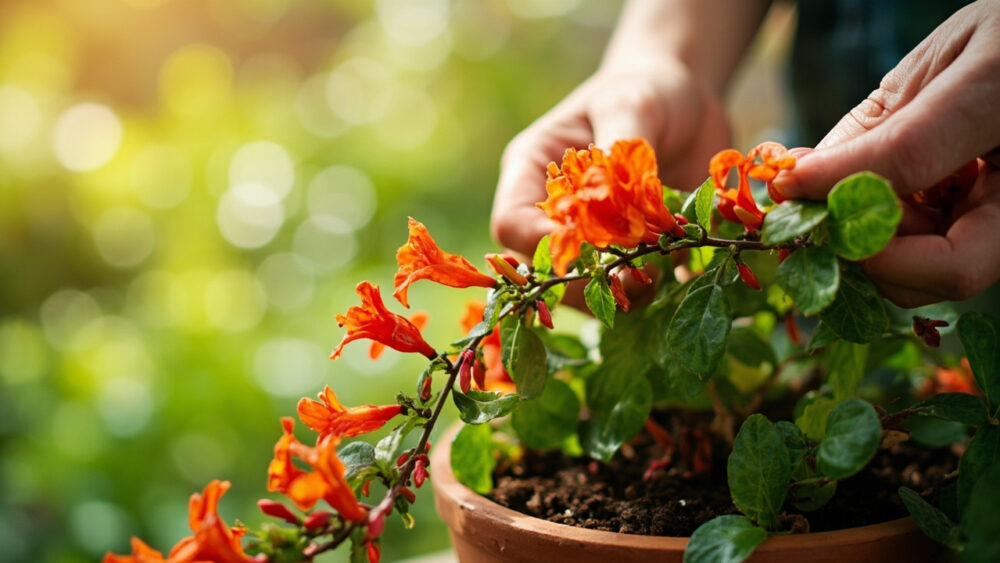
Here is how to care for goldfish plant, no guesswork: bright indirect light, weekly waterings that let the top inch or two dry out between drinks, high humidity, and temperatures that never dip below 60°F. Get those four things right and the plant rewards you with orange, tubular flowers that really do look like little leaping goldfish. Get one of them wrong for too long and the plant drops buds before they ever open, which is the single most common heartbreak with this houseplant.
There is a mistake that ruins more goldfish plants than any pest or disease, and it is not what most people expect. There is also a sign everyone misreads as a watering problem when it is actually about light. And there is an honest answer to the question every new grower eventually asks: why did all my flower buds fall off before opening.
Stick with me to the end and save the “Goldfish Plant at a Glance” card at the bottom. It is built to be screenshotted so you have every number in one place next time you are standing in front of the plant wondering what it wants.
Light, Placement, and Temperature
Goldfish plant wants bright, indirect lightseveral hours of it daily. An east or west window works well, or a few feet back from a south window where the light is bright but filtered. Direct hot sun scorches the leaves; deep shade means no flowers, ever.
Temperature matters more than most growers assume. This plant is a warmth lover, happiest between 65°F and 80°F, and it sulks hard below 60°F. Cold drafts near a winter windowsill or an air conditioning vent in summer will stall growth and cause leaf drop.
Humidity is the other half of placement. Kitchens and bathrooms with decent light are natural fits, or group it with other plants to raise the moisture in the air around it.
Get the spot right first, because everything else you do is damage control if the light or temperature is wrong.
Watering: How Much, How Often, and How to Tell
Water when the top inch or two of soil has dried out, then water thoroughly until it runs from the drainage holes. In an average home this lands somewhere between once a week in summer and every 10 to 14 days in winter, but the calendar is a guess and your finger in the soil is not.
Overwatering is the mistake that kills more goldfish plants than any other single cause, and it is sneakier than root rot in most tropicals because the symptoms look identical to underwatering: soft, yellowing leaves and a droopy look. If you assumed a droopy, sad-looking plant just needs more water, that guess is exactly backwards here more often than not.
Check the soil before you reach for the watering can.
The fix is simple but requires discipline. Let the pot dry out properly between waterings, always use a pot with drainage, and never let the plant sit in a saucer of standing water. Goldfish plant has fine, fuzzy roots that rot fast in soggy soil.
Once your watering rhythm is dialed in, soil and feeding decide how much growth you actually get.
Soil and Feeding
Use a light, fast-draining potting mix. A standard peat-based or coir-based houseplant mix cut with perlite works well; you want something that holds a little moisture without staying wet for days.
Feed during the active growing season, roughly spring through early fall, with a balanced liquid houseplant fertilizer diluted to about half strength every 4 to 6 weeks. Ease off or stop entirely in fall and winter when growth naturally slows.
Over-fertilizing pushes leafy growth at the expense of flowers and can scorch the fine roots, so more is not better here.
Feeding sets the growth rate, but routine maintenance is what keeps the plant looking full and blooming reliably.
Pruning, Repotting, and the Routine Tasks
Pinch back leggy stems after a bloom cycle to encourage bushier, fuller growth. Goldfish plant blooms on new growth, so a light trim after flowering actually sets up the next round of flowers rather than delaying them.
Repot every 1 to 2 years, or when you see roots crowding the drainage holes or the plant drying out unusually fast. Spring is the best window, right as new growth picks up. Size up only one pot size at a time. A too-large pot holds excess moisture the roots cannot use fast enough.
Wipe dust off the leaves every few weeks with a damp cloth. Dust blocks light from reaching the leaf surface and can harbor pests, so this is not just cosmetic.
Even with good pruning and repotting habits, problems still show up, and knowing which one you are looking at saves the plant.
The Problems Most Likely to Strike
Here is the honest answer to the question every goldfish plant grower eventually asks: why do the flower buds drop before opening. It is almost never a pest.
Bud drop is most often caused by a sudden change: a move to a darker spot, a cold draft, low humidity, or a big swing in temperature right as buds are forming. The plant is reacting to stress, not disease.
Watch for these other common issues:
- Yellow, soft leaves: almost always overwatering or poor drainage, not underwatering.
- Brown, crispy leaf edges: low humidity or too much direct sun.
- Leggy, sparse growth with no flowers: insufficient light.
- Sticky residue or fine webbing: aphids or spider mites, treated with insecticidal soap applied per the product label.
- Powdery white patches on leaves: powdery mildew from poor air circulation and excess humidity on the leaf surface, treated by improving airflow and, if needed, a fungicide labeled for houseplants used exactly as directed.
Note for households with pets: goldfish plant is generally considered non-toxic, but if a pet eats a significant amount and shows vomiting, drooling, or unusual behavior, call your veterinarian rather than waiting it out.
Once you have ruled out the obvious culprits, it helps to know what a genuinely healthy plant actually looks like.
How to Tell It Is Actually Thriving
A thriving goldfish plant has thick, glossy, dark green leaves that feel slightly succulent, not thin or papery. New growth appears steadily at the stem tips through the warmer months.
Flowering is the real tell. A happy plant produces flushes of orange, red, or yellow tubular blooms multiple times a year, not just once. If you have not seen a single flower in over a year of otherwise decent-looking growth, light is almost always the missing piece.
Stems that trail and thicken rather than stretch thin toward a window are another good sign. Thin, stretched stems mean the plant is reaching for more light than it is getting.
Everything you need to keep it there is below, saved in one place.
Goldfish Plant at a Glance
- Light: bright, indirect light for several hours daily, no direct hot sun.
- Temperature: 65°F to 80°F, never below 60°F for long.
- Watering: when the top 1 to 2 inches of soil are dry, water thoroughly and let excess drain, roughly weekly in summer and every 10 to 14 days in winter.
- Soil: light, fast-draining mix with perlite added, always in a pot with drainage.
- Feeding: balanced liquid fertilizer at half strength every 4 to 6 weeks in spring through early fall, none in winter.
- Repotting: every 1 to 2 years in spring, sizing up only one pot size at a time.
- Bloom sign of health: repeat flushes of orange to red tubular flowers through the growing season.
If you remember one thing, remember this: check the soil with your finger before you water, do not water on a schedule.
Consistent light and a dry-down between waterings solve most goldfish plant problems before they start.