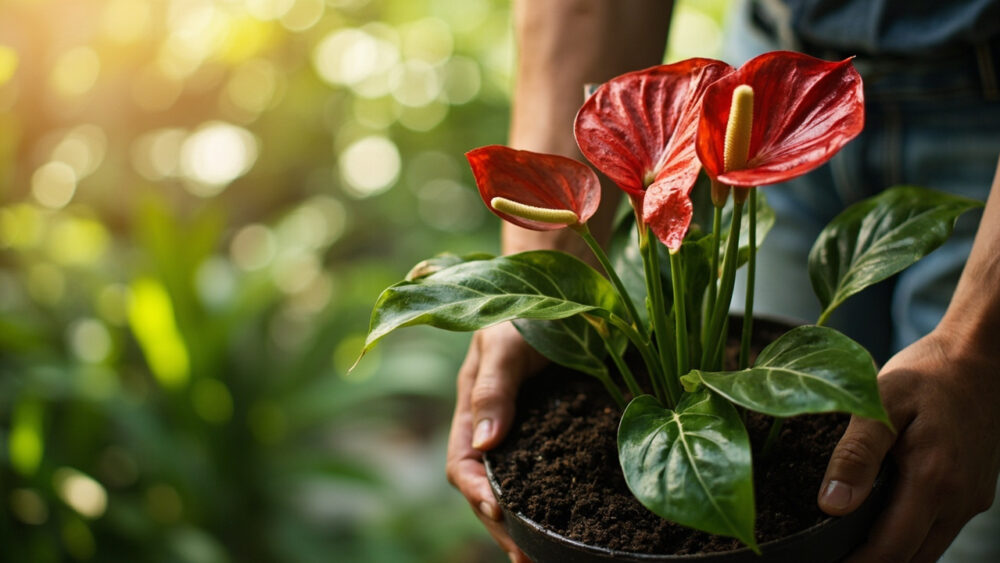
You grow anthurium indoors in bright, indirect light, in a chunky, fast-draining potting mix, keeping the soil barely moist and the humidity above 50 percent. Get those three things right and an anthurium will push out glossy leaves and waxy, heart-shaped blooms nearly year-round. Get the water or the mix wrong, and it rots from the roots up before you even see what killed it.
Most people who learn how to grow anthurium fail for the same reason: they treat it like a normal houseplant and water it on a schedule instead of checking the mix. That single habit causes more root rot than any pest or disease you’ll ever deal with.
Before the end of this guide, you’ll know exactly when to repot, the one sign on the leaves that everyone misreads as a light problem, and what it actually takes to get one to rebloom instead of just sitting there being green. There’s a save-able Anthurium at a Glance card waiting at the bottom, but the details that make it work are between here and there.
When to Plant or Repot Anthurium
Anthurium is tropical and has no frost tolerance at all, so outdoor timing only matters if you’re moving pots outside for summer, and even then, wait until night temperatures hold above 55°F consistently. Indoors, timing is about the plant’s growth cycle, not the calendar.
The best window to pot up or repot is spring through mid-summer, when the plant is actively growing and can recover fast from root disturbance. Repotting in the dead of winter, when growth has slowed, just prolongs stress.
You’ll know it’s time when roots are circling the drainage holes or pushing up out of the soil surface, or when it’s been two years since the last repot.
Next comes the part people skip entirely: picking a spot with the right light, not just any bright corner.
Choosing the Spot and Preparing the Soil
Anthurium wants bright, indirect light, the kind you’d get a few feet back from an east or west window, or near a south window with a sheer curtain filtering it. Direct sun scorches the leaves; deep shade means no blooms and slow, stretched growth.
The soil mix matters more than the pot. Anthurium is an epiphyte in the wild, meaning its roots want air as much as they want moisture. A dense, water-holding potting soil straight from the bag will suffocate the roots within weeks.
Build a mix of roughly equal parts standard potting soil, orchid bark, and perlite, or use a premixed aroid blend if you can find one. The goal is a mix that drains fast but still holds a little moisture, not a mix that stays soggy for days.
Choose a pot with real drainage holes, only 1 to 2 inches wider in diameter than the current root ball. Too much extra soil volume around small roots is a leading cause of rot.
With the right spot and mix ready, planting itself is the easy part.
Planting Anthurium Step by Step
1. Loosen and inspect the roots
Slide the plant out of its old pot and gently tease the roots apart. Cut away any that are brown, mushy, or hollow feeling; healthy roots are firm and pale.
2. Set the depth
Plant at the same depth it was growing before. Anthurium sits with its base at the soil surface, not buried. Covering the stem crown invites rot.
3. Fill in around the roots
Add your bark-and-perlite mix around the roots in stages, pressing lightly to remove big air pockets without compacting the mix solid.
4. Water it in
Water thoroughly right after planting until it runs from the drainage holes, then let the pot drain completely. Never let it sit in a saucer of standing water.
5. Skip fertilizer for two weeks
Let the roots settle before feeding. Fertilizing stressed, freshly cut roots does more harm than good.
Once it’s in and settled, the real skill of growing anthurium well starts with the watering can, not the fertilizer bottle.
Watering and Feeding Through the Season
If you assumed more water fixes a droopy anthurium, that guess kills more of them than underwatering ever does. Overwatering in a mix that doesn’t drain fast enough is the number one killer of this plant.
Check the top inch of mix with a finger before watering, and only water once it’s dry to that depth, usually every 7 to 10 days indoors, faster in summer heat, slower in winter. Water thoroughly, then let it drain and dry down again.
Humidity matters as much as watering. Anthurium wants 50 to 80 percent humidity. Dry indoor air, especially in winter, causes crispy leaf edges no amount of watering will fix. A pebble tray, humidifier, or grouping plants together all help.
Feed every 4 to 6 weeks during spring and summer with a balanced liquid fertilizer diluted to half strength, and cut back to every 8 weeks or skip it entirely in winter when growth slows. Over-fertilizing shows up as browned leaf tips and crusty white buildup on the soil surface.
Get the water and feeding rhythm right, and you’ll mostly avoid the problems that show up next.
The Problems Most Likely to Strike
Yellowing lower leaves are the sign almost everyone misreads. The instinct is to blame light, but on anthurium, yellowing paired with soft, dark, or mushy stems almost always points to overwatering and early root rot, not insufficient sun.
Root rot is the most serious problem you’ll face. If you pull the plant and find black, slimy roots with a sour smell, trim away every affected root with clean shears, repot into fresh dry mix, and hold off watering for a week longer than usual.
Crispy, browning leaf tips usually mean low humidity or fertilizer buildup, not lack of water. Curling leaves with no discoloration often point to too much direct light.
Pests to watch for are mealybugs and spider mites, especially in dry winter air. Look for white cottony clusters in leaf joints or fine webbing under leaves. Wipe leaves down with a damp cloth regularly, and if an infestation takes hold, treat with insecticidal soap or a horticultural oil, following the product label exactly.
Anthurium is also toxic to people and pets if chewed, thanks to calcium oxalate crystals in the sap. Watch for drooling, mouth pain, or vomiting in pets, and call a veterinarian if you suspect a bite or ingestion.
Handle the watering and light issues correctly and most of these problems never get the chance to start, which brings us to the payoff most people are actually waiting for: the blooms.
When and How Anthurium Blooms
Anthurium doesn’t have a harvest in the vegetable-garden sense, but it does bloom, and that’s the real finish line for most growers. A healthy plant in good light can flower nearly continuously, with each waxy spathe lasting 6 to 8 weeks before fading.
The honest answer to the question most people are about to ask: if your anthurium has healthy leaves but never blooms, the almost universal cause is insufficient light, not a lack of fertilizer. No amount of feeding will force a bloom out of a plant that’s sitting too far from a window.
Move it closer to bright, indirect light and be patient. A plant that’s finally getting enough light can take 2 to 3 months to show its first new bloom spike. Once a spathe fades and browns, snip the entire stem near the base to make room for new growth.
Everything above feeds into one simple reference, saved below so you don’t have to scroll back through it later.
Anthurium at a Glance
- When to plant or repot: spring through mid-summer, during active growth, or whenever roots crowd the pot.
- Light: bright, indirect light. No direct sun, no deep shade.
- Soil mix: equal parts potting soil, orchid bark, and perlite for fast drainage with some moisture retention.
- Watering: only when the top inch of mix is dry, roughly every 7 to 10 days, less in winter.
- Humidity: 50 to 80 percent. Use a humidifier or pebble tray in dry indoor air.
- Feeding: balanced liquid fertilizer at half strength every 4 to 6 weeks in spring and summer, less or none in winter.
- Bloom time: nearly continuous in good light, with each spathe lasting 6 to 8 weeks. No blooms usually means not enough light.
If you remember one thing, remember to check the soil with your finger before you water, not the calendar.
Everything else about growing anthurium well follows from getting that one habit right.