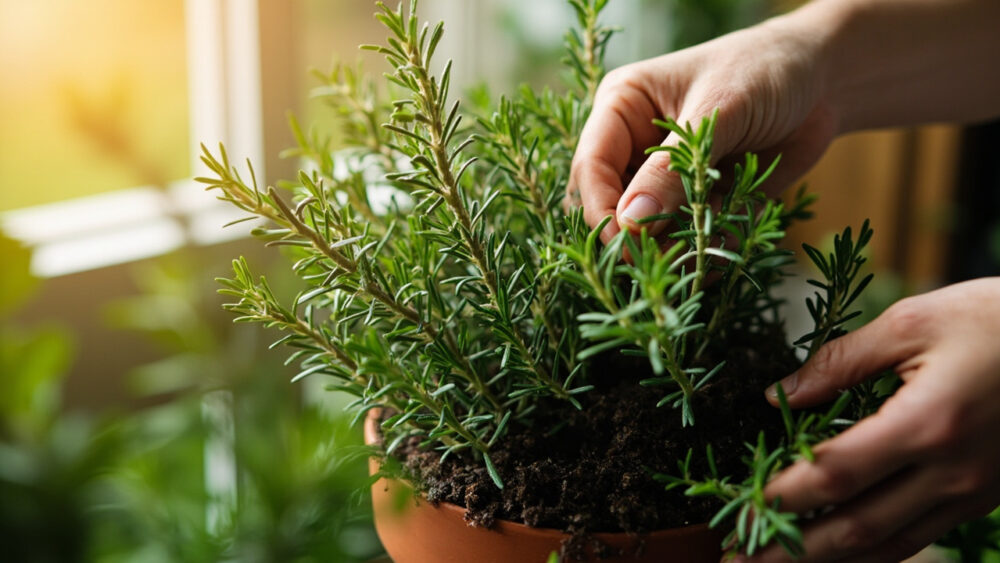
Growing rosemary indoors comes down to three things it cannot live without: a south or west window with at least six hours of direct light, a pot that actually drains, and water only when the soil is dry an inch down. Get those right and a rosemary plant will live on a windowsill for years. Get any one of them wrong and it will die slowly enough that you won’t know why until it’s too late.
Here’s the part almost nobody tells you: rosemary doesn’t die from cold or neglect indoors, it dies from being loved to death with a watering can. That’s the mistake that ends most attempts, and it looks nothing like overwatering until you know what to check.
There’s also a sign everyone misreads as a pest problem when it’s actually an airflow problem, and an honest answer to the question you’re probably already forming: can a rosemary plant you dig up from the garden actually survive winter inside. Stick with me through the sections below, and save the “Rosemary at a Glance” card at the very bottom before you go.
When to Start Rosemary Indoors
Rosemary indoors isn’t tied to frost dates the way outdoor crops are, since you control the climate. But timing still matters. The best window to start or transplant rosemary indoors is late summer through early fallsix to eight weeks before your first frost, so the plant adjusts to lower light gradually instead of all at once.
If you’re starting from a nursery pot in spring, any time works, but expect slower growth in winter regardless of when you start, since rosemary’s growth rate tracks daylight more than temperature.
Seeds are technically possible but genuinely not worth it. Rosemary seed germination is slow and wildly inconsistent, often under 50%, and a cutting or nursery plant gets you a usable herb in a fraction of the time.
Skip the seed packet and the timing question gets a lot simpler.
Choosing the Spot and Prepping the Soil
Rosemary wants the brightest window in the house, full stop. South-facing is ideal in the Northern Hemisphere; west works too. If the leaves start stretching toward the glass or the new growth looks thin and palethat’s your plant telling you it’s light-starved, not a fertilizer problem.
In winter, even a good window often isn’t enough, and a small grow light run 10 to 12 hours a day will keep the plant from thinning out.
Soil is where most kitchens get it wrong. Rosemary is a Mediterranean shrub bred by nature for rocky, fast-draining slopes, so a moisture-retentive potting mix is a slow death sentence. Use a cactus or succulent mix, or cut regular potting soil about 50/50 with perlite or coarse sand.
The pot needs a drainage hole, no exceptions, and unglazed terra cotta is worth the extra cost because it wicks excess moisture out through the walls.
Get the soil right and the watering mistakes become much harder to make.
Planting Rosemary Step by Step
1. Pick the right container
Start with a pot 8 to 10 inches across for a young plant, only sizing up one pot size at a time as it grows. A container that’s too big holds too much wet soil around too few roots, and that’s where root rot starts.
2. Set the depth
Plant at the same depth it was growing in the nursery pot. Don’t bury the woody base of the stem; rosemary doesn’t like being planted deeper than it was, and buried stems tend to rot rather than root.
3. Space for airflow
If you’re growing more than one plant in a tray or window box, give each rosemary 10 to 12 inches of room. Cramped plants with no air movement between them are exactly where the mildew problem below gets started.
4. Water it in once, then back off
Water thoroughly right after planting so the roots make contact with the new soil, then let the top inch or two dry out completely before you water again.
That first watering is also the last time rosemary wants to be wet for a while.
Watering and Feeding Through the Season
If you assumed brown, dry-looking needles mean the plant needs more water, that guess kills more indoor rosemary than actual drought ever does. Brown, crumbly foliage on rosemary is far more often a symptom of root rot from overwatering than underwatering, because damaged roots can’t move moisture up to the leaves even when the soil is soaked.
Check the soil with a finger, not a calendar. Water only when the top inch or two feels dry, and always let water run out the drainage hole rather than sitting in a saucer.
In winter, indoor rosemary needs noticeably less water than it did outside in summer, since growth slows and the plant simply isn’t using much.
Feed lightly. A balanced liquid fertilizer diluted to half strength, applied once a month during spring and summer, is plenty. Skip fertilizer entirely from late fall through winter, when the plant is barely growing and excess nutrients just sit in the soil.
Get the water right and most of the disease problems below never show up at all.
The Problems Most Likely to Strike Indoors
The sign everyone misreads as spider mites or aphids is actually powdery mildew, a grayish-white coating on leaves and stems that shows up when air is still and humidity is high around the plant. It’s not a bug problem, it’s an airflow problem, and a small fan running nearby for a few hours a day usually clears it before it spreads.
Spider mites are real tooand indoor rosemary in dry winter air is exactly the environment they love. Look for fine webbing between stems and a stippled, dusty look on the needles. A strong spray of water in the sink, repeated every few days, knocks down light infestations. For anything heavier, an insecticidal soap applied exactly per the product label is the standard fix.
Root rot is the quiet killer. Mushy brown stems at the soil line, a sour smell from the pot, and needles dropping from the inside out all point to soggy roots. There’s no saving a plant with fully rotted roots, but catching it early by repotting into dry, fast-draining soil and cutting away blackened roots can sometimes pull it back.
Rosemary is not toxic to cats, dogs, or people and is a genuinely safe herb to keep in a kitchen with pets around. If a pet ever eats something you can’t identify or seems ill afterward, call your veterinarian rather than guessing.
Head off the mildew and the mites, and what’s left to talk about is the fun part: cutting it for dinner.
When and How to Harvest
You can start snipping the moment a plant has enough growth to spare, usually once stems are 6 to 8 inches tall and reasonably woody at the base. Indoors, that first harvestable size often takes three to four months from a small nursery plant.
Cut stem tips, not individual needlestaking no more than a third of the plant at once. Snip just above a leaf node and new growth will branch out from that point, keeping the plant bushy instead of leggy.
Morning is the best time to harvest, after the dew or watering has dried but before the heat of the day, when the oils that give rosemary its scent and flavor are most concentrated.
Fresh rosemary keeps a week or two in the fridge wrapped loosely in a damp paper towel, and it dries beautifully if you hang small bundles somewhere warm and out of direct light for one to two weeks.
Now here’s the part you came back for, the details worth saving.
Rosemary at a Glance
- When to plant: late summer to early fall is ideal for the move indoors, but a healthy nursery plant can be started any time of year.
- Light needed: at least six hours of direct sun in a south or west window, supplemented with a grow light for 10 to 12 hours daily in winter.
- Soil and pot: a fast-draining cactus or succulent mix, or potting soil cut 50/50 with perlite, in a container with a drainage hole.
- Planting depth: same depth as the nursery pot, with the woody base of the stem left uncovered.
- Watering rule: only when the top one to two inches of soil feel dry, less often in winter, never let the pot sit in standing water.
- Feeding: half-strength balanced liquid fertilizer once a month in spring and summer, none in fall and winter.
- First harvest: once stems reach 6 to 8 inches and feel slightly woody, usually three to four months after starting a young plant.
Rosemary indoors fails almost entirely on water, not on skill.
Keep the soil dry between drinks and the light strong, and this plant will outlast most of the others on your windowsill.