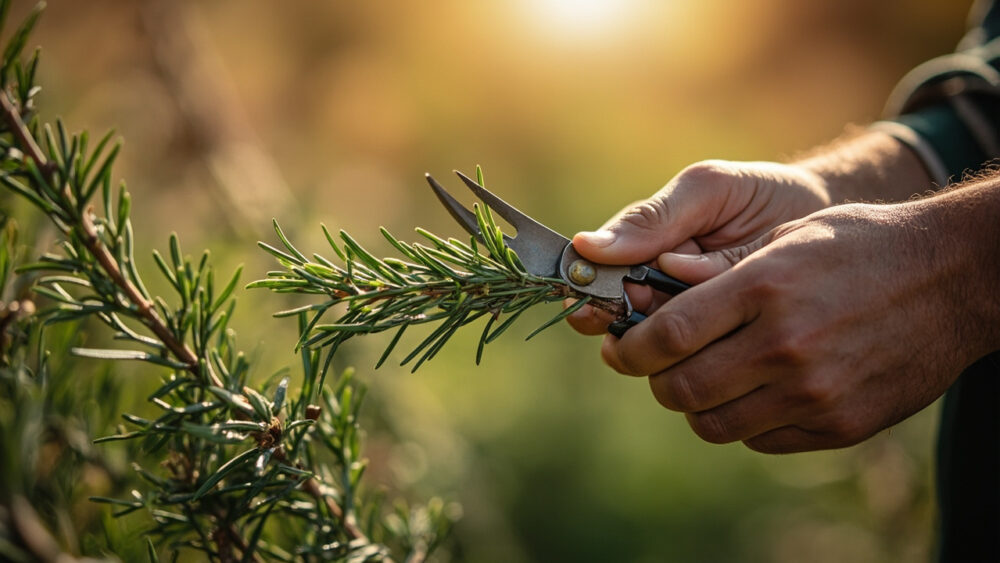
You can harvest rosemary any time the plant is actively growing, snipping stems that are at least 6 to 8 inches long and taking no more than a third of the plant at once. The best flavor comes from morning harvests, right after the dew dries, before the sun burns off the oils that make rosemary worth growing in the first place. That’s the short answer to how to harvest rosemary well instead of just hacking at it.
But here’s where most people go wrong, and it has nothing to do with timing. It’s the cut itself, and the spot on the stem where you make it decides whether that branch grows back thick or gives up entirely.
There’s also a sign everyone misreads on older plants, a woody-looking base that looks done for but usually isn’t, and an honest answer to the question you’re about to ask next: how much can you actually take without setting the plant back a full season. Stick around, because the save-able Rosemary at a Glance card is at the bottom, and it’s worth screenshotting before you go outside.
The Signs Your Rosemary Is Ready to Cut
Rosemary doesn’t ripen the way a tomato does. There’s no single ready day.
What matters is stem length and plant maturity. A new plant needs a full growing season, sometimes closer to a year, before it has enough woody structure to spare. Once it does, any stem past 6 to 8 inches with a few inches of firm growth below the tip is fair game.
Look for this
Healthy harvest-ready stems are green to gray-green, snap with a slight resistance rather than bending limply, and carry needles that are firm, not soft or curling.
Feel for this
Run two fingers down a stem. If the bottom half feels stiff and bark-like while the top stays soft, that’s a mature stem, and it’s exactly where you want to cut.
Once you know a stem is ready, the next question is whether right now is the right week to take it.
The Timing Window, and What Early or Late Costs You
Rosemary can be harvested lightly almost any time it’s actively growing, but the two heaviest harvest windows are late spring through summer, when new growth is fastest, and again in early fall before the first real cold snap.
Cut too early in spring, before new growth has hardened off a little, and you’ll take stems that are still soft and low in oil, which means weaker flavor and slower regrowth. Cut too late in fall, especially after a hard frost has already hit the plant, and you’re harvesting stressed, sometimes damaged tissue that won’t dry or store well.
If you garden where winters dip into the teens or lower, avoid heavy harvesting within 4 to 6 weeks of your average first frost. The plant needs that time to toughen up, not push new tender growth that frost will kill outright.
In mild winter climates, zones 8 and warmer, rosemary keeps growing nearly year round, so the calendar matters far less than the stem itself.
Timing gets you to the plant at the right moment, but the actual cut is where most people cost themselves next month’s harvest.
How to Cut Rosemary Without Wrecking the Plant
Here’s the mistake that quietly ruins more rosemary plants than pests or cold ever do: cutting straight into old, bare wood.
Rosemary regrows from green or semi-green stem tissue. Cut back into the thick, gray, leafless wood at the base and that stem often won’t push new growth at all. You’ve just created a dead stub.
Do this instead
- Use clean, sharp bypass pruners or scissors, never a dull pair that crushes the stem.
- Cut 1 to 2 inches above where the stem turns woody, always leaving at least a couple inches of green, leafy growth below your cut.
- Take stems from all over the plant rather than stripping one side, which keeps growth even and keeps the plant from looking lopsided.
- Stop once you’ve removed about a third of the plant’s total growth in a single session.
That one-third rule is the honest answer to how much you can take. Go past it on a stressed or young plant and you risk a slow, sparse recovery that can cost you the rest of the season.
About that woody base everyone panics over: a thick, bark-like lower trunk on a mature rosemary is completely normal, not a sign of dying wood, so leave it alone and focus your cuts higher up on the green growth.
Once the stems are off the plant, what you do in the next hour matters almost as much as the cut itself.
Right After the Cut: Don’t Let the Harvest Wilt or Fade
Fresh rosemary starts losing aromatic oil the moment it’s cut, so don’t let it sit in a hot car or a sunny counter for hours.
Rinse gently if the stems are dusty, then pat dry. Wet rosemary going straight into storage invites mold fast.
For same-week use, stand the stems upright in a small jar with an inch of water, loosely covered, and refrigerate. They’ll hold well for 7 to 10 days that way, often longer.
For anything you’re not using within a week, move straight to drying or freezing rather than letting cut stems sit around losing flavor.
How you store it now decides whether this harvest lasts you a season or a week.
Curing and Storing: Making the Harvest Last
Rosemary dries beautifully, which is part of why it’s such a forgiving herb to grow.
Air drying is the simplest method: bundle 4 to 6 stems with twine, hang them upside down somewhere warm, dark, and dry with decent air movement, and check in 1 to 2 weeks. They’re done when needles snap cleanly off the stem instead of bending.
Strip the dried needles into an airtight jar and keep it out of direct light. Dried rosemary holds strong flavor for 6 to 12 months, though it never tastes quite as bright as fresh.
Freezing works even better for flavor. Freeze whole sprigs on a tray, then bag them, or strip and freeze the leaves in a little oil or water in an ice cube tray for cooking-ready portions.
Storage keeps what you’ve already cut, but a little strategy keeps new growth coming all season long.
Keeping the Harvest Coming Back
Light, frequent harvesting beats one big aggressive cut almost every time.
Snip a little every week or two during the active growing season instead of stripping the plant once a month. This mimics the kind of pruning that actually encourages rosemary to branch out and get bushier rather than tall and leggy.
Established, in-ground plants in warm climates can handle harder cutbacks, even down by half, right as new spring growth begins. Container plants and anything in its first year should be treated more gently, sticking to that one-third guideline every time.
Avoid any hard pruning within 4 to 6 weeks of your first expected frost, since new tender growth pushed that late has no time to toughen up before cold hits.
Get the rhythm right and one healthy rosemary plant can supply a kitchen for years, which brings us to the card worth saving before you head back outside.
Rosemary at a Glance
- When to harvest: any time the plant is actively growing, once stems reach at least 6 to 8 inches long, ideally in the morning after dew dries.
- How much to take: no more than about a third of the plant’s total growth in a single harvest session.
- Where to cut: 1 to 2 inches above where the stem turns from green to woody, always leaving some green growth behind.
- When to avoid heavy cutting: within 4 to 6 weeks of your first expected frost in cold-winter climates.
- Best storage for fresh: stems in a jar of water, loosely covered, refrigerated, good for 7 to 10 days.
- Best long-term storage: air-dried bundles or frozen sprigs, keeping strong flavor for 6 to 12 months.
- For continuous harvest: light, frequent snipping every week or two beats one large cutback.
The whole secret to rosemary is patience with the plant and restraint with the shears.
Cut a little, cut it right, and it will keep feeding you long after the season you started in.