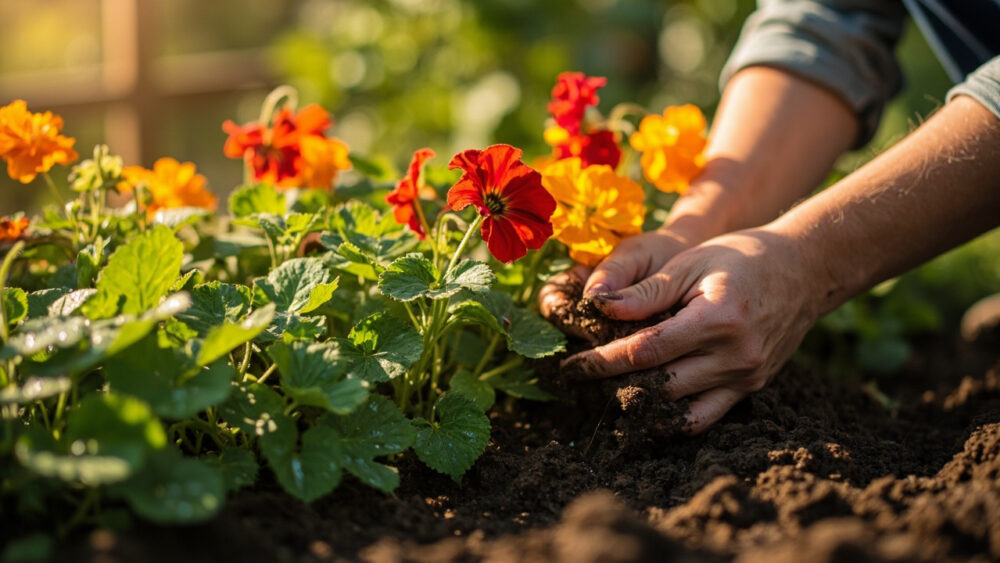
Nasturtiums are one of the easiest flowers you can grow, and learning how to grow nasturtiums really comes down to three things: wait until the soil warms up, do not feed them rich soil, and plant the seed direct where you want it to live. Sow seeds a half inch deep, 8 to 12 inches apart, once the soil hits about 55 to 60 F. Skip transplanting if you can, since nasturtiums hate having their roots disturbed and often sulk for two weeks after a move.
Here is the part almost nobody guesses right: the number one reason nasturtiums grow leaves for miles and never bloom is soil that is too good to them. Rich, well fed dirt is a mistake here, not a favor. There is also a sign most people misread as a pest problem when it is actually just how the plant works, and a very reasonable follow up question about whether the flowers and leaves are actually edible, which deserves a straight answer, not a maybe.
Stick around, because the save it to your phone card, “Nasturtiums at a Glance,” is waiting at the very bottom with every number in one place.
When to Plant Nasturtiums
Wait until the soil itself is warmnot just the air. Nasturtium seed sits and rots in cold, wet dirt rather than germinating, so aim for soil temperature around 55 to 60 F, which usually lines up with one to two weeks after your last spring frost date.
In most of the country that lands sometime in mid to late spring. Gardeners in hot summer zones, roughly zone 9 and up, get a second, often better window: fall planting for winter and spring bloom, since nasturtiums genuinely dislike heat above the mid 80s and will stall or die back in a hard summer.
If you are itching to start early, you can start seed indoors 3 to 4 weeks before your last frost in biodegradable pots you can plant whole, since disturbing the roots at transplant time is exactly the setback we are trying to avoid.
Timing solved, the next decision is where in the yard this plant actually wants to live.
Choosing the Spot and Prepping the Soil
Nasturtiums want full sun, 6 or more hours a day, though in the hottest climates a little afternoon shade actually extends the bloom season by keeping roots cooler. Good drainage matters more than fertility.
This is where the guess most people make backfires. If you assumed better soil means better flowers, that is the mistake that produces a jungle of leaves and almost no blooms.
Lean, average soil is what you want. Skip the compost, skip the fertilizer at planting time, and do not choose the bed you just amended for your tomatoes. Nasturtiums evolved on poor, rocky ground, and they bloom hardest when they are a little bit hungry.
A raised bed edge, a gravelly slope, or a container with plain, unenriched potting mix all work better than your best garden soil.
Once you have picked the spot, planting itself takes about five minutes.
Planting Step by Step
- Nick or soak the seed: nasturtium seeds have a hard shell; soaking them in room temperature water for 12 to 24 hours, or lightly scratching the surface with sandpaper, speeds germination from around two weeks down to 7 to 10 days.
- Sow direct, a half inch deep: push each seed into loosened soil and cover lightly. Direct sowing avoids the transplant shock that stalls this plant badly.
- Space by growth habit: bush types need 8 to 10 inches between plants; vining, trailing types need 12 to 16 inches or more, since they will run 4 to 8 feet given room and support.
- Water in once, then back off: a thorough soak at planting, then let the soil dry slightly before the next watering. Overwatering at this stage rots seed faster than cold ever does.
- Thin if needed: if you scattered seed loosely, thin seedlings to their final spacing once they have two true leaves, so nobody is competing for light.
Germination shows up in a week or two as a pair of round, slightly cupped seed leaves pushing straight up out of the soil.
Watering and Feeding Through the Season
Nasturtiums want soil that is evenly moist while seedlings, then noticeably drier once established. Check the top inch or two of soil with a finger. If it is still damp, wait.
Mature plants are genuinely drought tolerant and will bloom more, not less, under mild stress. Consistent heavy watering pushes them right back toward all leaf, no flower.
Skip regular fertilizer entirely, or feed at most once, lightly, with something very low in nitrogen if your soil is truly poor. High nitrogen feed is the single fastest way to get a huge, healthy looking plant that never flowers, which is the exact leaf explosion problem from the soil section showing up again mid season.
Deadheading spent blooms encourages more flowers, but nasturtiums are forgiving if you skip it, they will keep producing regardless.
Even well fed correctly, this plant has a short list of real threats worth watching for.
Problems That Actually Strike, and How to Head Them Off
Here is the sign almost everyone misreads. Clusters of small, soft bodied aphids, often bright yellow or orange, packed onto the stems and undersides of leaves are extremely common on nasturtiums, and that is not a sign you are doing something wrong.
Nasturtiums are a known aphid magnetand a lot of experienced gardeners plant them near roses and vegetables specifically as a decoy crop to pull aphids away from plants that matter more. A light infestation is cosmetic and rarely kills the plant.
If numbers get heavy, a strong blast of water knocks most off, and insecticidal soap handles the rest. Always follow the product label exactly.
Cabbage worms and cross striped cabbageworms will chew ragged holes in leaves since nasturtiums are in the same family as cabbage. Handpicking or a label directed organic caterpillar control clears them up.
Root rot from soggy, poorly drained soil is the other real risk, and it is far more dangerous than any insect. Wilting despite moist soil, and stems that go soft and dark at the base, mean the roots are already compromised. There is no fixing a nasturtium once crown rot sets in. Pull it and replant elsewhere with better drainage.
Get past those two issues and the only thing left to figure out is when the payoff actually shows up.
When and How to Harvest Nasturtiums
Nasturtiums bloom fasttypically 35 to 65 days from seed depending on variety, and once they start they do not stop until a hard frost or serious heat shuts them down. Pick flowers any time they are fully open, using clean scissors or your fingers, and picking regularly actually encourages more buds rather than fewer.
Now, the honest answer to the question you were probably already forming: yes, both the flowers and the leaves are edible for people, with a peppery, watercress-like bite, and they are a genuinely popular salad garnish.
That said, this is general food information, not an identification guide, and if you or anyone in your household has plant allergies or you are unsure exactly what you are eating, treat any new edible flower cautiously and check with a doctor first.
For pets, treat nasturtiums as best avoided. They are generally considered low toxicity but can cause mild stomach upset if a cat or dog eats a large quantity. If your pet eats a significant amount and seems unwell, call your veterinarian rather than waiting it out.
Seed pods form after flowering if you leave a few blooms unpicked, and you can collect those once they turn brown and papery for next year’s planting, completely free.
Everything you actually need to remember is right below.
Nasturtiums at a Glance
- When to plant: direct sow one to two weeks after last frost, once soil hits 55 to 60 F, or in fall in hot zones 9 and up.
- Depth and spacing: a half inch deep, 8 to 10 inches apart for bush types, 12 to 16 inches for vining types.
- Light and soil: full sun, lean and average to poor soil, good drainage, no compost or fertilizer at planting.
- Watering: keep evenly moist until established, then let soil dry between waterings, mature plants prefer it on the dry side.
- Feeding: skip regular fertilizer, rich or high nitrogen feed causes lush leaves and few flowers.
- Common problems: aphids are normal and mostly cosmetic, cabbage worms chew leaves, root rot from wet soil is the real killer.
- Bloom time: 35 to 65 days from seed, continuous flowers until frost or serious heat, both flowers and leaves are edible for people, treat as best avoided for pets.
Poor soil and a light hand on the watering can are what turn nasturtiums into nonstop bloomers.
Get those two things right and this is about as close to foolproof as flowers get.