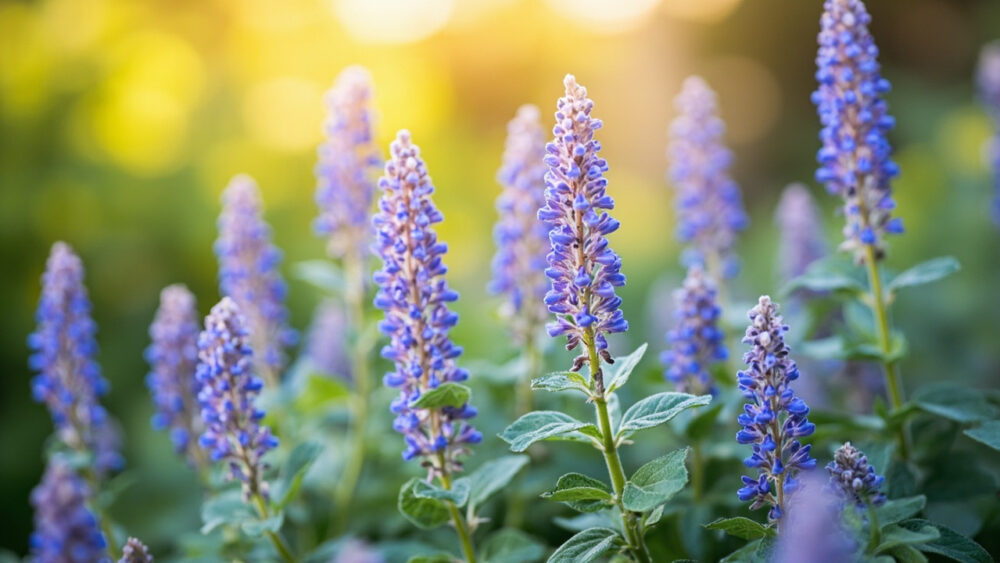
Catmint blooms from late spring through early summertypically starting sometime in May and running into June or July depending on your climate, and a single flush lasts about four to six weeks before it starts to fade. Cut it back hard after that first flush and most varieties will rebloom, giving you a second, sometimes third round of flowers into fall.
That’s the short version. But the honest range hides a few things that change the answer for your actual plant: whether you bought a full-size species or one of the compact hybrids, how hot your summers run, and whether anyone has ever cut the thing back.
Stick around, because down at the bottom there’s a quick-reference card you can save, and before that I’ll walk you through why your catmint might be sitting there green and flowerless when your neighbor’s is a purple haze of bees.
The Bloom Window, and Why “One Bloom Time” Is Misleading
Catmint’s first flush hits in late spring to early summer, roughly May into June in most temperate zones, a little later in cooler climates and a little earlier in warm ones. That first show typically holds for four to six weeks.
Here’s the part most people miss: catmint isn’t a one-shot bloomer like a peony. It’s a repeat performer, and with a midseason haircut it will flower again in mid to late summer, sometimes a third time before frost.
So “when does catmint bloom” really has two honest answers: once, if you never touch it, or three separate times, if you do.
That difference is entirely in your hands, and the next section is about what actually controls it.
What Actually Controls the Timing
Three things set the calendar: your zone, the variety, and the weather that particular year.
Zone and climate shift the whole window earlier or later. Gardeners in zone 3 or 4 might not see bloom until June, while zone 7 or 8 gardeners can be looking at flowers in April or May.
Variety matters more than people expect. Full-size types like Nepeta ‘Six Hills Giant’ bloom on a slightly later, longer arc, while compact hybrids such as ‘Walker’s Low’ or ‘Cat’s Meow’ tend to start a bit earlier and rebloom faster after a trim.
Weather is the wildcard. A cool, wet spring delays the first flush; a warm, dry spring pushes it earlier and can also shorten how long that first round lasts.
None of that tells you what’s happening in your own yard right now, and that’s the next thing to check.
How to Read What’s Actually Happening in Your Yard
Skip the calendar and look at the plant itself. Catmint buds up on new growth, so if you see fresh gray-green stems pushing several inches above last year’s base, flowers are usually two to four weeks behind that growth spurt.
Check the soil and sun, not just the date. Catmint wants full sun, at least six hours, and it blooms noticeably later and thinner in partial shade. It also prefers soil on the leaner, drier side. Rich, constantly moist soil pushes lush foliage at the expense of flowers, which is the opposite of what most people expect.
If your plant is in a pot, expect bloom to lag a week or two behind the same variety in the ground, since container soil warms and cools faster and root space is tighter.
Once you know where your plant stands, the next question is how to get more out of it.
How to Get More Blooms, and Get Them Longer
If you assumed more fertilizer means more flowers, that guess backfires with catmint. Extra nitrogen gives you a bigger, floppier plant with fewer blooms, not more.
What actually works is simpler and more physical:
- Full sun placement: six or more hours a day is non-negotiable for heavy bloom.
- Lean soil, good drainage: skip the compost-heavy bed, catmint is a plant that thrives on a little neglect.
- The midseason chop: once the first flush fades and looks tired, shear the whole plant back by a third to a half. New growth and a second bloom follow within two to four weeks.
- Division every three to four years: older clumps get woody in the center and bloom less; dividing in early spring or fall reinvigorates them.
Do the shear-back step and you’ve essentially doubled your bloom season for the cost of ten minutes with a pair of shears.
But shearing only helps a plant that was blooming in the first place, so let’s cover the ones that aren’t.
Why Your Catmint Isn’t Blooming
Most no-bloom catmint comes down to one of four causes, and they’re easy to tell apart.
Too much shade gives you a leggy, stretched plant with sparse flowers concentrated at the tips. The fix is moving it, or accepting a lighter bloom.
Too much fertility or water gives you a lush, floppy, deep-green plant that flowers weakly if at all. Back off the feeding and let the soil dry out more between waterings.
An overgrown, unclipped, woody clump blooms once, briefly, then quits for the season because it’s put all its energy into old growth. Divide it or cut it back hard and it usually recovers within a season.
A first-year plant from a small nursery pot sometimes just needs a season to establish roots before it flowers heavily. That’s normal, not a failure.
Once you’ve ruled those out, the last piece is keeping the flowers you do get from fizzling out early.
Deadheading and Aftercare That Stretch the Show
Catmint doesn’t need careful, flower-by-flower deadheading the way roses or dahlias do. Its blooms are small and packed along spikes, so the efficient move is a blanket shear, not precision snipping.
When the first flush starts looking gray and spentusually four to six weeks in, cut the entire plant back by about a third to half its height. This is the single biggest lever for a longer bloom season, more than watering or feeding.
After the cut, a light watering and a thin layer of mulch help push fresh growth without overfeeding. Skip heavy fertilizer here too. It still doesn’t help.
Do this once after the first flush and once again after the second if your season runs long enough, and you can realistically stretch a single “one bloom time” plant into color from late spring clear through the first hard frost.
Catmint: Quick Reference
- Bloom window: late spring through early summer, generally May into June or July depending on climate.
- First flush duration: four to six weeks before it fades.
- Reblooming: yes, if sheared back by a third to half after the first flush, expect a second bloom in mid to late summer.
- Light needs: full sun, six or more hours, for heaviest bloom. Shade delays and thins flowering.
- Soil preference: lean, well-drained soil. Rich or overly moist soil grows foliage instead of flowers.
- Common no-bloom causes: too much shade, too much fertilizer or water, an old woody unclipped clump, or a first-year plant still establishing.
- Best single fix: a hard shear after the first flush fades, which resets the plant for a longer, second round of color.
Catmint rewards a little discipline more than it rewards fussing over it.
Get the sun and the shears right, and it will bloom most of the season without asking much else of you.