Growing lemongrass means giving it heat, full sun, and room to spread, then waiting. Plant divisions or nursery starts after your last frost once soil hits about 65°F, space them 24 inches apart in rich, well-drained soil, and expect your first real harvest 4 to 6 months later once stalks are pencil-thick. It grows fast once it settles in, but the plant everyone buys at the grocery store looks nothing like the swaying, thigh-high clump you’re actually growing toward.
Most failed attempts trace back to one thing: starting from a grocery store stalk in a glass of water and never getting real roots before planting it out. There’s also a sign gardeners misread every year, thinking their lemongrass is dying when it’s actually doing exactly what it’s supposed to do in fall. And if you’re wondering whether this stuff is safe to have around pets and kids brushing past it daily, that answer is worth knowing before, not after.
I’ll cover timing, spacing, feeding, the problems that actually show up on lemongrass, and how to know it’s ready to cut. Save the Lemongrass at a Glance card at the very bottom for when you’re standing at the nursery or out in the bed with dirt on your hands.
When to Plant Lemongrass
Lemongrass is tropical at heart and has zero frost tolerance, so timing is simple: wait until night temperatures are reliably staying above 50°F and soil has warmed to at least 65°F. That’s usually 2 to 4 weeks after your last spring frost date, depending on your region.
Zone matters more than most herbs. In zones 9 and up it can be a perennial that comes back year after year. In zones 8 and colder, treat it as an annual, or dig up the clump before frost and overwinter it indoors in a pot near a bright window.
Planting too early into cold, wet soil is the fastest way to stall it out for the whole season.
Choosing the Spot and Prepping the Soil
Lemongrass wants full sun, 6 to 8 hours minimum, and it wants heat radiating back at it. A spot against a south-facing wall or near a driveway does wonders in cooler climates.
Soil should be loose, rich in organic matter, and drain well. Work a couple inches of compost into the top 8 to 10 inches before planting, and if your soil is heavy clay, raise the bed or grow it in a large container instead.
Lemongrass hates wet feet. Standing water around the roots will rot the clump faster than cold ever will, so drainage is not optional.
Get the bed right once and everything after this is easy.
Planting Lemongrass Step by Step
Here’s where most people go wrong before they even get a plant in the ground. A stalk rooted in a glass of water on your counter is not ready to plant until it has a real root mass, not just a few white threads.
Starting from a grocery store stalk
- Choose a fat, firm stalk with the base intact, not dried out or split.
- Set it in an inch of water, base down, on a bright windowsill.
- Change the water every couple days and wait 3 to 4 weeks for a dense cluster of roots at least 2 inches long before planting.
Planting divisions or nursery starts
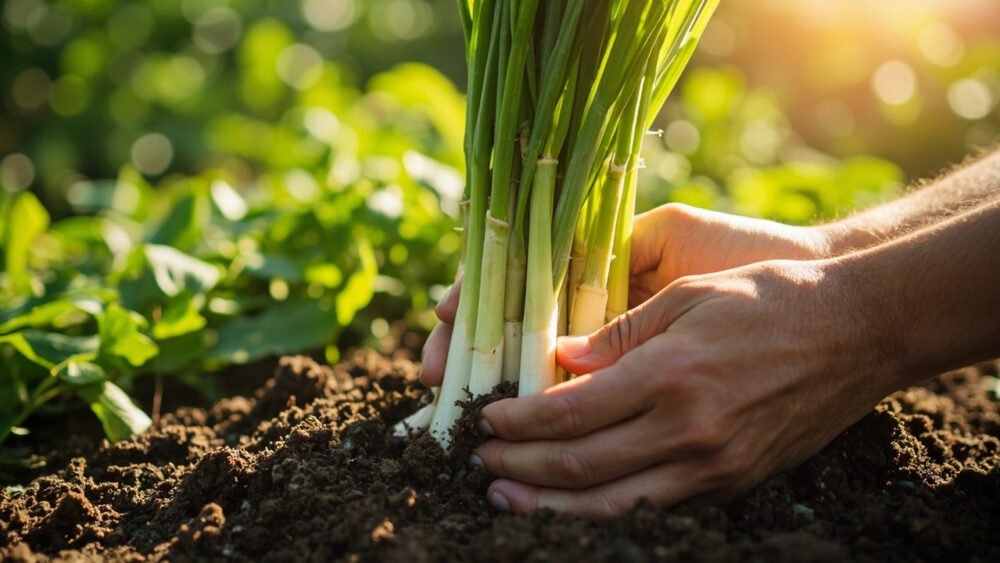
- Dig a hole just deep enough that the base sits at the same level it was growing before, roughly 2 to 3 inches deep.
- Space plants 24 to 36 inches apart in every direction. This grass clumps out to 3 to 4 feet wide at maturity and needs the room.
- Backfill, firm the soil gently around the base, and water in thoroughly right away.
- Mulch 2 inches around the base to hold warmth and moisture, keeping mulch off the actual stalks.
Once it’s in the ground, the real test is what you do with a hose over the next few weeks.
Watering and Feeding Through the Season
Keep soil consistently moist for the first 3 to 4 weeks while roots establish, watering whenever the top inch of soil feels dry. Established lemongrass wants about 1 inch of water a week, more during a hot, dry stretch since it’s actively growing all summer.
Feed it like the heavy grass it is. Lemongrass is a hungry grower. Work in a balanced granular fertilizer at planting, then side-dress with compost or a balanced feed every 4 to 6 weeks through summer, or use a diluted liquid feed monthly if you’re growing in a container.
Container-grown plants dry out faster and need checking every day or two once temperatures climb into the 80s and 90s.
Feed and water generously now, because a starved clump never bulks up enough to actually harvest.
The Problems That Actually Show Up
Lemongrass is genuinely low-drama compared to most herbs, but a few issues do turn up.
- Rust-colored streaks on leaves: usually a fungal leaf rust from overhead watering and poor airflow. Water at the base instead of the foliage, and thin overcrowded clumps.
- Spider mites: fine webbing and stippled, dull leaves in hot, dry weather. A strong spray of water and improved humidity usually knocks them back; insecticidal soap is the next step, applied per the label.
- Yellowing at the base with mushy stalks: root rot from soggy soil. Pull back mulch, ease off watering, and improve drainage before it spreads.
- Slow growth all season: almost always a heat or nitrogen problem, not a pest. Check both before you assume disease.
Now, about that scary-looking change every fall.
The Fall Sign Everyone Misreads
As nights cool, lemongrass leaf tips start browning and the whole clump looks tired and washed out. If you assume that’s a dying plant that needs rescuing with extra water and fertilizer, that guess actually makes things worse by keeping roots wet going into cold weather.
That browning is normal seasonal slowdown, not decline. The plant is simply shutting down growth as temperatures drop, the same way it would in its native tropical dry season.
In frost-free zones, cut it back hard and it regrows from the base next spring. Everywhere else, dig up the clump before your first hard frost, pot it, and let it rest indoors through winter with minimal water.
Which brings up the other question people ask right about now, whether this plant is safe to have around.
Is Lemongrass Safe Around Pets and Kids
Lemongrass itself is generally considered non-toxic and is even used in food and tea, but the leaf edges are sharp and fibrous enough to cause mechanical irritation to the mouth, gums, and digestive tract if chewed on in quantity, particularly in cats and dogs. Watch for drooling, vomiting, or pawing at the mouth after any suspected chewing.
If a pet or child seems to be reacting badly after contact or ingestion, call a veterinarian or doctor rather than waiting to see if it passes.
With that settled, let’s get to the part you actually planted this for: cutting stalks for the kitchen.
When and How to Harvest Lemongrass
Lemongrass is ready to harvest once stalks are at least 12 inches tall and as thick as a pencil at the base, which typically takes 4 to 6 months from planting a division, longer from a rooted grocery stalk. Thickness matters more than height. A tall, thin stalk isn’t mature yet, no matter how impressive the clump looks.
To harvest, grab an outer stalk near the base and either cut it with a sharp knife or twist and pull. Take outer, mature stalks first and always leave the center of the clump growing.
You can harvest continually through the warm season once the clump is established, taking a few stalks at a time rather than stripping it all at once. A well-fed clump in the right climate will keep producing right up until the weather turns.
Everything you need to remember about timing, spacing, and care is right below.
Lemongrass at a Glance
- When to plant: after your last frost, once soil is at least 65°F and nights stay above 50°F.
- Spacing: 24 to 36 inches apart, planting 2 to 3 inches deep at the same level the roots were growing.
- Light and soil: full sun, 6 to 8 hours minimum, in loose, rich, well-drained soil.
- Water: about 1 inch a week once established, more in hot weather, never soggy.
- Feeding: compost or balanced fertilizer at planting, then every 4 to 6 weeks through the growing season.
- Hardiness: perennial in zones 9 and up, grown as an annual or overwintered indoors elsewhere.
- Harvest: outer stalks at least 12 inches tall and pencil-thick, usually 4 to 6 months after planting.
Give lemongrass heat, room, and steady water, and it does the rest of the work itself.
The clump that looks unimpressive in June is usually the one you’re cutting stalks off of by September.