Here is the short version: sow cilantro seed a quarter inch deep, direct in the ground once you’re past your last frost, keep the soil evenly moist at 55 to 75°F, and you’ll see leaves ready to cut in 45 to 70 days. That’s the whole plant summed up in one sentence. But if you want to actually get a bowl of cilantro instead of a patch of flowers and seed heads, there are a handful of details that separate a good harvest from a frustrating one.
Most people who fail with cilantro make the same mistake, and it isn’t watering or soil. It’s timing, specifically starting it the way you’d start a tomato. Cilantro punishes that approach fast, and I’ll walk you through why in a minute.
There’s also a sign gardeners misread constantly, the moment cilantro sends up a tall center stalk. Most people think they did something wrong. Usually the plant is just doing exactly what it’s built to do. Stick around, because the full at-a-glance card with every number you need is waiting at the bottom, saveable to your phone before you walk back out to the garden.
When to Start Cilantro Seeds
Direct sow is almost always the right call. Cilantro grows a long taproot early, and that root resents being disturbed. Started indoors and transplanted, a big share of seedlings sulk, stall, or bolt straight to seed out of stress. Nurseries sell it in cell packs because people buy it that way, not because it thrives that way.
Sow directly outdoors as soon as the soil can be worked in spring, generally 2 to 3 weeks before your last expected frost through a few weeks after. Cilantro tolerates light frost fine and actually prefers cool soil over hot. In warm climates, skip spring almost entirely and plant in early fall instead, since cilantro bolts hard once days get long and hot.
Get the timing wrong here and nothing later fixes it.
Sowing Cilantro Step by Step
The steps are simple, but each one has a detail that matters more than people expect.
Depth and spacing
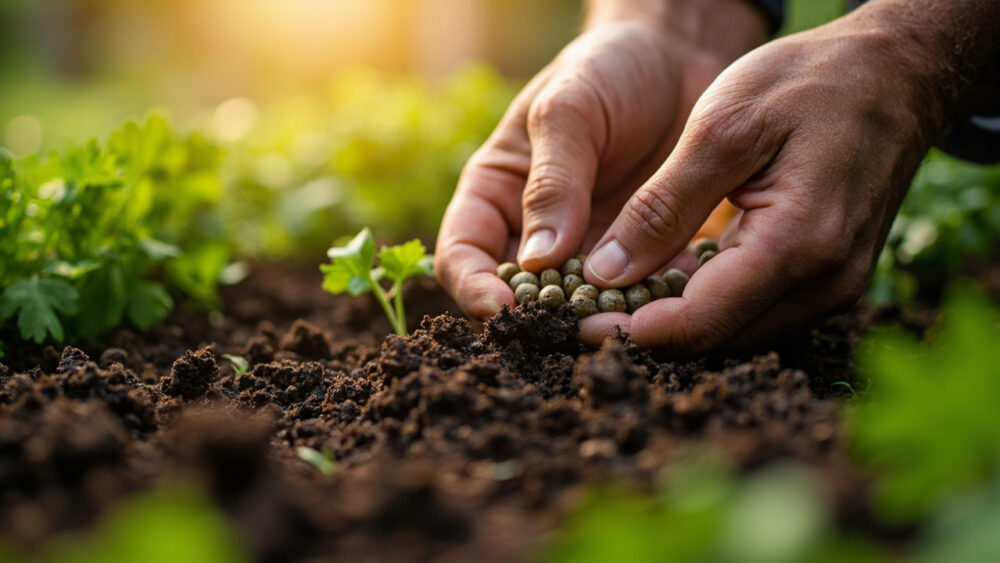
Sow seeds about a quarter inch to a half inch deep. Space seeds 1 to 2 inches apart, or scatter them and thin later. Rows should sit 8 to 12 inches apart if you’re planting more than a patch.
Soil and medium
Cilantro wants loose, well-draining soil with some organic matter, not heavy clay that stays soggy. Work in an inch of compost before sowing. Soggy, compacted soil rots seed before it ever sprouts.
Temperature and light
Soil between 55 and 75°F germinates fastest. Below 50°F, germination slows to a crawl. Full sun works in cool weather, but part shade or afternoon shade extends the harvest window once temperatures climb.
Get the seed in at the right depth and temperature, and the next stage takes care of itself.
Germination: What to Expect and When to Worry
Expect sprouts in 7 to 14 days under good conditions. Cold soil can stretch that to 3 weeks, and that’s normal, not a failure.
Keep the top inch of soil consistently damp during this window, watering lightly every day or two rather than deep-soaking on a schedule. Cilantro seed is actually two seeds fused in one round hull, so germination is often patchy, with some spots thick and others bare. That unevenness is normal.
Genuine cause for concern is different: seed sitting more than 3 weeks in warm, moist soil with nothing showing usually means the seed was old, or it rotted in soil that stayed too wet. If that happens, resow rather than waiting longer.
Once true leaves show up, the plant moves fast, and that’s where people get careless.
Hardening Off and Transplanting, If You Started Indoors
If you started seed indoors anyway, or bought a cell-pack seedling, transplant while it’s still young, ideally under 3 inches tall with just a few true leaves. Waiting longer means fighting that taproot, and the plant often stalls for a week or more in protest.
Harden off over 4 to 7 days, setting seedlings outside in shade for an hour the first day and adding sun and time daily.
Transplant on an overcast afternoon or evening, water immediately, and disturb the roots as little as possible. Handle the root ball, never the stem.
Even a perfect transplant sets cilantro back briefly, so don’t panic if it sulks for a few days.
Caring for Cilantro Through the Season
Cilantro is low-maintenance as long as it doesn’t dry out or overheat. Water enough to keep soil evenly moist, about 1 inch per week, more during hot stretches. Drought stress is the fastest route to bitter leaves and early bolting.
Feed lightly if at all. A single dose of balanced fertilizer or an inch of compost worked in at planting is usually enough; heavy nitrogen pushes leafy growth at the expense of flavor.
Thin seedlings to 4 to 6 inches apart once they have a couple of true leaves, so plants aren’t fighting each other for water and light.
Mulch lightly to keep roots cool once the weather warms, since heat is what pushes cilantro toward seed faster than anything else.
Keep it cool and evenly watered, and you buy yourself real harvest time before the plant changes its mind about staying leafy.
Harvest, and the Bolt Everyone Misreads
Start snipping outer leaves once the plant is 4 to 6 inches tall, usually 45 to 55 days from seed for leaf production. Cut stems near the base rather than pinching single leaves, and the plant keeps producing from the center.
Here’s the part almost everyone misreads. When a thick central stalk shoots up fast, most gardeners assume they underwatered or something went wrong. Usually it’s neither.
Bolting is triggered by heat and daylength, not neglect. Once temperatures push into the 75 to 80°F range for several days running, cilantro shifts into reproductive mode almost regardless of how well you cared for it. This is the plant working exactly as designed, just not on the timeline you wanted.
Once it bolts, leaf flavor turns grassy and bitter fast, and leaf harvest is basically over. But that’s not the end of the story, because the plant has one more useful act left.
Let it flower and you get two bonus harvests: the white-pink blooms are edible and mild, and the green seeds that follow, dried, are coriander. Let seed heads turn tan and dry on the plant, then shake them into a paper bag. Cilantro also self-seeds readily, so a bolted patch often means a free volunteer crop next season with zero effort from you.
Cilantro at a Glance
- When to plant: direct sow 2 to 3 weeks before last frost through early spring, or in early fall in hot climates.
- Depth and spacing: a quarter to half inch deep, thinned to 4 to 6 inches apart, rows 8 to 12 inches apart.
- Soil and temperature: loose, well-draining soil with compost worked in, germinating best between 55 and 75°F.
- Germination time: 7 to 14 days in warm soil, up to 3 weeks in cold soil.
- Water needs: about 1 inch per week, kept consistent, never allowed to dry out completely.
- Time to harvest: 45 to 70 days from seed for leaf, bolting fast once heat arrives.
- Bolting trigger: heat above roughly 75°F and long daylight, not a watering mistake.
Cilantro’s whole game is staying cool and getting cut early, not fighting the plant once it decides to bolt.
Plant a new round every 2 to 3 weeks through the cool season, and you’ll have fresh leaves far longer than any single sowing gives you.