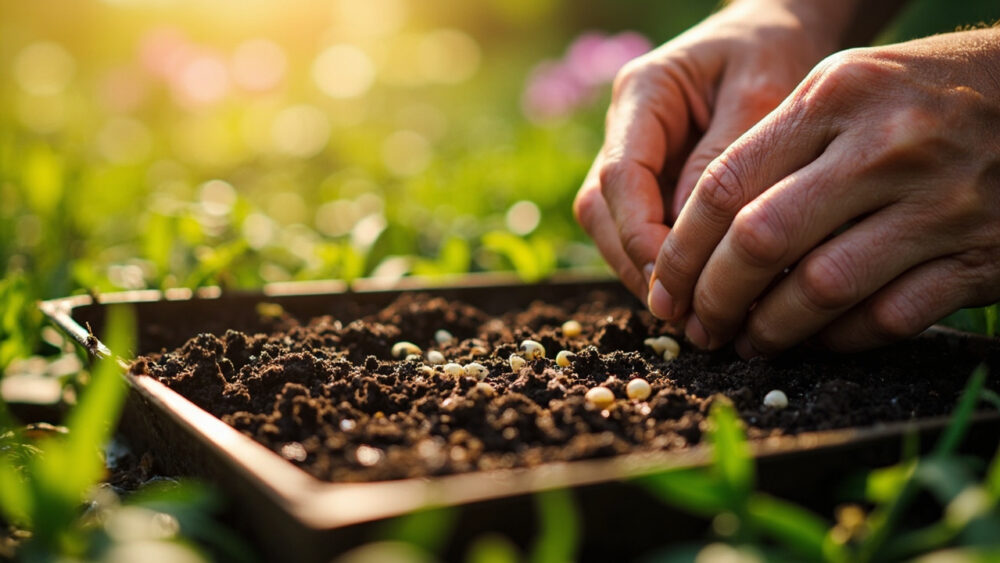
Yarrow seeds are tiny, need light to germinate, and want surface sowing, not burial. That single detail is where most people learning how to grow yarrow from seed go wrong before they even get started. Get the depth right, keep the soil at 60 to 70 F, and you will see sprouts in 7 to 14 days, with flowers by midsummer if you started early enough.
Here is what nobody mentions up front: yarrow germinates so easily that the seedlings themselves become the problem. They come up in a thick, grassy-looking mat that is easy to mistake for weeds, and thinning them late is the mistake that costs most people their whole stand. There is also a timing question everyone eventually asks and almost nobody answers honestly, which is whether direct sowing actually works as well as starting indoors. It does, but only under specific conditions I will lay out below.
Stick with me through sowing, germination, hardening off, and the first bloom, and you will end up with the kind of yarrow patch that comes back reliably for years. The full Yarrow at a Glance card, the one worth saving to your phone before you head out to the garden, is waiting at the bottom.
When to Start Yarrow Seeds
Start indoors 6 to 8 weeks before your last frost date, or direct sow outdoors 2 to 3 weeks before that same date once soil is workable. Yarrow tolerates a light frost as a young seedling, so you have more room here than with tender annuals.
Direct sowing works fine in mild climates or sandy, fast-draining soil. In heavy clay or a short, wet spring, indoor starting gives you a head start and far better odds, since yarrow seedlings hate sitting in cold, saturated ground.
Zone matters less than soil temperature. Yarrow seed barely germinates below 55 F soil, so a calendar date means nothing if your ground is still cold and soggy.
The actual sowing technique is where most of the real mistakes happen next.
Sowing Yarrow Seed Step by Step
Yarrow seed is dust-fine, so technique matters more than usual. Rushing this step is the single biggest reason trays come up bare.
1. Choose the medium
Use a light seed-starting mix, not garden soil or a heavy potting blend. Yarrow wants excellent drainage and hates compaction.
2. Sow on the surface
Do not bury the seed. Press it lightly into the surface or cover with the faintest dusting, no more than 1/16 inch. Yarrow needs light to trigger germination, and buried seed simply sits there.
3. Water from below
Mist the surface or bottom-water the tray. A heavy top watering displaces the tiny seed and washes it into clumps at the low corners of the tray.
4. Set the temperature and light
Keep the tray at 60 to 70 F, on a bright windowsill or under grow lights 12 to 16 hours a day. Cooler soil just stalls everything, it will not ruin the seed, but you will wait weeks longer than you need to.
Once the surface stays lightly moist and warm, the waiting game begins, and this is where most people start second-guessing themselves.
Germination: What to Expect, and When to Actually Worry
Expect the first thread-like sprouts in 7 to 14 days under good warmth and light. By day 21, you should have a dense, mossy-looking carpet of tiny seedlings if you sowed generously.
If you assumed a bare tray at day 10 means failure, that guess is premature. Yarrow at 65 F germinates reliably but not always fast, and uneven light or a cool room can stretch the timeline to 18 or even 21 days.
The real warning sign is not slow germination, it is damping off: seedlings that sprout, look fine for a few days, then collapse at the soil line and turn translucent. That means too much moisture and too little airflow, not a seed problem. Cut back watering, add a small fan on low, and thin any overcrowded clumps immediately.
Once true seedlings have their first ferny leaves, the next decision is when and how to move them outside.
Hardening Off and Transplanting Yarrow
Start hardening off once seedlings have 2 to 3 sets of true leaves and outdoor temperatures stay reliably above freezing at night. Set trays outside in a sheltered, shaded spot for an hour the first day, adding an hour or two daily over 7 to 10 days.
Transplant after your last frost, spacing plants 12 to 18 inches apart. Yarrow spreads by rhizome once established, so tight spacing today means a crowded, floppy mess in two years.
Choose full sun, at least 6 hours a day, in average to poor soil with sharp drainage. Rich, heavily amended soil is the second big mistake: it produces tall, weak, floppy stems that flop over in the first summer storm instead of the tight, upright growth yarrow is known for.
Water new transplants in well, then start backing off almost immediately.
Caring for Yarrow Through the Season
Water new transplants twice a week until you see fresh growth, then taper off hard. Established yarrow wants dry to average soil and genuinely struggles in anything consistently damp.
Skip the fertilizer. Yarrow evolved for lean, rocky, poor ground, and feeding it richly is the fastest way to get weak stems and fewer flowers. If your soil grows decent weeds on its own, that is plenty for yarrow.
Pinch the growing tips once plants reach 6 to 8 inches to encourage bushier, sturdier growth instead of one tall floppy stem. Deadhead spent flower heads through summer to keep new blooms coming.
Watch for powdery mildew in humid, crowded conditions, visible as a gray-white coating on leaves. Improve airflow by dividing crowded clumps, and if it persists, a fungicide labeled for powdery mildew on ornamentals works, applied exactly per the label.
All that care is building toward one specific visual signal that tells you it is finally time.
When Yarrow Reaches Bloom and Harvest
Seed-started yarrow typically blooms in its first year if started early indoors, usually by mid to late summer, about 90 to 120 days from sowing. Plants started later or direct sown may wait until year two to flower reliably.
The sign you are looking for is flat-topped clusters of tiny flowers, usually white, yellow, or pink depending on variety, held well above the ferny foliage on stiff stems.
Harvest for fresh use or drying once clusters are fully open but before petals start browning at the edges. Cut stems in the morning after dew dries, bundle, and hang upside down in a dark, airy spot to dry.
Yarrow is not for eating carelessly or foraging casually from the wild; some people develop skin irritation from handling it, and it is considered toxic to dogs, cats, and horses if ingested, with signs like vomiting, diarrhea, or lethargy. If a pet eats a meaningful amount, call your veterinarian rather than waiting to see what happens.
Once you have that first bloom, everything else about growing yarrow gets easier every year after.
Yarrow at a Glance
- When to plant: start indoors 6 to 8 weeks before last frost, or direct sow 2 to 3 weeks before last frost once soil hits at least 55 to 60 F.
- Sowing depth: surface sow, barely covered, no more than 1/16 inch, since seed needs light to germinate.
- Germination time: 7 to 14 days at 60 to 70 F, sometimes up to 21 days in cooler or lower light conditions.
- Spacing: 12 to 18 inches apart at transplant to allow for rhizome spread.
- Light and soil: full sun, at least 6 hours daily, lean and well-drained soil, no rich amendments or regular fertilizer.
- Water needs: regular water while establishing, then dry to average moisture once mature.
- Time to bloom: 90 to 120 days from seed if started early, or the following year for late-started or direct-sown plants.
Get the surface sowing and lean soil right, and yarrow more or less takes care of itself after that.
Everything else is just patience while it settles in.