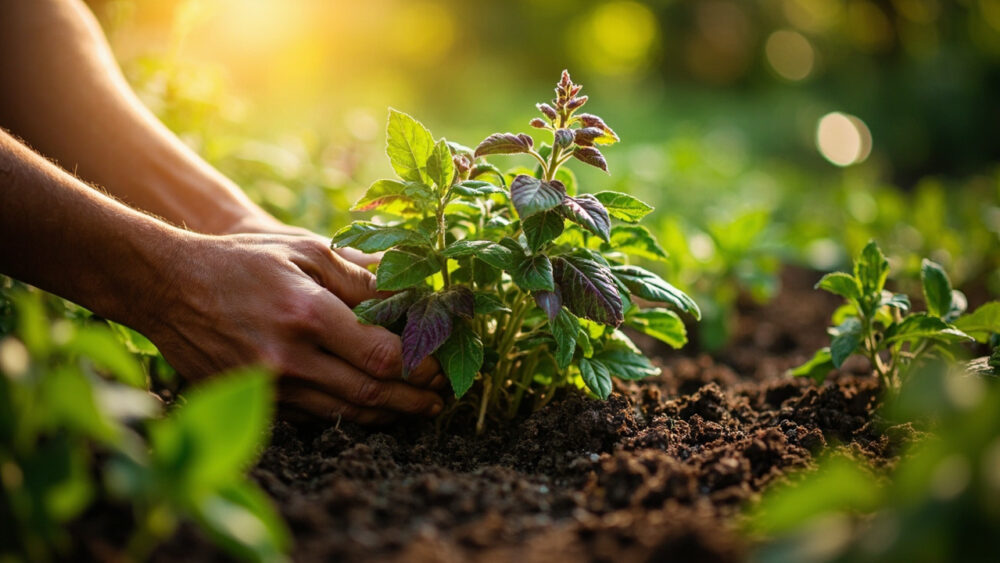
Growing holy basil (tulsi) means starting it warm, either from seed indoors six to eight weeks before your last frost or transplanting after nights stay above 50°F, then giving it full sun, rich well-drained soil, and 12 to 18 inches of elbow room per plant. It’s slower and fussier from seed than sweet basil, and it wants to flower constantly, which throws off gardeners expecting the same rhythm as their culinary basil.
Here’s what trips people up before they even get a harvest: pinching too late, planting too early into cold soil, and misreading the flower spikes as a sign to rip the plant out when they’re actually your cue to get busy. There’s also the question you haven’t asked yet but will, which is why your holy basil tastes clove-y and peppery instead of sweet like the basil you’re used to. That’s not a mistake. That’s the plant doing exactly what it’s supposed to.
Stick with this, because the save-able Holy Basil at a Glance card is waiting at the bottom once you’ve got the full picture.
When to Plant Holy Basil
Holy basil is a heat lover, more sensitive to cold than sweet basil, and it sulks or dies outright below 50°F. Start seed indoors six to eight weeks before your last frost date, then transplant only after nighttime lows are reliably staying above 55°F and soil temperature has hit at least 65°F.
Direct-seeding outdoors works in zones 9 and warmer, but everywhere else you’re better off transplanting started seedlings to get a full season before fall cold shuts things down.
In zones 3 through 7, treat it strictly as an annual since it won’t survive winter outdoors.
Rushing the calendar here costs you more than a slow start, it can cost you the whole plant.
Choosing the Spot and Prepping the Soil
Give it full sun, six or more hours a day. Less than that and you’ll get a leggy, sparse plant that never fills out.
Soil should be loose, well-drained, and moderately fertile, a pH around 6.0 to 7.5 suits it fine. Work in an inch or two of compost before planting, especially if your soil is heavy clay or thin sand.
Raised beds or large containers (at least 12 inches across) are smart moves if your native soil stays wet, since holy basil’s roots rot fast in soggy ground.
Good drainage is the unglamorous detail that decides whether this plant thrives or slowly declines all summer.
Planting Step by Step
- Depth: sow seed 1/4 inch deep, barely covered, since light helps germination.
- Spacing: set transplants or thin seedlings to 12 to 18 inches apart, in rows 18 to 24 inches apart.
- Technique: harden off indoor-started seedlings for 4 to 7 days before transplanting, easing them into direct sun and outdoor temperature swings.
- Timing the move: transplant on a cloudy day or in the evening to reduce transplant shock.
- Mulch: add a thin layer around the base once plants are established, to hold moisture and keep roots cool.
Get the spacing right now and you’ll skip the mildew problems that crowded basil almost always develops later.
Watering and Feeding Through the Season
Water deeply when the top inch of soil feels dry, roughly two to three times a week in hot weather, less in cool or rainy stretches. Holy basil tolerates brief dry spells better than most herbs, but consistent moisture during establishment matters a lot.
If you assumed more water always means a happier basil plant, that guess is what causes root rot in this species. Overwatering in poorly drained soil kills more holy basil than underwatering ever does.
Feed lightly, a balanced organic fertilizer or compost tea every four to six weeks is plenty. Too much nitrogen pushes soft, floppy growth with weaker flavor and lower resistance to pests.
Once the roots are settled, this plant asks for less fussing than you’d expect, which is exactly when people start over-tending it.
Problems Most Likely to Strike
Fungal issues, especially root rot and leaf spot, show up fastest in wet, crowded, poorly ventilated plantings. Good spacing and drainage prevent most of it before it starts.
Watch for aphids and whiteflies on new growth, and Japanese beetles chewing ragged holes in leaves. A strong water spray knocks back small aphid colonies, and insecticidal soap applied per the label handles most soft-bodied pests.
Powdery mildew can appear late in the season in humid climates, showing as a white dusty coating on leaves. Improve airflow first, and if it persists, use a fungicide labeled for edible herbs, following the label exactly.
Holy basil is not toxic to typical household pets, but if you have any doubt about what an animal ingested from your garden, a call to your veterinarian is always the right move.
None of these problems are common if the plant has sun, air movement, and soil that drains, which brings us to the part everyone gets confused about: the flowers.
When and How to Harvest Holy Basil
Holy basil matures and starts flowering fast, often within 60 to 90 days from seed, sometimes sooner. Unlike sweet basil, it flowers constantly and heavily, and that is not a sign the plant is finished or bolting badly.
The honest answer is that you harvest right alongside the blooms, not instead of them. Pinch flower spikes and upper leaf sets regularly, which encourages bushier growth and steady leaf production all season.
Harvest in the morning after dew dries, when essential oil content and flavor are strongest. Take the top third of stems, cutting just above a leaf pair, and the plant will branch and regrow from there.
For tea or drying, harvest whole flowering stems, bundle them loosely, and hang them in a warm, dark, well-ventilated spot until leaves crumble easily, usually one to two weeks.
Expect the strong, clove-and-pepper flavor that’s completely different from sweet basil, since that sharper profile is the whole point of growing tulsi in the first place.
Holy Basil at a Glance
- When to plant: start seed indoors 6 to 8 weeks before last frost, transplant once nights stay above 55°F and soil hits 65°F.
- Sun and soil: full sun, 6 or more hours daily, loose well-drained soil with pH 6.0 to 7.5.
- Spacing and depth: sow 1/4 inch deep, space plants 12 to 18 inches apart.
- Watering: water deeply when the top inch of soil dries out, avoid soggy soil at all costs.
- Feeding: light balanced fertilizer or compost tea every 4 to 6 weeks, no more.
- Days to maturity: 60 to 90 days from seed to first real harvest.
- Harvest habit: pinch flowering stem tips regularly all season, morning harvest for best flavor.
Get the drainage and the sun right, and holy basil mostly grows itself from there.
Pinch it often, expect the flowers, and don’t mistake its peppery bite for a mistake in your soil.