Growing sage from seed comes down to this: start it indoors 8 to 10 weeks before your last frost, keep the soil around 65 to 70°F until it sprouts in 10 to 21 days, then move it outside once nights stay above 45°F. Sage is slow and a little stubborn from seed, but it is not fussy about anything except patience.
Most people who try this quit around week three, convinced nothing is happening, and that is exactly the point where sage is doing the most work underground. There is also one watering mistake that kills more sage seedlings than cold ever does, and a sign at the six-week mark that looks like trouble but usually is not.
Stick with me through the whole process and I will give you a save-able Sage at a Glance card at the bottom with every number in one place.
When to Start Sage Seeds
Indoors is the better bet for almost everyone. Sage seedlings grow slowly for the first month, and starting indoors 8 to 10 weeks before your last frost date gives them a head start on that slow phase while you control temperature and light.
Direct sowing works only in mild climates with a long, forgiving spring, and even then germination outdoors is spottier because soil temperature swings too much day to night.
If you direct sow, wait until soil has warmed to at least 60°F, usually two to three weeks after your last frost.
Get the timing right and the rest of this gets a lot easier.
Sowing Sage Seed Step by Step
1. Choose the medium
Use a light, well-draining seed-starting mix, not garden soil and not straight potting soil. Sage seeds rot fast in anything heavy or soggy.
2. Depth matters more than people think
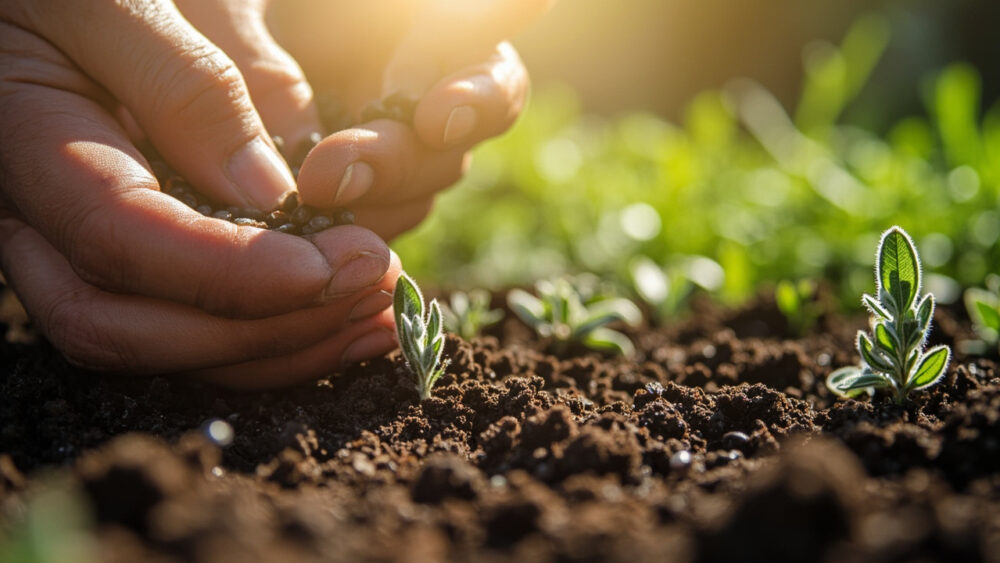
Sow seeds about 1/4 inch deep. Buried any deeper and sage seeds, which are small and don’t carry much stored energy, often can’t push through to the surface at all.
3. Temperature and light
Keep the soil at 65 to 70°F, using a seedling heat mat if your house runs cool. Sage germinates in the dark just fine, but once sprouts appear they need bright light immediately, either a sunny south window or a grow light 2 to 3 inches above the leaves.
4. Water from below if you can
Bottom-water by setting trays in a shallow pan, or mist the surface gently. Heavy top watering displaces the tiny seeds and compacts the soil crust they’re trying to break through.
Sowing is the easy part, the waiting is where most people’s confidence cracks.
Germination: What to Expect and When to Actually Worry
Expect germination in 10 to 21 days, and don’t be surprised if it’s uneven, with some seeds up in 10 days and others still coming at day 20. That spread is normal for sage, not a sign you did something wrong.
If you assumed no visible sprout by day 10 means failure, that guess causes more people to dump trays and start over than anything actually wrong with the seed. Sage is just slow. Give it the full three weeks before you write it off.
The real thing to worry about is a white or grayish fuzz on the soil surface, which signals damping off, usually from soil kept too wet and too cool at the same time. If you see it, cut back watering, increase airflow with a small fan, and remove any seedlings that have collapsed at the base.
Once you’ve got sprouts, the next test is whether they’re strong enough to leave the tray.
Hardening Off and Transplanting
Wait until seedlings have at least two sets of true leaves, not just the first rounded seed leaves, before you even think about moving them outside. That’s usually 6 to 8 weeks after germination.
Harden off over 7 to 10 days: start with an hour or two in a sheltered, shaded spot, and add an hour or two of outdoor time and a bit more sun each day.
Skipping this step is the single mistake that ruins the most sage-from-seed attempts. Seedlings that look perfectly healthy indoors will scorch or collapse within a day if moved straight into full sun and wind.
Transplant once nights stay reliably above 45°F, spacing plants 18 to 24 inches apart since sage gets wide and woody by its second year.
Getting a seedling into the ground is only half the job, keeping it alive through its first real season is the other half.
Caring for Sage Through the Season
Sage wants full sun, at least 6 hours a day, and soil that drains fast. It is far more likely to die from wet feet than from drought.
Water deeply but infrequently, letting the top 1 to 2 inches of soil dry out between waterings. Established sage is genuinely drought-tolerant and would rather be slightly underwatered than sitting in damp soil.
Skip heavy feeding. A light layer of compost in spring is enough, since too much nitrogen produces soft, floppy growth with weaker flavor and worse winter survival.
Pinch the growing tips once plants reach 6 to 8 inches to encourage bushier growth instead of one tall, leggy stem.
Here’s the part that surprises first-time growers most: your first-year harvest will be modest, and that’s by design, not a failure.
When Sage Is Ready to Harvest or Bloom
You can start snipping a few leaves once plants are 6 to 8 inches tall, usually in the second half of the first growing season if you started seed on schedule. Take no more than a third of the plant at a time so it keeps recovering strength for winter.
The real harvest comes in year two, when established plants produce far more leaf and the flavor is noticeably stronger and more concentrated.
In late spring of year two or later, mature sage sends up spikes of purple, blue, or white flowers. Bees love them, but once a plant flowers heavily, leaf production slows and flavor turns a bit bitter, so pinch off flower spikes early if leaves are your goal.
Sage from seed is genuinely a two-year project before it hits full stride, and knowing that upfront saves you from thinking you failed when you didn’t.
Sage at a Glance
- When to plant: start seeds indoors 8 to 10 weeks before your last frost, or direct sow once soil hits at least 60°F.
- Sowing depth: about 1/4 inch deep in a light, well-draining seed-starting mix.
- Germination: 10 to 21 days at a soil temperature of 65 to 70°F, uneven timing is normal.
- Spacing: 18 to 24 inches apart at transplant, since sage becomes a wide, woody plant by year two.
- Watering: deep but infrequent, letting the top 1 to 2 inches of soil dry out between waterings.
- First harvest: light picking in the second half of year one, full harvests in year two and beyond.
- Watch for: white or gray fuzz on seedling soil (damping off), and full-sun scorch if hardening off is skipped.
Sage from seed rewards patience more than skill. Get it through its slow first year and it will feed you for a decade.