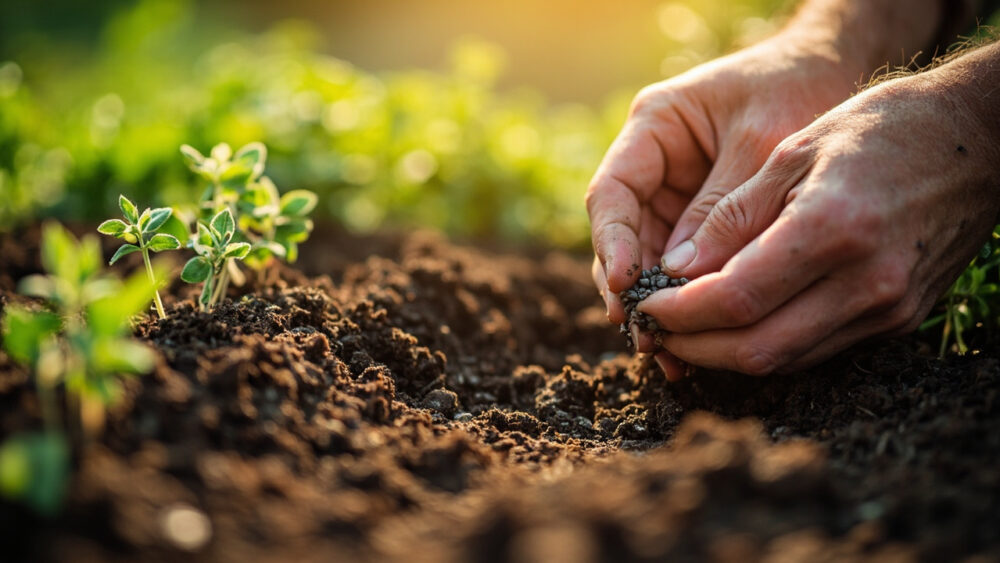
Growing oregano from seed comes down to this: scatter the tiny seeds on top of warm, bright soil, keep them barely damp, and don’t bury them. They need light to germinate, and that single detail is where most people lose the batch before it even starts. Get the light and the moisture right and you’ll have usable leaves within about ten to twelve weeks of sowing.
Here’s what nobody tells you upfront: oregano seed germinates unevenly, and if you’re expecting a neat carpet of seedlings in a week, you’ll assume you failed when you actually just need to wait. There’s also a transplant mistake that stunts seedlings for a month without killing them outright, so you won’t even know it happened until harvest is late. And the “when is it ready to pick” question has a more honest answer than most seed packets give you.
Stick with me through the whole process and I’ll flag each of those as we get to it. At the very bottom there’s an Oregano at a Glance card, the kind of thing worth screenshotting before you head out to the garden bed or the seed tray this weekend.
When to Start Oregano Seeds
Start oregano indoors about 8 to 10 weeks before your last expected frost. That head start matters because oregano seed is slow and irregular to sprout, and outdoor soil in early spring is usually too cold for it to bother.
Direct sowing works too, but only once soil has warmed to at least 65 to 70°F, which in most regions is a few weeks after your last frost, not right at it. Sow too early outdoors and the seed just sits there, rotting slowly instead of sprouting.
If you’re gardening in a warm climate, fall sowing is also an option, since oregano tolerates mild winters in zones 7 and warmer.
Timing gets the seed in the ground at the right moment, but the sowing itself is where the real mistake happens.
Sowing Oregano Seed Step by Step
This is the part everyone rushes, and it’s also where that light requirement trips people up.
Step by step
- Medium: use a light, well-draining seed-starting mix, not garden soil and not anything heavy or peat-dense that stays soggy.
- Depth: press seeds onto the surface and barely dust them with mix, no more than 1/16 inch. Many growers don’t cover them at all.
- Spacing: scatter 2 to 3 seeds per cell if using trays, or sow thinly in rows 1/4 inch apart if using a flat, since you’ll thin later.
- Moisture: mist rather than pour. A bottom-watering tray or spray bottle keeps seeds from washing down and away from light.
- Temperature: keep the tray at 70 to 75°F. A seedling heat mat helps a lot if your house or greenhouse runs cooler.
- Light: this is non-negotiable. Set the tray under grow lights or on a bright windowsill immediately, uncovered by soil. No light on the seed, no germination.
If you assumed covering seeds deeper gives them a better start, that instinct is exactly backward for oregano.
Germination: What to Expect and When to Actually Worry
Expect the first sprouts in 7 to 14 days, but don’t panic if some seeds take three full weeks. Oregano germination is genuinely uneven, and a tray that looks half-empty at day 10 often fills in by day 18.
The real warning sign isn’t slow sprouting, it’s a tray that stays bone dry or one that’s kept constantly wet enough to grow a film of algae or mold on the surface. Either extreme kills more seed than patience ever will.
Keep the surface consistently barely moist, never puddled, and maintain that warmth and light. If you see nothing at all after 4 weeks in warm conditions, the batch has failed and it’s time to resow rather than keep waiting.
Once seedlings show their first true leaves, a new set of decisions starts.
Hardening Off and Transplanting
Thin seedlings to one per cell once they have two sets of true leaves, snipping extras at the soil line instead of pulling them, which protects the roots of the one you keep.
Before transplanting outdoors, harden off over 7 to 10 days: start with an hour or two of sheltered outdoor time, out of direct wind and hot midday sun, and add an hour or two daily until seedlings are outside full days.
Here’s the stunting mistake: transplanting too early, while seedlings are still under 2 to 3 inches tall with only a couple of true leaves, sets them back hard. They survive, but they sit and sulk for weeks instead of growing, and you won’t connect the dots because nothing looks obviously wrong. Wait until seedlings are a sturdy 3 to 4 inches with several sets of leaves before they go in the ground, and do it after your last frost has passed with soil workable and warming.
Space transplants 8 to 12 inches apart in full sun, in soil that drains well, since oregano actually prefers lean, slightly poor soil over rich, heavily amended beds.
Get them settled and the plant mostly takes over from there.
Care Through the Season
Oregano wants full sun, at least 6 hours a day, and soil on the drier side once established. Overwatering is a far bigger risk than underwatering here. Let the top inch or two of soil dry out between waterings.
Skip heavy fertilizing. Rich soil and frequent feeding push soft, watery growth with weaker flavor, which defeats the point of growing a culinary herb at all.
Pinch growing tips back once plants reach 4 to 6 inches tall to encourage bushier growth instead of one tall, floppy stem. Watch for aphids or spider mites in hot, dry stretches; a strong water spray or insecticidal soap applied per the label handles most outbreaks without drama.
By midsummer, a well-sited plant is thick, leafy, and ready for the question you actually clicked for.
When Oregano Is Ready to Harvest
You can start snipping leaves once the plant is 4 to 6 inches tall and bushy, usually 8 to 12 weeks after sowing. That’s the honest answer, and it’s earlier than most packets imply, since oregano doesn’t need to flower to be useful.
For the best flavor, though, harvest right as flower buds form but before they fully open. That’s when the essential oils in the leaves peak, which is the opposite of what most herb growers assume, since we’re trained to think flowers mean the plant is “done.”
Cut stems back by about a third, harvesting in the morning after dew dries but before afternoon heat, and the plant will push new growth for a second and often third cutting through the season.
Once you’ve got that first real harvest in hand, everything else about growing oregano is just repetition, which is exactly why the quick-reference card below is worth keeping.
Oregano at a Glance
- When to plant: start seed indoors 8 to 10 weeks before last frost, or direct sow once soil hits 65 to 70°F.
- Depth: on the surface or barely covered, no more than 1/16 inch, since seeds need light to germinate.
- Germination: 7 to 14 days typically, up to 3 weeks in cooler conditions, at 70 to 75°F.
- Spacing: 8 to 12 inches apart once transplanted, in full sun with well-draining, lean soil.
- Watering: let the top 1 to 2 inches dry out between waterings, oregano dislikes wet feet.
- First harvest: 8 to 12 weeks after sowing, once plants are 4 to 6 inches tall and bushy.
- Best-flavor harvest: right as flower buds form but before they open.
If you remember one thing, remember the light. Bury oregano seed and you’re not growing it wrong, you’re just not growing it at all.