You can absolutely grow eggplant in containers, and honestly it often outperforms in-ground plants because you control the soil and the heat around the roots. The short version: use a pot at least 15 to 20 gallons, fill it with a loose, rich potting mix, plant one eggplant per container after nights stay reliably above 55°F, and keep it fed hard all season because container eggplant is a hungry, thirsty crop. That part is simple.
What trips people up is everything around that simple answer. There’s a container size mistake that quietly stunts plants for the whole season without ever looking like the obvious problem. There’s a watering habit that looks responsible but actually causes blossom drop. And there’s a question you’re probably about to ask right after this one: why are there flowers but no fruit.
All of it gets answered below, in order, and I’ll tell you exactly when to pick your first eggplant and how to know it’s ready. Stick around for the Eggplant at a Glance card at the very bottom, it’s the save-to-your-phone version of this whole guide.
When to Plant Eggplant in Containers
Eggplant is a heat lover, more sensitive to cold than tomatoes or peppers. Wait until nighttime temperatures stay above 55°F and soil temperature is at least 65°F, usually two to three weeks after your last spring frost date.
In cooler zones (5 and below), starting seed indoors 8 to 10 weeks before that date and transplanting is the only realistic path to a full harvest. In warmer zones (7 and up), you can direct-sow or transplant earlier and often get a second planting in for fall.
If you set plants out too early into cold soil, they don’t die, they just sulk. Growth stalls for weeks and those plants rarely catch up to a later, warmer planting.
Get the timing right and the next decision, the container itself, matters just as much.
Choosing the Container and Building the Soil
This is the mistake that ruins most container eggplant attempts: too small a pot. A 5-gallon bucket looks generous, but eggplant roots want room, and a cramped root zone means small, stressed plants that drop flowers in the first hot spell.
Go with 15 to 20 gallons per plant minimum, and choose a pot with real drainage holes, not just a few pinpricks. Dark-colored plastic or fabric grow bags work well because they hold heat, which eggplant appreciates.
Skip garden soil entirely. Use a quality potting mix cut with 20 to 30 percent compost for nutrition and better water retention.
Mix in a slow-release granular vegetable fertilizer at planting time, following the label rate. That soil setup is your foundation, but where you put the pot matters just as much as what’s in it.
Picking the Spot
Eggplant wants a minimum of 6 to 8 hours of direct sun, and more is better. Less sun than that gives you a leafy plant with disappointing fruit set.
Place containers against a south-facing wall or on pavement if you can, the reflected heat pushes growth. Eggplant genuinely likes to be a little too warm, unlike lettuce or peas.
Wind is the other factor people forget. A top-heavy eggplant loaded with fruit can tip in a gusty spot, so give it some shelter or plan to stake it later.
Once the spot is chosen, it’s time to get the plant into the pot correctly.
Planting Step by Step
- Depth: plant transplants at the same depth they were growing in their nursery pot, maybe half an inch deeper. Unlike tomatoes, burying the stem doesn’t help eggplant root further.
- Spacing: one plant per 15 to 20 gallon container. If you’re using a larger 30-gallon or half-barrel container, two plants can work with at least 18 inches between them.
- Hardening off: if plants were started indoors, harden them off over 5 to 7 days, gradually increasing outdoor sun exposure, before transplanting.
- Watering in: water thoroughly right after planting until it runs from the drainage holes, then let the top inch dry before watering again.
- Support: drop a stake or small tomato cage in at planting time, not later. Eggplant roots resent being disturbed once established.
With the plant in the ground, the real work of the season, keeping it fed and watered right, begins.
Watering and Feeding Through the Season
If you assumed a daily light sprinkle is the safe, careful way to water container eggplant, that habit is actually what causes blossom drop and shallow, stressed roots. Containers dry out fast, but the fix is deep, less frequent watering, not frequent shallow watering.
Check soil moisture by pushing a finger 2 inches down. If it’s dry, water slowly until it runs from the bottom, this may mean daily watering during a summer heat wave.
Feed every 2 to 3 weeks with a balanced liquid fertilizer, or one slightly higher in phosphorus and potassium once flowering starts. Container plants exhaust their nutrients faster than in-ground plants because every watering leaches some out the drainage holes.
Mulching the soil surface with straw or shredded leaves helps hold moisture and keeps roots cooler in a dark-colored pot.
Even with perfect watering and feeding, eggplant still has a short list of problems that show up almost every season.
Problems That Actually Show Up, and What to Do
Now for that follow-up question: why does the plant have plenty of flowers but no fruit. Usually it’s heat stress above 95°F, inconsistent watering, or simply a lack of pollinators visiting. Flowers that don’t get pollinated dry up and drop without ever swelling.
You can hand-pollinate by gently shaking the plant or brushing inside each flower with a small soft brush around midday.
Pests to Watch For
- Flea beetles: tiny shot-hole marks in leaves, worst on young plants. Row cover early in the season prevents most damage.
- Aphids: clusters on new growth and undersides of leaves. A strong water spray or insecticidal soap, applied per the product label, usually handles them.
- Spider mites: fine stippling and webbing in hot, dry conditions. Consistent watering and occasional leaf misting reduce their numbers.
Verticillium wilt and other soil-borne diseases are less common in fresh container mix than in garden soil, which is one real advantage of growing this way. If a plant wilts suddenly despite moist soil, pull it and start fresh rather than trying to nurse it back.
Handle the pests and get pollination right, and you’re on a straight line to harvest.
When and How to Harvest
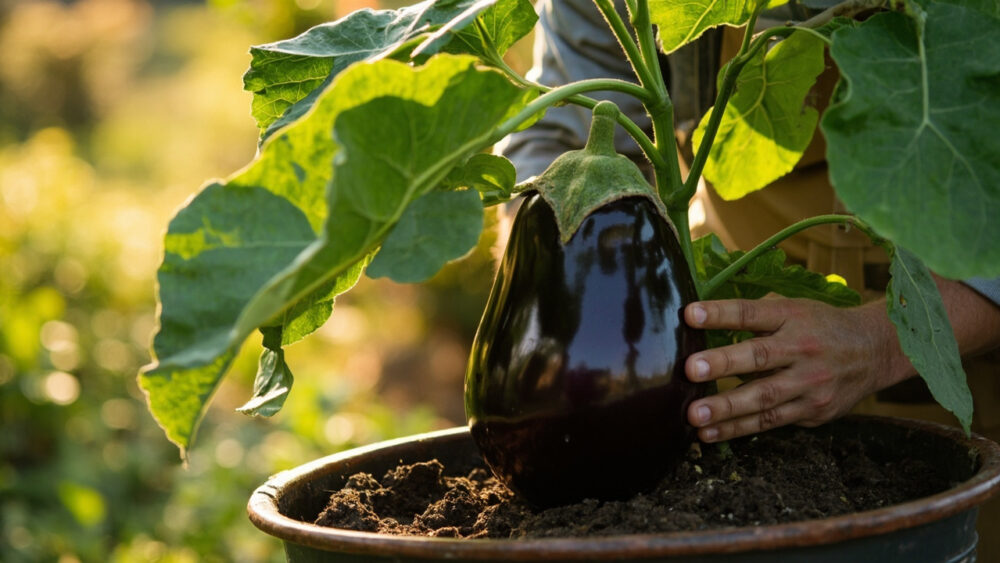
Most container eggplant varieties reach harvest 60 to 80 days after transplanting, depending on the type. The visual cue that matters more than any calendar: skin that’s glossy and taut.
Once skin turns dull or the fruit feels soft and spongy, it’s overripe, bitter, and full of hard seeds. Harvest a little early rather than late.
Cut fruit with a sharp knife or pruners, leaving a short stub of stem attached, the skin bruises easily and the calyx is sharp. Regular picking every few days actually pushes the plant to set more fruit, so don’t let ripe eggplants sit.
A healthy container plant can keep producing until the weather cools in fall or a frost ends the season.
Eggplant at a Glance
- When to plant: after nights stay above 55°F and soil hits at least 65°F, roughly two to three weeks past your last frost.
- Container size: 15 to 20 gallons per plant minimum, with real drainage holes.
- Soil: quality potting mix cut with 20 to 30 percent compost, plus a slow-release vegetable fertilizer at planting.
- Sun: 6 to 8 hours of direct sun minimum, more is better.
- Watering: deep and thorough when the top 2 inches are dry, not a daily light sprinkle.
- Feeding: balanced liquid fertilizer every 2 to 3 weeks, switching to more phosphorus and potassium once flowering starts.
- Harvest: 60 to 80 days after transplanting, when skin is glossy and taut, picked with pruners and a stub of stem attached.
Get the container size and the deep-watering rhythm right, and eggplant forgives almost everything else.
Everything past that is just fine-tuning a plant that genuinely wants to grow for you.