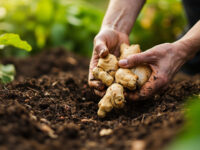
Ginger takes 8 to 10 months from planting a rhizome piece to harvesting a mature root, and that is the honest answer whether you clicked this while standing over a pot on your patio or a bed you just dug. If you want to know how long does it take to grow ginger to the point where you can actually cook with it, you can sneak a partial harvest of young “baby ginger” at around 4 to 6 months, but the thick, tan-skinned storage root everyone pictures needs the full run.
That range is not padding. Two people planting on the same day, one in a heated greenhouse and one in a cool basement window, can end up three months apart.
Before you get to the timeline, you need to know which end of that range your setup is likely to land on, what the plant is actually doing during those quiet middle months when nothing seems to be happening above ground, and the one thing impatient gardeners do that sets the whole crop back instead of speeding it up. There is a save-able quick-reference card at the bottom once all of that is covered.
The Realistic Timeline, Start to Finish
Sprouting from a healthy rhizome piece takes 2 to 4 weeks in warm soil, and this is the stage most people underestimate. Ginger is slow to wake up even under good conditions, and a piece that shows nothing after two weeks is not necessarily dead.
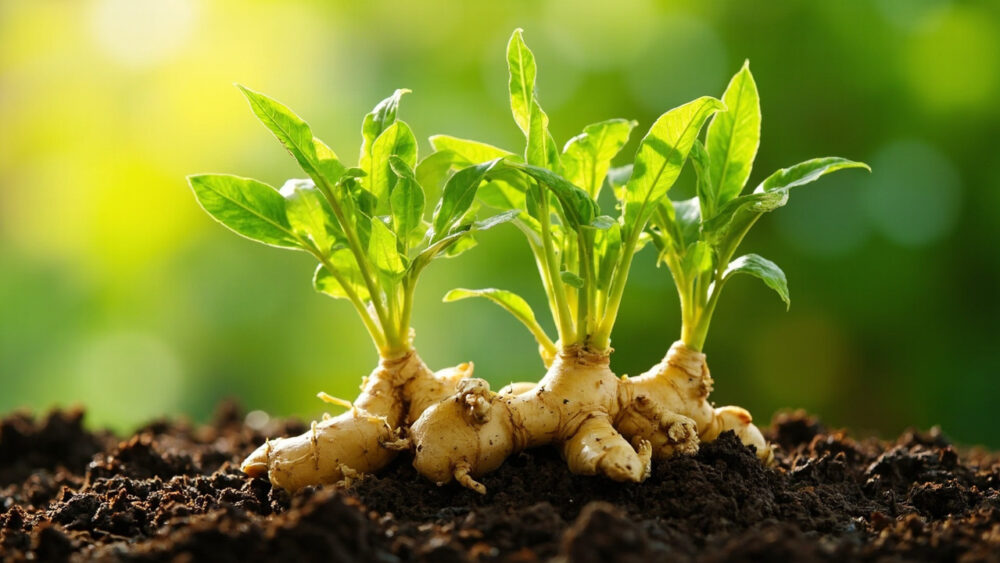
Once it sprouts, you get roughly 6 to 7 months of steady leaf and stem growth where the plant looks like a leafy tropical grass and is quietly building the rhizome underground. Harvest window opens after that, typically 8 to 10 months from planting for full-size roots.
Grown in the ground in a truly tropical climate, some growers push past 10 months for a bigger harvest. In pots or shorter seasons, 8 months is the more common finish line.
Knowing the total is one thing, knowing what actually controls where you land in that range is another.
What Actually Controls the Speed
Temperature is the biggest lever by far. Ginger wants soil consistently between 70 and 85°F, and growth slows dramatically below 65°F and stalls out below 55°F.
A pot on a sunny patio in a hot summer will outpace a shaded garden bed every time. This is not about the variety as much as people assume.
Most ginger sold for planting is a fairly generic culinary type, and the differences between sources matter far less than the differences in heat, light, and moisture you provide.
Humidity and consistent watering come next. Ginger is a rainforest understory plant by nature, so it wants evenly moist soil and humid air, never bone dry and never waterlogged.
Container size matters more than people expect, since a cramped pot restricts the rhizome’s room to spread and can cap your final harvest regardless of how long you wait.
Get the conditions right and the calendar mostly takes care of itself.
What the Plant Is Doing at Each Stage
In the first month, you are watching for a single green shoot to push through the soil. Nothing else happens visibly, and that is normal.
By month 2 to 3, you should have several leafy stalks, each looking like a slim bamboo or lily stem topped with long blade-shaped leaves. This is the plant building its energy factory above ground.
Months 4 through 7 are the deceptive part. The foliage looks mature and stops changing much, but underground the rhizome is thickening and multiplying into the branching hand shape you recognize from the grocery store.
The visible plant plateaus long before the root does, which is exactly why digging early disappoints people.
By month 8 onward, the lower leaves start yellowing and dying back, and that die-back is your actual harvest signal, not a date on the calendar.
Once you see that yellowing spread through the lower third of the plant, you are in harvest territory.
How to Legitimately Speed Things Up
Starting indoors 4 to 6 weeks before your last frost, in warm soil, is the single biggest legitimate head start you can give ginger in a temperate climate. It lets you bank extra warm weeks before you ever move it outside.
Bottom heat helps more than almost anything else. A seedling heat mat under the pot during sprouting can cut that initial 2 to 4 week wait significantly, since cold soil is the main thing holding sprouting back.
Choosing plump rhizome pieces with several visible growth buds, rather than shriveled leftover grocery-store ginger, also gives you a faster, more reliable start.
What does not work: more fertilizer than the plant needs, constant soil disturbance to check on the root, or moving pots in and out to chase sun. Ginger rewards steady, boring conditions far more than active fussing.
Even with every trick applied, there is a floor you cannot push through, and that is the next thing worth knowing.
When Slow Growth Is Normal and When It Is a Problem
If your ginger is 6 to 8 weeks in with no sprout at all, and the soil has stayed consistently warm and moist, check the rhizome piece itself. Soft, mushy, or foul-smelling means it rotted and will not recover.
A firm piece that simply has not sprouted yet, even at 6 weeks, is still within normal range in cooler conditions, so resist digging it up repeatedly to check.
Slow but steady is fine, stalled and mushy is not. Yellowing lower leaves in month 8 or later is a good sign, harvest time, but yellowing across the whole plant in month 2 or 3 usually means overwatering or cold stress.
A plant that sprouted, grew leaves for a few months, and then simply stopped adding new growth for 6 or more weeks during the warm season is worth investigating for root-bound pots or persistently cold soil rather than just waiting it out.
Once you can tell normal patience apart from an actual stall, the whole timeline stops feeling like guesswork.
Ginger: Quick Reference
- Full harvest: 8 to 10 months from planting a rhizome to a mature, storage-ready root.
- Baby ginger: harvestable at 4 to 6 months, milder flavor, thin translucent skin, does not store as long.
- Sprouting time: 2 to 4 weeks in warm soil, longer in cool conditions.
- Ideal soil temperature: 70 to 85°F, with growth stalling below about 55°F.
- Harvest signal: lower leaves yellowing and dying back, not a specific date.
- Biggest speed factor: consistent warmth and moisture, far more than variety choice or fertilizer.
Ginger rewards patience more than intervention, and the calendar is more honest than the calendar-watching gardener.
Get the warmth and moisture steady, then let the leaves tell you when it is time to dig.