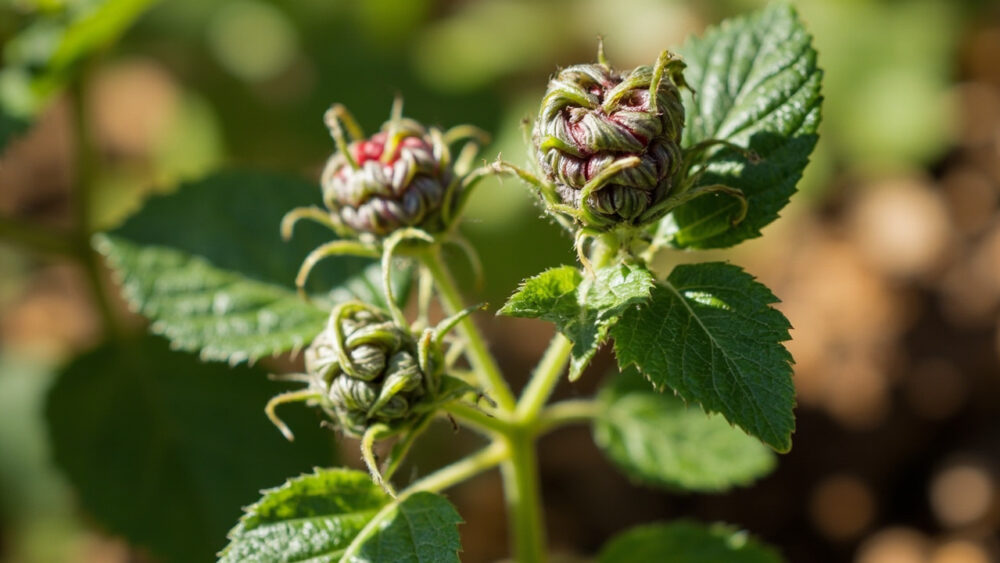
Nine times out of ten, curling raspberry leaves mean spider mites or aphids feeding on the undersides, or the plant is stressed from heat and dry soil. Check the underside of a curled leaf with a hand lens or even your bare eye first, that’s where the answer usually is. Most cases of raspberry plant leaves curling are fixable within a couple of weeks once you know which one you’re dealing with.
Everyone blames a virus first, and almost every time that guess is wrong. Viruses cause curling too, but they’re the least common reason and the one you can’t fix, so it pays to rule out the easy stuff before you assume the worst.
The real tell isn’t the curl itself, it’s exactly where on the plant it’s happening and what the leaf feels and looks like up close. Stick with this, because the full diagnosis checklist you can run at the plant in two minutes is waiting at the bottom of the page.
Causes, Most to Least Likely
1. Spider Mites
Confirm it: flip a curled leaf over and look for tiny yellow-to-bronze stippling and fine webbing in the leaf axils. Hold a white sheet of paper under the leaf and tap it, if specks drop and start crawling, that’s mites. They thrive in hot, dry, dusty conditions, so a heat wave with no rain is prime mite weather.
Fix it: hose down the undersides of leaves forcefully every couple of days to knock populations back. For a real infestation, use an insecticidal soap or horticultural oil labeled for mites, following the label exactly, and reapply as directed since one treatment rarely finishes the job.
Mites are the top suspect, but a soft-bodied lookalike causes nearly identical curling for a completely different reason.
2. Aphids
Confirm it: look on the underside of new, curled leaves for small green, yellow, or gray soft-bodied insects clustered along the veins. You’ll often see sticky honeydew residue or even sooty black mold on leaves below the infested ones. Ants patrolling the cane are another giveaway, they farm aphids for that honeydew.
Fix it: a strong water spray removes many of them. Insecticidal soap handles the rest, applied per label directions, and beneficial insects like lady beetles usually show up on their own if you’re not spraying broad insecticides that kill them off too.
If the undersides are clean with no bugs at all, the cause is almost certainly not an insect, and that changes everything about the fix.
3. Heat and Drought Stress
Confirm it: curling shows up on the newest growth first, leaves feel slightly leathery or dry rather than sticky or webbed, and it happens during or right after a stretch of high heat with little rain. Push a finger two inches into the soil near the roots, if it’s dry at that depth, this is your answer.
Fix it: water deeply, about an inch to an inch and a half per week including rainfall, delivered slowly at the base rather than overhead. Mulch two to three inches deep with straw or wood chips to hold soil moisture and cut root temperature.
Curling from heat looks a lot like the start of a nutrient problem, so here’s how those two actually differ.
4. Herbicide Drift
Confirm it: the curl is often dramatic, tight cupping or twisting, sometimes with a strange downward claw shape, and it appears suddenly on one side of the plant facing a lawn, field, or road that was recently sprayed. Growth-regulator type herbicides (the kind used on lawns for broadleaf weeds) are the usual culprit and cause this exact symptom on raspberries.
Fix it: there’s no antidote once it’s absorbed. Remove badly distorted leaves and canes if damage is severe, keep the plant watered and otherwise healthy, and watch new growth over the next month, it often comes in normal once the exposure is gone.
This one is unmistakable once you’ve seen it, but a virus can produce a milder, slower version of the same twist.
5. Viral Disease
Confirm it: curling is persistent across the whole plant, doesn’t resolve with water or bug control, and often comes with yellow mottling, vein clearing, or stunted, weak canes. These viruses usually arrive via aphids feeding over a season or two, or through infected planting stock.
Fix it: there’s no cure. Raspberry viruses are managed, not treated. If a whole planting shows this pattern, the honest move is removing infected canes and replacing with certified virus-free stock rather than fighting a losing cause plant by plant.
Now that you’ve got the five likely suspects, here’s the fast way to line your symptoms up against each one.
How to Tell the Causes Apart
Location on the plant is the fastest sort. Mites and heat stress hit new growth and upper leaves first. Aphids cluster on tender shoot tips. Herbicide drift often shows on one side of the plant facing the spray source. Viruses show up everywhere, old and new leaves alike, without much pattern.
Feel and residue narrow it further. Webbing and stippling mean mites. Sticky honeydew and visible insects mean aphids. Leathery, dry curling with no residue points to heat or drought. Dramatic twisting with no bugs at all points to herbicide.
Once you’ve matched the pattern, the next question is the one every reader actually wants answered.
Will It Recover?
Mites and aphids: good outlook. New growth usually comes in clean within two to three weeks of consistent treatment, since the curled leaves themselves won’t uncurl but everything after them can look normal.
Heat and drought stress: good outlook, often the fastest recovery of all. Fix the watering and you’ll see healthier new leaves within a week or two, though the existing curled ones stay as they are.
Herbicide drift: depends on the dose. Light exposure grows out within a month or so. Heavy exposure, especially on young canes, can stunt or kill the plant, and there’s no way to speed that timeline, only wait and watch.
Viral disease: poor outlook. The plant won’t recover and will likely decline over one to two seasons, spreading risk to neighboring canes in the meantime.
Cutting your losses on a virus-infected plant is hard advice to give, but it’s the honest one, and prevention is how you avoid needing it again.
How to Keep It From Happening Again
Water consistently rather than letting the soil swing from soaked to bone dry, and mulch to buffer both moisture and heat. Inspect leaf undersides every week or two during hot, dry stretches when mites build up fast.
Buy certified disease-free stock when planting new canes, and control aphids early since they’re the main vector spreading virus between plants. Keep a buffer between raspberries and any lawn area treated with broadleaf herbicide, and avoid spraying on windy days near the patch.
That covers prevention, and now here’s the two-minute rundown to run right at the plant.
Diagnosis Checklist
- Flip a curled leaf over, check for fine webbing or tiny specks: if present, treat for spider mites.
- Check the same leaf for clustered soft-bodied insects or sticky residue: if present, treat for aphids.
- If undersides are clean, push a finger two inches into the soil: if dry, water deeply and mulch for heat and drought stress.
- Look for dramatic, sudden cupping or twisting on one side of the plant near a treated lawn or field: if present, suspect herbicide drift and give it time.
- If none of the above fit and curling is widespread with yellow mottling or stunted canes: suspect viral disease and plan to remove and replace with certified stock.
- Recheck new growth in two to three weeks: clean new leaves confirm the fix worked, continued curling means recheck the list.
Most curled raspberry leaves trace back to bugs or dry soil, both of which you can fix this week.
Save this checklist, walk the row, and you’ll know exactly which cause you’re dealing with before you put the hose away.