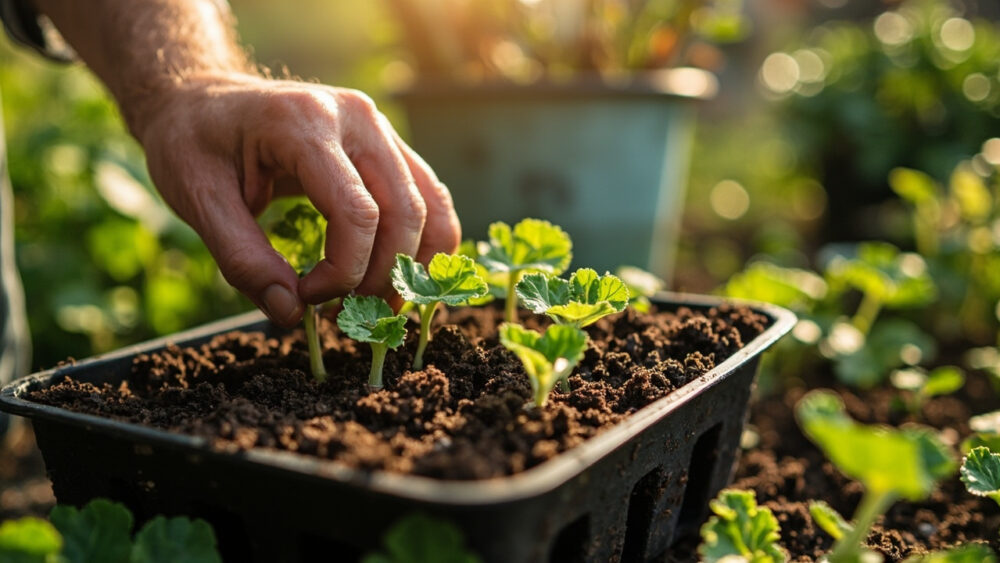
Growing cauliflower from seed means starting indoors 6 to 8 weeks before your last frost, or direct sowing 2 to 4 weeks before that date if you garden somewhere with mild summers, then transplanting into rich, consistently moist soil and getting a head in roughly 55 to 75 days depending on variety. That part is simple. The part that trips people up is temperature timing, not the sowing itself.
Cauliflower is genuinely fussier than its cousins broccoli and cabbage, and most failed attempts come down to one mistake: letting the plant get stressed by heat or cold at the wrong moment, which causes it to “button,” meaning it forms a tiny, useless head way too early. There’s also a sign most new growers misread completely when the curd starts forming, and it costs them flavor and color if they don’t catch it in time.
I’ll walk through the whole run, seed to harvest, including the honest answer to the question you’re probably already forming: why did my cauliflower never actually make a head. Save-able specifics, including spacing, days to maturity, and the exact visual cue for harvest day, are waiting in the Cauliflower at a Glance card at the bottom.
When to Start Cauliflower Seeds
Cauliflower grows best as a cool-season crop, which means you’re aiming for it to mature before summer heat or before hard frost, not during either. For a spring crop, start seeds indoors 6 to 8 weeks before your last expected frost date. For a fall crop, which many gardeners find easier, count backward from your first fall frost and start seeds 10 to 12 weeks ahead, timing transplant for when summer heat starts breaking.
Direct sowing works only in regions with long, mild springs or falls, since cauliflower seedlings are slow and can get overtaken by heat before they size up. Most gardeners get better results starting indoors under lights and transplanting.
Timing is where the whole crop gets decided before a single true leaf shows up.
Sowing Cauliflower Seed Step by Step
The mechanics are easy. Getting the temperature and light right is what actually matters here.
1. Choose your medium
Use a seed-starting mix, not garden soil or potting soil straight from the bag. It needs to be light and drain fast, since cauliflower seedlings rot quickly in soggy mix.
2. Sow at the right depth
Plant seeds about 1/4 to 1/2 inch deep. Any deeper and germination slows down or fails outright.
3. Keep soil warm
Cauliflower germinates best with soil temperature between 65 and 75°F. Below 50°F, germination stalls out for weeks.
4. Get light on them fast
The moment sprouts appear, they need strong direct light, either a bright south window or grow lights held 2 to 3 inches above the seedlings. Weak light is the number one reason indoor starts turn into tall, floppy, useless seedlings.
Get this part right and germination itself is almost boring, which is exactly what you want.
Germination: What to Expect and When to Worry
Expect sprouts in 5 to 10 days at the right soil temperature. If nothing has shown by day 14, the seed was likely too old, too cold, or too deep, and it’s worth resowing rather than waiting longer.
If you assumed slow germination means bad seed, that’s usually the wrong read. Most of the time it’s soil temperature that’s too cool, not the seed itself. A seedling heat mat under the tray fixes this faster than buying new seed.
Once sprouted, thin to one seedling per cell or space seedlings to about 2 inches apart if grown in a shared tray. Crowded seedlings stretch and weaken fast.
Healthy sprouts move quick from here, which means hardening off sneaks up on you.
Hardening Off and Transplanting
Start hardening off 7 to 10 days before you plan to transplant, once seedlings have 2 to 3 true leaves and outdoor temperatures are reliably above 45°F. Set trays outside in shade for an hour the first day, then add an hour and a bit more sun each following day.
This is the step everyone rushes, and it’s the second most common way to lose a cauliflower crop. Skip hardening off and a cold snap or hot sun can shock the plant into bolting or buttoning within days.
Transplant into the garden once nights stay above about 40°F, spacing plants 18 to 24 inches apart in rows 24 to 30 inches apart. Cauliflower wants rich, well-drained soil with a pH around 6.5 to 7.0, and it appreciates a dose of compost or balanced fertilizer worked in before planting.
Plants go into the ground looking small and unbothered, but the next few weeks decide almost everything.
Season-Long Care: Water, Feeding, and the Blanching Question
Cauliflower needs steady, even moisture, about 1 to 1.5 inches of water a week, more in hot or windy stretches. Inconsistent watering is the other major cause of buttoning, right alongside temperature stress, so don’t let the soil dry out and crack between waterings.
Feed with a nitrogen-rich fertilizer 3 to 4 weeks after transplant, then switch to a balanced feed as heads start forming. Mulch heavily to keep roots cool and moisture even.
Here’s the sign most people misread: once you see the curd (the small white head) starting to form in the center of the plant, that is your cue to blanch it, meaning tie or fold the outer leaves loosely over the head to block sunlight. Skip this and the curd yellows, toughens, and loses flavor. Self-blanching varieties fold their own leaves over naturally and need little help, but most classic white varieties need you to do it by hand.
Check under those tied leaves every few days, because harvest window closes faster than it looks.
When Cauliflower Is Ready to Harvest
The honest answer to when it’s actually done is a visual one, not a days-to-maturity number, though that number gets you in the right week. Harvest when the head reaches 6 to 8 inches across, still tight, firm, and white (or the color proper to the variety), with no gaps or separation showing between the curds.
Wait too long and the head loosens, develops a ricey, grainy texture, and can even start to flower, called bolting, which ruins the eating quality for good. There’s no fixing a bolted head, only harvesting it fast and using it before it gets worse.
Cut the head with a few inches of stem and a couple of wrapper leaves still attached to protect it, then use it within a few days for best flavor, or refrigerate up to a week.
Everything above compresses into the card below, worth screenshotting before you head out to the garden.
Cauliflower at a Glance
- When to start seeds: indoors 6 to 8 weeks before last frost for spring crops, or 10 to 12 weeks before first fall frost for fall crops.
- Sowing depth and temperature: 1/4 to 1/2 inch deep, soil at 65 to 75°F, germinates in 5 to 10 days.
- Transplant timing: once nights stay above about 40°F and seedlings have 2 to 3 true leaves, after 7 to 10 days of hardening off.
- Spacing: 18 to 24 inches between plants, 24 to 30 inches between rows.
- Water needs: steady 1 to 1.5 inches per week, never letting soil dry out completely.
- Blanching cue: tie outer leaves over the head as soon as the curd appears, unless growing a self-blanching variety.
- Harvest sign: head is 6 to 8 inches across, tight and firm with no visible separation, usually 55 to 75 days after transplant.
Cauliflower rewards steady conditions more than any special skill, so keep the temperature even and the soil moist and you’ve done most of the job.
Watch the curd like you’d watch a pot about to boil over, because that window from perfect to ruined is shorter than people expect.