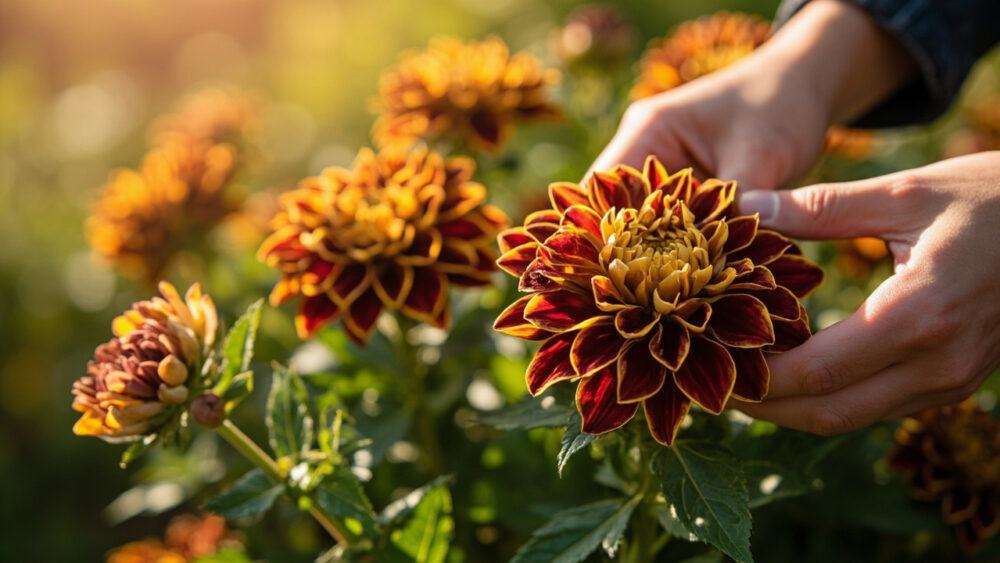
Caring for chrysanthemums comes down to four things: at least 5 to 6 hours of direct sun, evenly moist but never soggy soil, a pinch back in early summer, and protection from the first hard freeze if you want them to return next year. Get those right and mums bloom for 4 to 6 weeks straight, right through fall. Get one wrong and you’ll get a plant that looks fine in September and is dead sticks by Thanksgiving.
Most people who buy a mum in fall treat it like a disposable decoration, and honestly, that’s how garden centers sell them. But a chrysanthemum is a genuine perennial in a lot of climates, and the ones that fail almost always fail for the same handful of reasons.
Before the end of this guide, I’ll tell you the one watering mistake that kills more mums than frost does, the reason your “healthy-looking” plant might already be past saving, and why that leggy, floppy growth in July is not actually a sign of a sick plant. Stick around for the Chrysanthemums at a Glance card at the bottom too. It’s the save-to-your-phone version of everything here.
Light, Placement, and Temperature
Mums need full sun, at least 5 to 6 hours of direct light a day. In partial shade they’ll survive but bloom sparse and stretch toward the light, getting leggy and thin.
They actually prefer cooler temperatures, which is why they’re a fall flower in the first place. Daytime temps in the 60s and 70s Fahrenheit with cool nights trigger the heaviest bud set.
If you’re growing them in containers, move pots to a spot that gets morning sun and a bit of afternoon relief in hot climates. Scorching afternoon heat in zones 8 and up can stall flowering.
Where you put the plant this week decides how much water it needs next week.
Watering: How Much, How Often, and How to Check
Water when the top inch of soil is dry to the touch, and water deeply enough that it drains out the bottom of the pot or soaks 6 to 8 inches down in the ground. For most mums that’s every 2 to 3 days in containers, once or twice a week in the ground, more often in heat.
Here’s the guess that kills mums: people assume wilting means the plant is thirsty, so they water more. But mums wilt just as fast from soggy, oxygen-starved roots as from drought. If the soil is already damp and the plant is wilting, you’ve likely got root rot starting, not dehydration.
Check by sticking a finger in the soil before you water, every time, no exceptions. Never water on a schedule, water on what the soil tells you.
Mums in containers dry out fast, sometimes daily in summer heat, so the finger test matters even more there than in the ground.
Soil, Potting Mix, and Feeding
Mums want soil that drains well but holds some moisture, slightly acidic to neutral, in the 6.0 to 6.5 pH range. In the ground, work a couple inches of compost into heavy clay or fast-draining sand before planting.
In containers, use a standard quality potting mix, not garden soil, which compacts and drowns roots in a pot.
Feed lightly with a balanced fertilizer every 2 to 3 weeks from spring through midsummer, then stop once buds start to show color. Feeding after that pushes leafy growth instead of bloom and can delay flowering.
Good soil sets the stage, but the next job is the one most people skip entirely.
Pinching, Deadheading, and Repotting: The Routine That Actually Matters
This is the step almost everyone gets wrong, and it’s the difference between a tight, bushy mound of blooms and a floppy, sparse plant that falls over in August.
Pinch the growing tips back by about an inch every 2 to 3 weeks from spring until early to mid summer, roughly the Fourth of July as a rough marker in northern climates, earlier further south. This forces the plant to branch instead of growing one tall stem, which means more buds later.
If you stopped pinching too early or never started, you’ll see it now as leggy, sprawling stems in midsummer. That’s not disease, that’s an unpruned mum, and it’s fixable next year, not this one.
Deadhead spent blooms through the flowering season to keep new buds coming. Once flowering finishes for the year, cut stems back to about 4 to 6 inches from the ground.
Repot container mums every spring into fresh mix, sizing up one pot size if roots are circling the base.
Skip the pinch step and you’ll spend all fall wondering why your mum looks nothing like the ones at the garden center.
Problems That Actually Show Up on Mums
The most common issue isn’t a pest, it’s root rot from overwatering, showing up as yellowing lower leaves, a mushy stem base, and wilting despite wet soil. Cut back watering immediately and improve drainage, but badly rotted roots often can’t be saved.
Aphids and spider mites show up in dry, stressed conditions, clustering on new growth and leaf undersides. A strong spray of water knocks most off, and insecticidal soap handles the rest, always following the product label.
Powdery mildew, a white dusty coating on leaves, shows up in humid weather with poor airflow. Space plants for airflow and treat with a fungicide labeled for mildew if it’s already established.
Chrysanthemums are toxic to cats, dogs, and horses if chewed or eaten, causing drooling, vomiting, or skin irritation on contact for sensitive pets. If you suspect a pet has eaten any part of the plant, call your veterinarian rather than waiting to see what happens.
Most of these problems are preventable, but there’s one honest answer nobody wants to hear about mums bought in bloom.
The Question You’re About to Ask: Will This Mum Come Back Next Year?
Here’s the truth: a mum bought already in full bloom in fall, especially from a grocery store or big box display, was bred and forced for a one-season show. It can survive winter and return, but the odds drop the later in fall you bought it and the colder your climate.
In zones 5 through 9, garden mums (sold as “hardy mums”) have a real shot at overwintering if planted in the ground at least 4 to 6 weeks before your first hard frost, giving roots time to establish. Mulch 2 to 3 inches deep after the ground freezes, not before, to insulate roots without trapping rot-inviting warmth.
Mums bought in late fall and left in their nursery pot rarely survive winter outdoors, container roots freeze solid far faster than garden soil. Move potted mums into an unheated garage or bury the pot in the ground before freeze if you want a shot at spring regrowth.
If it does come back, treat it like any other perennial: cut back dead growth in spring once new shoots appear at the base.
Now that you know what a mum actually needs, here’s how to tell if yours is getting it.
Signs Your Chrysanthemum Is Actually Thriving
A thriving mum is compact and dense, not tall and gangly, with dark green leaves showing no yellowing or spotting. Buds should be numerous and forming from multiple branch tips, not just one central stem.
Flowering should last a solid 4 to 6 weeks once it starts, with new buds opening as older ones fade. If your plant blooms once and quits after a week or two, it likely needs more sun, more consistent water, or both.
New growth at the base in spring is the real proof of a mum that survived winter successfully.
Everything above is the reasoning, here’s the short version worth saving.
Chrysanthemums at a Glance
- Light needed: full sun, at least 5 to 6 hours of direct light daily.
- Watering: when the top inch of soil is dry, watered deeply, checked by finger not by schedule.
- Soil: well draining, slightly acidic, pH 6.0 to 6.5, amended with compost if planting in the ground.
- Feeding: balanced fertilizer every 2 to 3 weeks from spring to midsummer, stopped once buds show color.
- Pinching: pinch tips back an inch every 2 to 3 weeks from spring until early to midsummer for bushier growth.
- Overwintering: plant in ground 4 to 6 weeks before first hard frost, mulch after ground freezes, best odds in zones 5 through 9.
- Pet safety: toxic to cats, dogs, and horses if ingested, call a veterinarian for any suspected ingestion.
Get the pinching and watering right and everything else about mums takes care of itself.
Skip either one and no amount of fertilizer will save the season.