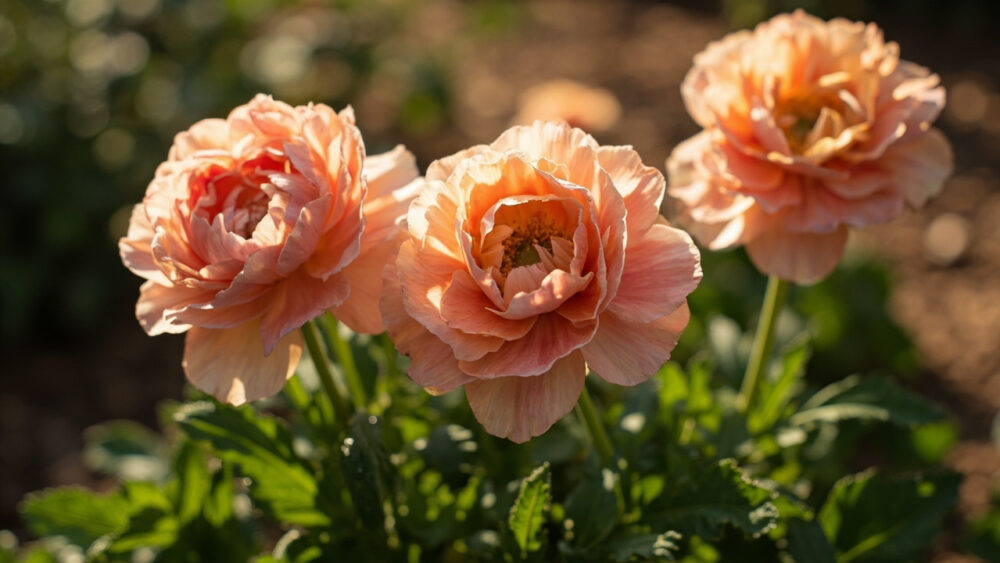
Ranunculus are perennial, but for most gardeners they don’t reliably come back on their own outdoors. They’re winter-hardy corms in USDA zones 8 through 10, where they’ll return year after year with almost no help. Everywhere colder, they either die over winter or need to be dug up and stored, which is really the deciding factor most readers actually care about.
So the honest answer splits into two very different experiences depending on your zone, and guessing wrong is the single most common way people lose a whole planting. There’s also a middle case that trips people up: a mild winter can fool you into thinking your ranunculus are hardy when really you just got lucky.
Stick with this one. Below you’ll get the zone breakdown, what actually happens to the corms underground over winter, how to overwinter them if you’re outside that warm range, when it’s smarter to just treat them as an annual, and a save-able quick-reference card at the bottom with the whole answer in one place.
The Plain Answer, By Zone
In zones 8 through 10, ranunculus corms stay in the ground and come back reliably, often multiplying into bigger clumps over a few seasons. Winters there stay mild enough that the corms never freeze.
In zone 7, it’s a gamble. A mild winter with good drainage and mulch can bring them back, but a hard freeze usually kills the corms in the ground.
In zone 6 and colder, ranunculus planted in the ground almost never survive winter. The corms rot or freeze, and by spring there’s nothing there.
Container-grown plants follow the same rules, except pots freeze faster than garden soil, so treat container ranunculus as one zone colder than what’s printed on the tag.
Knowing your zone only tells half the story though, because what happens underground between now and spring matters just as much.
What Happens To The Corms Over Winter
Ranunculus grow from small claw-shaped corms that go dormant after bloom, usually as the weather heats up in early to mid summer. The foliage yellows and collapses, and that’s the plant telling you it’s done for the season, not dying.
In warm zones, the dormant corms simply sit in the soil through summer and fall, then push new growth again once temperatures cool in autumn or late winter.
In cold zones, the corms left in frozen or waterlogged soil don’t go dormant, they die. This is the part people misread most: they assume the plant “just didn’t come back” the way an annual naturally wouldn’t, when really the corm was viable and lost to conditions, not lifespan.
That distinction is exactly why digging them up is worth the effort if you’re outside the warm zones.
How To Overwinter Ranunculus So They Return
If you’re in zone 7 or colder and want the same plants back next year, dig the corms after the foliage yellows and dies back on its own. Pulling them too early, while leaves are still green, gives you weak, underdeveloped corms that struggle the following year.
Let the dug corms air dry for a few days somewhere shaded and airy, then knock off the loose soil. Don’t wash them or let them sit wet, damp storage is the number one cause of rot.
Store them in a paper bag or a box of dry peat moss or vermiculite, somewhere cool and dark, ideally 40 to 50 degrees Fahrenheit. A garage shelf or unheated closet usually works fine.
Come planting time, soak the corms in room-temperature water for 3 to 4 hours before replanting, which wakes them up and dramatically improves sprouting odds.
- Plant claw-side down, 1 to 2 inches deep, 4 to 6 inches apart.
- Soil temperature around 50 to 60 degrees Fahrenheit is the sweet spot for planting.
- In mild climates, fall planting gives earlier, bigger spring blooms than waiting until spring.
Done right, this cycle can carry the same corms for several years, but it does take a real, repeatable chore each season.
When Treating Them As An Annual Is Honestly Smarter
If digging and storing corms sounds like more upkeep than you want, that’s a completely reasonable call, not a failure. Ranunculus corms are inexpensive enough that many gardeners in cold zones simply buy new ones every year and skip the storage step entirely.
This is also the better choice if your storage space can’t hold steady, cool, dry conditions. Corms that get too warm rot or sprout early indoors, and either way you lose them before spring.
Gardeners who leave the country for winter, live somewhere humid year round, or just want guaranteed, uniform blooms without gambling on stored corms often get better results buying fresh stock each year than fighting to keep old corms alive.
There’s no horticultural downside to running ranunculus as an annual. You just accept an annual cost instead of a storage chore, and either path gets you the same flowers.
Whichever way you go, the quick card below has the whole decision in one place.
Ranunculus: Quick Reference
- Core answer: perennial in zones 8 through 10, usually not winter-hardy in zones 7 and colder without digging and storing the corms.
- Dormancy: foliage yellows and dies back in early to mid summer, that is normal, not the plant failing.
- Cold zones: dig corms after foliage yellows naturally, never while leaves are still green.
- Storage: dry a few days, store in dry peat moss or a paper bag, 40 to 50 degrees Fahrenheit, dark and dry.
- Replanting: soak stored corms 3 to 4 hours before planting, set claw-side down, 1 to 2 inches deep.
- Containers: treat as one zone colder than in-ground plantings, pots freeze faster.
- Fair alternative: buying fresh corms yearly is a completely normal choice in cold climates.
Ranunculus reward a little planning more than most spring flowers do.
Get the timing and storage right once, and you’ll know exactly which kind of gardener you want to be with them going forward.