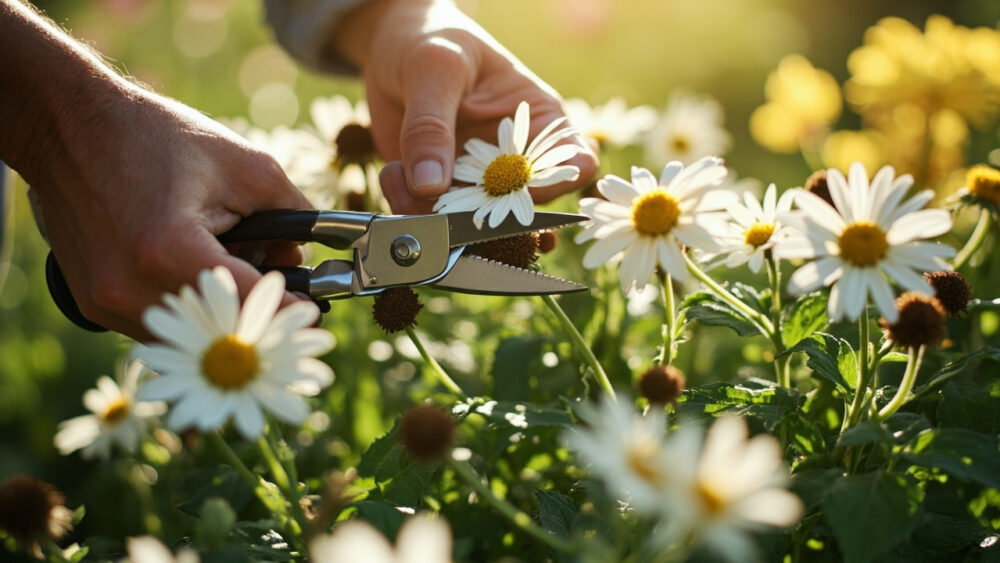
To deadhead shasta daisiessnip the spent flower stem down to the first set of full leaves or to a side bud, not just the bare neck below the petals. Do this as soon as a bloom looks tired, petals drooping or browning at the base, rather than waiting for the whole stem to turn to straw. Stay on top of it through the bloom flush and you can squeeze out several extra weeks of flowers and sometimes a real second round in late summer.
Most people deadhead shasta daisies wrong in one specific way, and it is not laziness. It is cutting the flower head off and leaving three inches of naked stem standing there, which does nothing for the plant and looks worse than the dead bloom did.
There is also a timing question nobody asks until their daisies stop flowering entirely by mid July, and a spent-clump problem that looks like disease but is not disease at all. Stick with me through the how-to and I will hand you a save-able Shasta Daisies at a Glance card at the bottom with the numbers you actually need on hand next time you are standing over the plant.
When to Deadhead, and When to Leave Them Alone
Start deadheading the moment the first flush of blooms begins fading, usually four to six weeks after the plant starts flowering in late spring or early summer depending on your zone. Check every 4 to 7 days during peak bloom. A flower is done when the petals go limp, curl backward, or drop, and the center disc darkens and dries.
Do not deadhead in the first two weeks after transplanting a new shasta daisy. Let it settle and root in before you ask it to redirect energy into more flowers.
Stop deadheading about six weeks before your first fall frost. Later blooms left alone will form seed heads that finches actually enjoy, and the plant needs that window to harden off for winter instead of pushing tender new growth.
Knowing when to stop is just as useful as knowing when to start.
The Tools and the One Prep Step That Matters
A clean pair of bypass pruners or simple garden snips is all you need. Scissors work fine on the thin stems too. What you actually need is sharp, clean blades, since crushed or torn stems heal slower and invite rot in humid weather.
Wipe your blades with rubbing alcohol before you start, especially if you used them on anything showing powdery mildew or leaf spot recently. Shasta daisies are prone to both, and a dirty blade is a great way to spread either one down the row.
That prep step takes ten seconds and it is the one nearly everyone skips.
How to Deadhead a Shasta Daisy, Step by Step
Find the right cut point
Follow the dead flower stem down past the bloom. You are looking for the first healthy leaf or side branch, usually 2 to 6 inches below the flower head depending on how tall the stem grew.
Cut there, not at the base of the bloom
Snip just above that leaf node or side bud at a slight angle. This is the step almost everyone gets wrong: cutting right under the flower head leaves a bare, leafless stick that cannot branch or rebloom, and just sits there turning brown for the rest of the season.
Check for a side bud before you cut deep
Many stems are already forming a smaller side bud below the spent flower. If you see one, cut just above it. That bud often opens into a smaller bloom within two to three weeks, which is your fastest path to more flowers.
Clear the debris
Drop the cut stems in the compost or trash rather than letting them sit in the crown of the plant, where they hold moisture against the foliage and invite fungal problems.
Once the cutting is done, the plant still has work to do, and what happens next tells you whether you cut it right.
What to Expect After You Deadhead
Within 10 to 14 days you should see new buds forming on the side shoots below your cuts, assuming the plant is getting at least six hours of sun and water is not a limiting factor. If nothing is happening by three weeks out, check soil moisture before you blame your pruning cut.
If you assumed a shasta daisy will rebloom no matter what once you deadhead it, that guess is only half right. Rebloom depends on the plant having enough energy reserves, which means a light feeding with a balanced fertilizer after the first deadheading round genuinely helps, especially on sandy soil or plants that bloomed hard the first time.
By midsummer, whole clumps sometimes look ragged rather than just individual spent flowers, and that calls for a different move entirely.
The Midsummer Shear: When One Flower at a Time Isn’t Enough
When more than half the flowers on a clump are spent at once, skip the one-by-one deadheading and shear the whole plant back by a third, using hedge shears or pruners across the top of the clump. This looks brutal and it is not.
Shasta daisies handle a hard midsummer haircut well, and it usually triggers a fuller, tidier second bloom in four to six weeks rather than the sparse, awkward rebloom you get from spot-deadheading a tired clump.
This is the step most people never try because it feels like it should kill the plant.
It does the opposite, and it is also your best move once flowering slows for the season, not just mid-bloom.
The Mistakes That Cost You Flowers
- Cutting too shallow: leaving bare stem stubs instead of cutting back to a leaf node or side bud stalls rebloom completely.
- Deadheading too late: once a flower has fully gone to seed, the plant has already spent the energy; you are just tidying, not encouraging more blooms.
- Ignoring the whole clump: spot-deadheading a plant that is 70 percent spent wastes time; shear it instead.
- Skipping water and food: reblooming takes real energy, and a dry, unfed plant will deadhead fine but simply refuse to push new buds.
- Working with dirty blades: spreading leaf spot or mildew from plant to plant through your pruners undoes all the deadheading benefit.
- Deadheading right up to frost: stop six weeks out so the plant can harden off instead of pushing soft new growth into cold weather.
Fix those six habits and your shasta daisies will out-bloom most of the bed around them.
Shasta Daisies at a Glance
- When to deadhead: every 4 to 7 days once the first blooms fade, starting a few weeks into the bloom flush and stopping about six weeks before first frost.
- Where to cut: just above the first healthy leaf, side bud, or branch point below the spent flower, never right at the base of the bloom head.
- Midsummer shear: when over half the clump is spent at once, cut the whole plant back by about a third to trigger a fuller second bloom in 4 to 6 weeks.
- Tools: clean, sharp bypass pruners or snips, wiped with rubbing alcohol before use.
- After deadheading: expect new buds in 10 to 14 days with adequate sun and water. Feed lightly with a balanced fertilizer after the first round.
- Sun and water needs: at least 6 hours of direct sun and consistent moisture. Rebloom stalls fast without both.
- Skip deadheading: for the first two weeks after transplanting, and in the final six weeks before frost.
Get the cut location right and stay consistent through the flush, and shasta daisies will rebloom for you almost on schedule.
When in doubt, cut to the leaf, not to the flower.