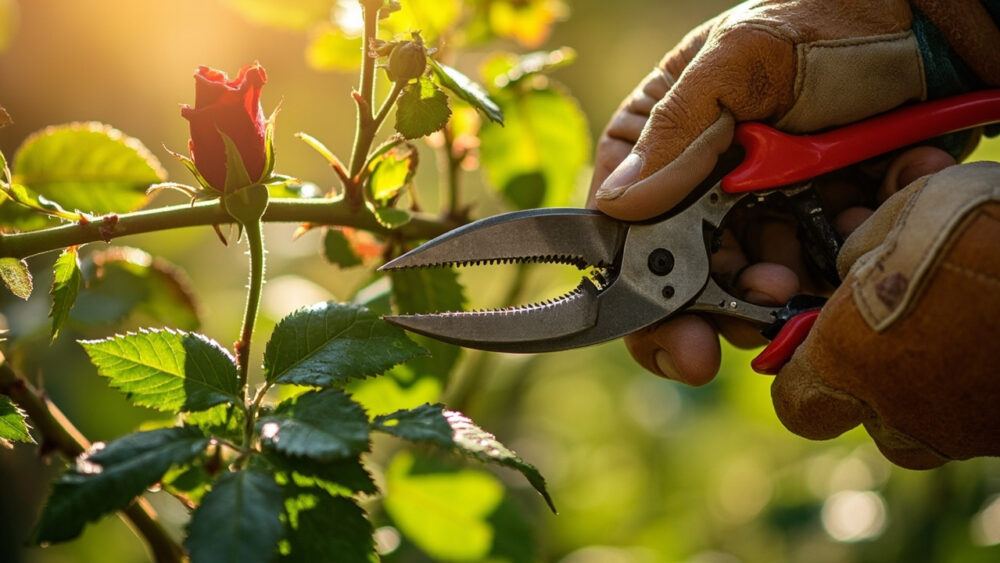
The best time to prune roses is late winter to early spring, right as the buds start swelling but before they leaf out, when you cut most bush roses back to 3 to 5 healthy canes about 12 to 18 inches tall, angled cuts just above outward-facing buds. That single window is where most of your flower count for the year gets decided. Get it wrong and you either lose the whole season’s bloom or open the plant up to dieback it never quite recovers from.
Here is what nobody tells you upfront: the scariest-looking cut is usually the correct one, and the gentle little trim most people do instead is the mistake that ruins the season. There is also a sign on the cane itself that tells you exactly where to stop cutting, and almost nobody checks for it. And you’re probably about to ask whether you can prune a rose that already has new red growth on it. You can, but only if you know what you’re looking at.
Stick around for the part on how much to actually remove, because “a little” and “a lot” mean very different things depending on whether you’re growing a hybrid tea, a climber, or an old garden rose. Save the Roses at a Glance card at the bottom for your phone. It has the numbers you’ll want standing at the bush with pruners in hand.
When to Prune, and When to Leave the Pruners in the Shed
Prune in the dormant-to-just-waking window: after your last hard freeze but before leaves fully emerge. Watch the buds along the canes, small reddish nubs that swell and start to show a hint of color. That is your signal, not the calendar.
In mild climates (zone 8 and warmer) this can land in January or February. In colder zones (5 and 6) it’s often March or even early April, once forsythia is blooming nearby as a rough regional cue.
Do not prune in fall. Cutting back in fall pushes tender new growth right before winter, and that growth dies back and can take the cane with it. Fall is for deadheading and light cleanup only, not shaping cuts.
One-time bloomers like many old garden roses and most climbers are the exception, since they set flower buds on old wood; prune those right after their spring bloom finishes, not in late winter.
Get the timing right and the how-to part gets a lot more forgiving.
Tools and the One Prep Step That Actually Matters
You need sharp bypass pruners for anything under half an inch thick, loppers for thicker old canes, and thick gloves, gauntlet-style if you can, because rose thorns do not care about your schedule. A small pruning saw earns its keep on truly old, woody canes.
Sharpness matters more than brand. Dull blades crush stems instead of cutting them, and a crushed cut heals slower and invites disease in. If your pruners squash rather than slice through a pencil-thick stem, sharpen or replace them before you touch the roses.
The prep step almost everyone skips: wipe your blades with rubbing alcohol between plants, especially if any bush showed disease last season. Blackspot and canker spread on pruner blades more than people realize.
Tools sharp and clean, now the actual cutting.
How to Prune a Rose, Step by Step
Step 1: Clear the Dead and Damaged Wood First
Before shaping anything, remove all dead, blackened, or shriveled canes down to healthy tissue or all the way to the base. Healthy cane is creamy white or pale green inside when you nick it; dead cane is brown and dry all the way through.
Cut damaged canes back until you hit that white center, even if it means going lower than you planned.
Step 2: Open Up the Center
Remove any canes crossing through the middle of the bush or rubbing against another cane. Good air movement through the center is what keeps blackspot and powdery mildew from taking over by midsummer.
Step 3: Choose Your 3 to 5 Best Canes
Keep the thickest, healthiest canes, spaced around the plant like spokes on a wheel. For most hybrid teas, floribundas, and grandifloras, cut these keepers down to 12 to 18 inches, leaving 3 to 5 outward-facing buds per cane.
Shrub roses and landscape types can be pruned lighter, taking off about a third of overall height. Climbers get almost no cane-shortening at all in this pass. You’re mostly removing old, unproductive wood and tying in new canes horizontally, which encourages more side shoots and more flowers.
Step 4: Make the Cut in the Right Place
Cut about a quarter inch above a bud, at a 45-degree angle sloping away from the bud, so water runs off instead of pooling on it. Always cut above a bud facing outward from the plant’s center, since that is the direction the new stem will grow.
This is the cut that scares people, because it looks drastic on paper and looks worse in person.
What the Bush Looks Like Right After, and Why That’s Fine
A freshly pruned rose looks alarming. Bare, short, stubby canes sticking up with no leaves. If you assumed a good pruning job should still look full and leafy, that assumption is exactly what causes people to under-prune and end up with a leggy, weak-flowering bush by summer.
Within 2 to 4 weeks, new red-tinged shoots push out from the buds you cut above. Within 6 to 8 weeks you’ll have full foliage and the first flower buds forming on many types.
If a cane you thought was healthy turns black and dies back after cutting, that’s a sign of cane borer or winter dieback traveling further down than expected. Cut again lower, below any discoloration, until you reach clean white pith.
The bush recovers fast, but only if the mistakes below didn’t happen first.
The Mistakes That Cost You an Entire Season of Flowers
- Pruning too early: a warm spell tricks you into cutting weeks before the last hard freeze, and the resulting new growth gets killed by frost, forcing the plant to start over.
- Pruning one-time bloomers in late winter: if you cut a climber or old garden rose that blooms once on old wood using the hybrid tea timeline, you remove the very wood that was about to flower.
- Cutting above an inward-facing bud: this sends new growth into the center of the bush instead of outward, creating the crowded, airless tangle that invites disease.
- Leaving stubs above the bud: more than a quarter to half inch of stem above the bud dies back and can rot down into the cane itself.
- Under-pruning out of nerves: a light trim instead of a real cutback leaves too many weak, thin canes competing for energy, and you get more stems but smaller, fewer blooms.
- Skipping the disease check: pruning past visible blackspot or canker without cutting back to clean wood just relocates the problem instead of solving it.
Get the timing and the cut right, and the rest of the season mostly takes care of itself.
Roses at a Glance
- When to prune: late winter to early spring, as buds swell but before leaves fully emerge, right after your region’s last hard freeze.
- Exception: one-time bloomers and most climbers get pruned right after spring flowering, not in late winter.
- How much to remove: hybrid teas and floribundas cut to 3 to 5 canes, 12 to 18 inches tall, shrub roses lose about a third of their height.
- Where to cut: a quarter inch above an outward-facing bud, at a 45-degree angle sloping away from the bud.
- Tools needed: sharp bypass pruners, loppers for thick canes, a pruning saw for old wood, thick gloves.
- Between plants: wipe blades with rubbing alcohol to avoid spreading disease.
- First sign of recovery: reddish new shoots within 2 to 4 weeks, full foliage and first buds within 6 to 8 weeks.
If you only remember one thing, remember to cut just above an outward-facing bud, at an angle, not straight across.
Everything else about pruning roses well follows from getting that one cut right, over and over, all the way around the bush.