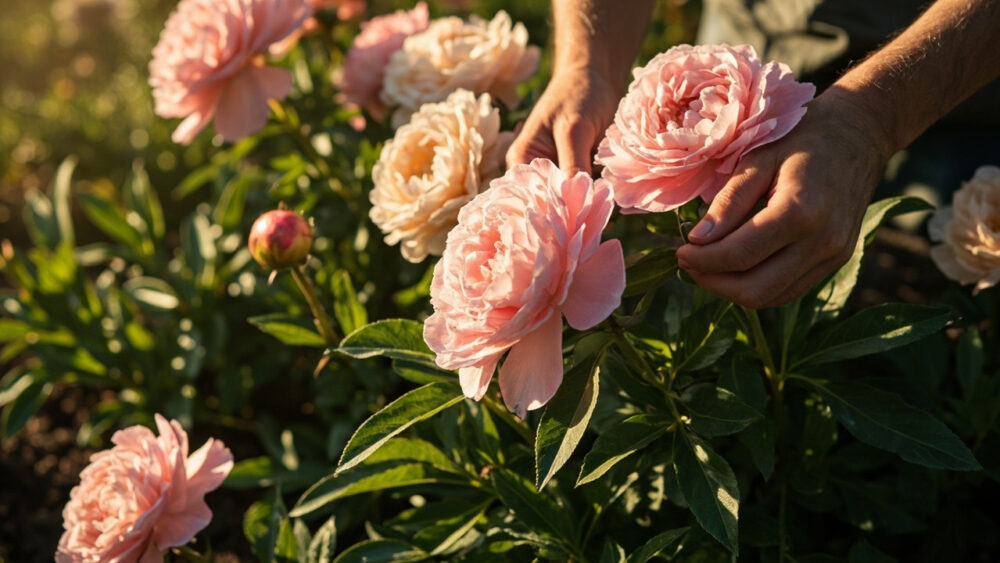
If your peony is putting out plenty of healthy green foliage but no flowers, the most likely culprit is planting depth. Peonies set buds from eyes that need to sit no more than 1 to 2 inches below the soil surface, and if yours are buried deeper than that, or got covered by years of mulch and topsoil creeping up on them, they simply will not flower no matter how well you feed and water them. The fix is usually a fall replanting job, not a fertilizer, and that surprises most people who assumed the problem was how to make peonies bloom with more food or more sun.
Here is the loop worth opening right away: too much shade gets blamed constantly, and sometimes it is real, but a huge share of “won’t bloom” peonies are sitting in decent light and failing for a completely different reason. There is one detail on the plant itself, where the buds form and how far they get before stalling, that tells you which of the five or six real causes you are actually dealing with.
And yes, some of these are fixable this season, while one or two mean you are waiting until next year no matter what you do. Stick with me through the causes and the tell-apart guide, and save the two-minute diagnosis checklist at the very bottom for when you are standing at the plant deciding what to do next.
Causes of Peonies Not Blooming, Most to Least Likely
1. Planted Too Deep
Confirm it: scrape back the mulch and top inch or two of soil right at the base of the stems. If the pink or reddish eyes (the growth buds) are sitting more than 2 inches under the soil line, this is almost certainly your answer, especially on a peony that has never bloomed since you put it in the ground.
Fix it: wait until fall, dig the whole clump up carefully, and replant with the eyes 1 to 2 inches below the surface, no deeper. Do this too shallow and winter can heave the roots up; too deep and you get exactly this problem.
Depth is the classic beginner mistake, but it is far from the only reason a peony sulks.
2. Not Enough Direct Sun
Confirm it: watch the spot for a full day. Peonies want a genuine 6 or more hours of direct sun; if a fence, shed, or a tree that has grown up over the years is now shading the bed for a big chunk of the afternoon, that is your answer.
Fix it: transplant in early fall to a sunnier spot, or prune back overhanging branches if that is realistic. There is no feeding your way out of a shade problem.
If the plant gets plenty of sun and still refuses to flower, shade is not your issue, and the next cause is a common one.
3. Too Young or Recently Transplanted
Confirm it: check your own memory here. Peonies planted or divided within the last 1 to 3 years often skip blooming entirely while they rebuild root mass, even in perfect conditions.
Fix it: nothing to fix. Leave it alone, keep it watered through dry spells, and give it time. A peony can take three years to hit its stride and that is normal, not failure.
Patience solves this one, but the next cause is something you can actually undo.
4. Late Frost or Cold Snap Killed the Buds
Confirm it: look for buds that formed, turned brown or black, and then shriveled or dropped before opening, rather than a plant that never budded at all. This points to a late spring frost hitting tender buds.
Fix it: nothing recovers those buds this season. Going forward, avoid heavy nitrogen fertilizer that pushes early soft growth, and if you know a hard frost is coming after buds have formed, cover the plant overnight with a sheet or frost cloth.
Frost damage is a one-season problem, but the next cause repeats every single year until you address it.
5. Overfeeding With Nitrogen
Confirm it: look at the plant itself. Is it lush, dark green, and clearly vigorous, with lots of leafy growth but zero buds, and have you been feeding it lawn fertilizer or a high-nitrogen mix nearby?
Fix it: stop the nitrogen. Switch to a low-nitrogen, higher-phosphorus fertilizer (something like a 5-10-10 ratio) applied lightly in early spring, and let the excess nitrogen in the soil work itself out over a season or two.
A too-green, too-happy-looking peony that will not flower is almost always overfed, and that is an easy habit to break.
6. Foliage Cut Back Too Early Last Year
Confirm it: think back to last fall. If you cut the stems down in August or September while leaves were still green and photosynthesizing, the plant did not get to store enough energy for this year’s buds.
Fix it: nothing to do now except wait, but going forward, leave foliage standing until it yellows and dies back naturally after a hard frost, then cut it to the ground.
This is a timing mistake more than a growing mistake, and it fixes itself with one better fall.
How to Tell the Causes Apart
Where the problem shows up on the plant is your best clue. No buds ever form at all points to depth, shade, youth, or root competition. Buds form and then die or brown before opening points to frost damage or, less commonly, a fungal bud blight in a wet spring. Lots of leafy growth with zero bud attempts points to nitrogen overfeeding.
Age matters too. A peony that bloomed fine for years and suddenly stopped has a new problem, likely shade from growth around it, root crowding, or a recent nitrogen-heavy feeding, not a depth issue from planting.
Once you know where on the timeline things went wrong, the recovery outlook gets a lot clearer.
Will It Recover?
Most of these are fully fixable, just not quickly. Depth and shade problems resolve within one to two years after a proper fall transplant, once the roots settle in.
Young or recently divided peonies almost always come around on their own within two to three years with no intervention needed at all.
Frost-damaged buds and overfeeding are single-season setbacks. Correct the habit and next year’s buds are unaffected. The one honest exception is a peony planted in deep, dense shade with no realistic way to add light or move it. That plant may survive for decades as a leafy, blank green mound and never bloom, and at that point moving it is the only real fix, not more patience.
Knowing the timeline is one thing, keeping this from happening again is the part that actually matters.
How to Keep It From Happening Again
Get planting depth right the first time: eyes 1 to 2 inches deep, no more, and check it again every couple of years since mulch and settling soil creep up on the crown.
Pick the site for the long haul. Peonies live 20, 30, even 50 years in the same spot, so account for trees and shrubs that will eventually shade it out.
Feed lightly with a low-nitrogen, phosphorus-forward fertilizer in early spring, skip the lawn feed drift, and always let foliage die back naturally in fall before cutting it down.
Divide only when truly overcrowded, roughly every 8 to 10 years, and expect a bloom gap for a year or two afterward.
Get these habits in place once, and a peony rewards you with flowers for longer than most gardeners keep the same house.
Diagnosis Checklist
- Scrape back soil at the base: if eyes sit deeper than 2 inches, replant shallower this fall.
- Watch the bed for a full day: if it gets less than 6 hours of direct sun, plan a sunnier relocation for fall.
- Check the plant’s age: if it was planted or divided within the last 1 to 3 years, wait it out, no action needed.
- Look for shriveled brown buds rather than no buds at all: if present, suspect a late frost and skip nitrogen feeding this spring.
- Assess overall growth: if the plant is lush and dark green with no bud attempts, cut nitrogen fertilizer and switch to a low-nitrogen, phosphorus-heavy feed.
- Recall last fall’s cleanup: if foliage was cut back while still green, commit to waiting for natural die-back this year.
- If none of these fit and the plant has bloomed reliably for years, check for new shade or root competition from nearby plants that have grown up around it.
Peonies are patient plants, and most of these fixes just need one good season to prove themselves.
Get the depth, light, and feeding right, and the blooms come back on their own.