A grapevine moves through five distinct stages every year: bud break, shoot and flower development, bloom, berry development, and veraison through harvest. If you know the grapes growing stages and what each one demands from you, you can catch problems while they’re still fixable instead of finding out at harvest that something went wrong back in May.
Most people lose their crop at the same two points, and neither one is the one they’re worried about. There’s also a stage where the vine looks like it’s dying when it’s actually doing exactly what it should, and if you don’t know that ahead of time, you’ll panic and do something that actually hurts it.
Stick around to the end and you’ll get a Grapes at a Glance card, the kind of thing worth saving to your phone before you walk back out to the vine.
Dormancy and Bud Break: Late Winter Into Spring
Through winter, the vine looks dead. That’s normal, and it’s also when you should be pruning, while the plant is fully dormant and you can see the structure clearly.
Bud break happens when the buds swell and push out small fuzzy green shoots, usually once soil temperatures climb into the 50s Fahrenheit for a stretch, often four to eight weeks before your last frost date depending on your climate and the variety.
This is the most fragile point in the whole season. A late frost after bud break can kill the young shoots outright, and there’s no saving them once they’ve blackened, only new growth from secondary buds, which comes in weaker and later.
Watch your local frost forecast harder than you watch the vine itself right now.
Shoot Growth and Leaf Development: Spring
Once past bud break, shoots elongate fast, sometimes an inch or more a day in good conditions, and leaves unfurl along their length. This is when the vine builds the framework it’ll fruit on.
Your job here is training and tying. Shoots need to be secured to a wire or trellis before they get long and brittle, because a whip-thin new shoot snaps easily in wind if it’s not supported.
Feed lightly if your soil is poor, but don’t overdo nitrogen. A vine pushed too hard with fertilizer grows lush leaves and lazy roots, and that catches up with it later in the form of weak flowering.
Green growth is the easy part, the real test comes next.
Bloom: Late Spring Into Early Summer
Small, pale, almost forgettable flower clusters appear along the shoots six to ten weeks after bud break, and bloom itself lasts about one to two weeks per cluster. Grape flowers are self-pollinating and don’t need bees the way squash or apples do, though a little wind and warm, dry weather during bloom helps pollination go smoothly.
Here’s the mistake almost everyone makes: assuming poor fruit set is a pollination problem and searching for ways to attract more pollinators. That’s rarely it.
Cold, wet, or windy weather during bloom is the real culprit behind poor fruit set, along with a vine that was stressed by drought or nutrient shortage in the weeks leading up to it. There’s no fixing bloom weather after the fact. You can only set the vine up well beforehand and accept what the season gives you.
What happens right after bloom is where most beginners really go wrong.
Berry Development: The Stage Where Most People Panic Unnecessarily
After bloom, tiny hard green berries form and swell over six to eight weeks. They stay green, sour, and rock hard for most of this stage, which is exactly what confuses people.
If you assumed hard green grapes in midsummer mean something is wrong, that guess is understandable but backward. Green and hard is correct.
Grapes do almost all their sugar accumulation later, not now, so tasting a berry in July and finding it sour tells you nothing bad. What actually matters at this stage is thinning if your clusters are overcrowded, and staying consistent with water, since irregular deep-drought-then-flood watering here causes cracked or uneven berries later.
This is also the stage where powdery mildew and black rot show up on leaves and young berries in humid climates, so keep air moving through the canopy by removing a few excess leaves around the fruit zone, and treat with a fungicide labeled for grapes if you see it establishing, following the product label exactly.
The real transformation is still ahead, and it happens fast once it starts.
Veraison: When Color Finally Changes
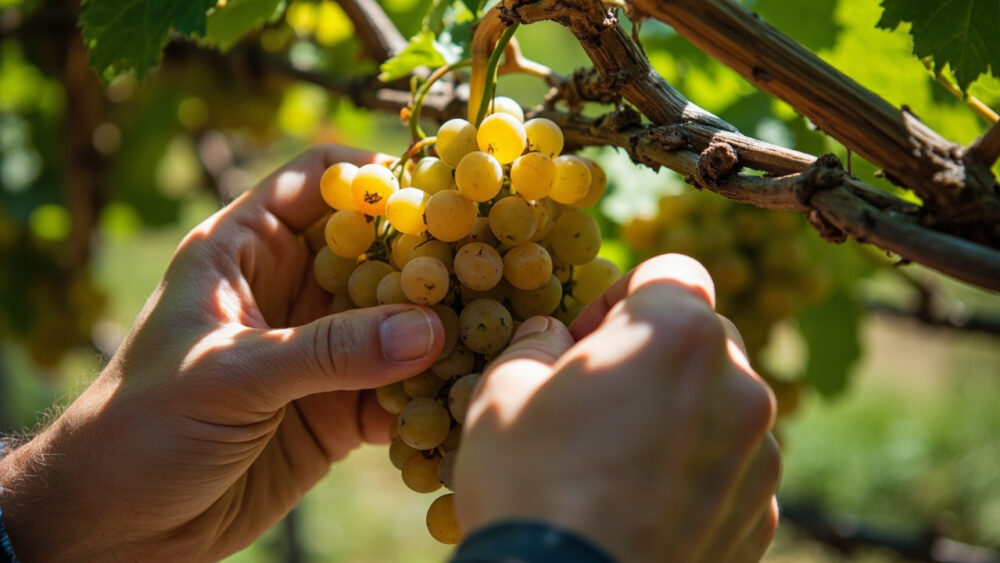
Veraison is the stage where berries switch from hard and green to soft and colored, whether that’s red, purple, or gold depending on variety, and it usually starts six to ten weeks after bloom. Sugar rises quickly now, acid drops, and the berries soften almost overnight in the way that surprises people who weren’t watching closely.
This is the honest answer to the question most people are about to ask, which is “how do I know when to harvest.” You don’t harvest at color change. Color arrives well before the sugar and flavor peak, sometimes two to four weeks before, so a berry that looks ripe by color alone is often still tart.
Taste is the only reliable test. Once color is fully changed across most of the cluster, start sampling berries every few days until they taste genuinely sweet with no green, grassy edge left, and the seeds inside have turned brown instead of white.
Once taste confirms it, you’re in the harvest window, and that window is short.
Harvest: The Payoff Stage
Depending on variety and climate, harvest generally falls somewhere from late summer into mid fall, roughly 100 to 160 days after bud break. Table grapes and wine grapes are picked at different sugar levels, but for the home gardener eating fresh, taste is still the deciding factor over any chart.
Grapes do not ripen further once picked, unlike tomatoes or bananas, so picking early can’t be corrected on the counter. If a cluster still tastes tart, leave it and check again in a few days rather than picking the whole vine at once.
Birds and wasps often decide the exact harvest date for you by getting there first, so netting the vine as berries color up is worth the hassle in most yards.
Knowing what a stalled vine looks like matters just as much as knowing what a healthy one looks like.
Healthy Progress Versus a Real Stall
A healthy vine shows steady, visible change every one to two weeks through spring and early summer: longer shoots, more leaves, swelling clusters. Slow but steady is normal, especially in a young vine’s first two or three years, which focus more on root and structure than fruit.
A real stall looks different. No shoot growth for three or more weeks during the growing season, leaves that yellow between the veins while veins stay green, or berries that shrivel instead of swelling are all signs of a genuine problem, usually a root issue, nutrient deficiency, or in older vines, a disease like Pierce’s disease or crown gall.
A vine in its first or second year that produces little or no fruit is not stalled, it’s just young. Grapevines typically don’t bear a full crop until year three or later.
Save the card below and you’ll know exactly where your vine should be standing on any given week.
Grapes at a Glance
- Bud break: happens once soil hits the 50s Fahrenheit, often four to eight weeks before last frost, and is the most frost-vulnerable stage of the year.
- Bloom timing: occurs six to ten weeks after bud break, lasts one to two weeks per cluster, and needs no pollinators, only calm, dry weather.
- Berry development: six to eight weeks of hard, green, sour berries after bloom, which is completely normal and not a sign of trouble.
- Veraison: color change starts six to ten weeks after bloom, but sugar peaks two to four weeks after color fully changes, not at the moment color arrives.
- Harvest window: roughly 100 to 160 days after bud break depending on variety and climate, confirmed by taste and brown seeds, never by color alone.
- Spacing and planting: plant dormant vines 6 to 8 feet apart in well-drained soil once the ground can be worked in early spring.
- First real harvest: expect little to no fruit in years one and two, with a full crop typically by year three or later.
Grapes reward patience more than effort, and the calendar matters less than what the vine is actually showing you.
Learn to read bud break, bloom, and that green-to-color shift, and you’ll rarely be surprised by what the vine does next.