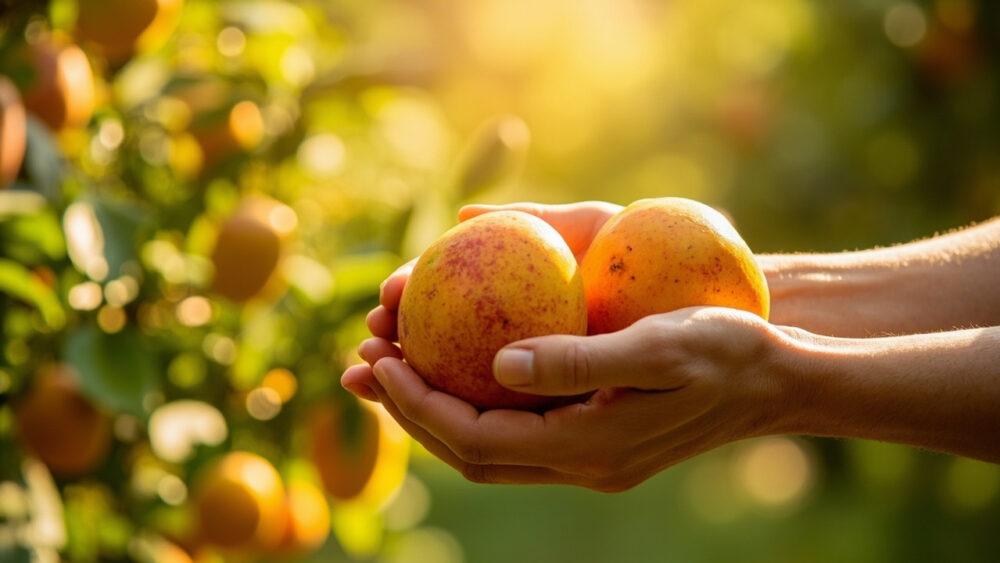
The right way to store mangoes depends entirely on whether they’re ripe yet. Hard, unripe mangoes belong on the counter at room temperature, never in the fridge, until they yield slightly to a gentle squeeze. Once ripe, move them to the fridge where they’ll hold for about five to seven days, or cut and freeze the flesh for eating within eight to twelve months.
Here’s the part almost everyone gets backward: refrigerating a hard, unripe mango doesn’t preserve it, it stalls it out and often ruins the texture for good. That’s the mistake that quietly kills more mango batches than actual spoilage does.
There’s also a smell test people misread, a cutting mistake that turns good fridge storage into a slimy mess in three days, and an honest answer about freezing texture that nobody wants to hear before they do it. Stick around, because the save-able Mangoes at a Glance card at the bottom covers all of it in ten seconds flat.
Ripening on the Counter First
A hard mango is not a storage problem, it’s a ripening problem. Leave it at room temperature, out of direct sun, until the skin gives slightly under gentle thumb pressure near the stem end. That’s usually two to seven days depending on how green it was at purchase.
Color is a weak signal. Some ripe varieties stay mostly green with just a blush of yellow or red. Squeeze and smell instead: ripe mangoes smell faintly sweet and fruity right at the stem end.
Want it faster? Put it in a paper bag, folded shut, for a day or two. The trapped ethylene speeds things along without cooking the fruit the way a sunny windowsill can.
Once it gives to gentle pressure, the clock changes completely.
The Fridge Method, Step by Step
Once a mango is ripe, refrigeration is exactly right, and here’s how to do it so it actually lasts the full week instead of turning in three days.
- Leave the mango whole and unwashed until you’re ready to eat it.
- Store it loose in the crisper drawer, not sealed in a bag.
- Keep it away from the coldest back wall of the fridge, which can bruise the flesh.
- If it’s already cut, put the pieces in an airtight container.
Cut mango behaves differently than whole mango, and that difference is where most kitchen mistakes happen.
How Long Mangoes Actually Keep, Method by Method
Counter, unripe to ripening: two to seven days, entirely dependent on starting firmness.
Ripe, whole, in the fridge: five to seven days, sometimes up to ten with a very firm-ripe fruit.
Cut and refrigerated in an airtight container: three to four days, no longer. The cut surface starts breaking down fast once it’s exposed to air.
Frozen, cut into chunks: eight to twelve months for best quality, safe indefinitely in a truly cold freezer but the texture softens over time.
Dried or cured mango, stored airtight in a cool, dark spot: six to twelve months, sometimes longer if vacuum sealed.
Each of those numbers only holds if you skip the prep mistakes, which is where most people actually lose the fruit.
Prep That Makes or Breaks Storage
Do not wash a mango before storing it whole. Water sitting on the skin invites mold and soft spots long before the fruit is actually ripe.
Wash it right before you cut it, not before it goes in the fridge or the bag.
For freezing, peel and cut the flesh into chunks or slices, then freeze on a tray in a single layer before bagging them. Skip that flash-freeze step and you’ll get one solid, clumped block instead of scoopable pieces.
No blanching is needed for mango, unlike some fruits and vegetables. The flesh freezes fine raw, though it will soften noticeably once thawed, which matters for smoothies but not for baking or blending.
Curing or drying mango works the same as most fruit leather: thin, even slices, low heat, fully dry to the touch before storing airtight, with any residual moisture being the single biggest cause of mold in the jar later.
Get the prep wrong and even a perfectly ripe mango won’t make it to day five looking good.
The Signs a Mango Has Turned
A ripe mango naturally softens as it sits, so softness alone doesn’t mean it’s bad. What actually means trouble is different.
Watch for these real spoilage signs:
- Wrinkled, shriveled skin instead of smooth and taut
- Dark, sunken soft spots rather than even overall softness
- A sour or alcohol-like smell instead of sweet fruitiness
- Visible mold, usually gray or white fuzz near the stem
- Leaking juice or a mushy feel all the way through
If you assumed a very soft mango is automatically spoiled, that guess wastes a lot of good fruit. Very soft, even mushy, mango is often still perfectly fine for smoothies or mango lassi, it’s just past its best for slicing. Smell and mold are the real tests, not firmness.
Cut mango turning slimy or developing a sour smell within a day or two means it’s done, no rescuing it.
Knowing the real signs matters less if you’re making the mistakes that cause early spoilage in the first place.
The Mistakes That Ruin a Batch
Refrigerating unripe mango is the top offender. Cold halts the ripening enzymes, and the fruit often stays starchy and fibrous even after it eventually softens.
Sealing cut mango in a container with too much airspace speeds up oxidation and dulls both flavor and color faster than a tightly packed, minimal-air container.
Storing mangoes in a fruit bowl pressed against bananas or apples ripens them unevenly, since those fruits pump out extra ethylene.
Skipping the flash-freeze step before bagging frozen chunks gives you a frozen brick that’s nearly impossible to portion later.
And freezing a mango that’s already overripe locks in mushy texture permanently, there’s no fixing that on the thaw.
Avoid those five and a mango is honestly one of the easier fruits to store well.
Mangoes at a Glance
- Unripe storage: counter at room temperature, out of direct sun, until it gives slightly to a gentle squeeze.
- Ripe, whole, fridge: five to seven days, loose in the crisper drawer, unwashed.
- Ripe, cut: three to four days in an airtight container, washed right before cutting.
- Frozen chunks: eight to twelve months for best texture, flash-frozen on a tray before bagging.
- Dried or cured: six to twelve months airtight, cool and dark, fully dry before sealing.
- Ripeness check: gentle give near the stem plus a sweet smell, not color alone.
- Real spoilage signs: sour smell, mold, sunken dark spots, or leaking juice, not just softness.
Get the ripening stage right before it ever touches the fridge, and everything after that is easy.
The fruit will tell you what it needs if you check firmness and smell instead of the calendar.