If your boxwood has tan or straw-colored blotches on the leaves and black streaking on the stems underneath, you’re most likely looking at boxwood blight, and there is no cure once it’s in the plant. If instead you’re seeing bronze or straw patches with tiny yellow specks on individual leaves rather than blotches, that’s more likely boxwood leafminer or mite damage, both of which are very fixable. The word boxwood diseases covers a handful of very different problems, and telling them apart in the first two minutes is what decides whether you’re pruning out a nuisance or bagging up the whole shrub.
Here’s the loop worth opening right away: most people blame “root rot” or “drought stress” the second they see brown patches, and that guess is wrong more often than it’s right. The real tell is not the color of the leaf, it’s where on the plant the damage started and what the stems look like underneath the leaves.
I’ll walk you through every likely cause in order, how to confirm each one at the plant today, and the honest odds of recovery, including the one disease here that sometimes means starting over. Stick around for the two-minute diagnosis checklist at the bottom, it’s built to run right next to the shrub with your phone in hand.
Most Likely Causes, Ranked
1. Boxwood Blight
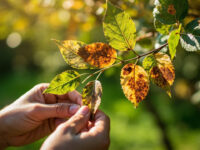
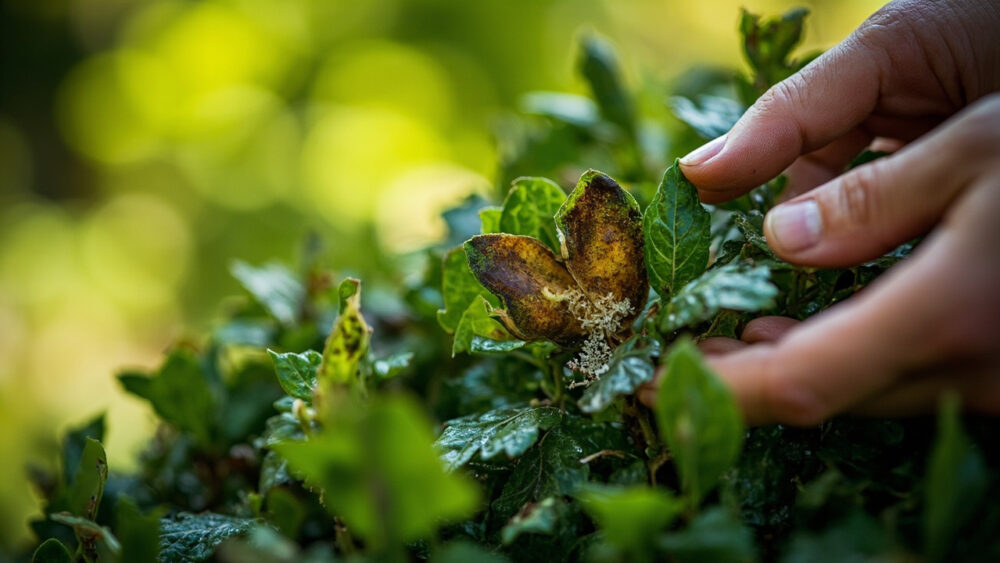
Confirm it: look for circular tan or dark brown leaf spots with a darker ring, rapid leaf drop starting at the bottom of the plant, and thin black streaks or lesions running along the green stems. Pull back a few leaves and check the stems directly, the streaking is the giveaway most other problems don’t produce.
Fix it: there is no curing an infected boxwood. Remove and bag the entire plant, roots included, along with fallen leaf litter, and do not compost any of it. Fungicide can slow spread on nearby healthy boxwood but won’t save an infected one. Disinfect tools and boots before touching other plants.
This is the one everyone dreads, but it’s also the one you can usually rule out fast if the stems are clean.
2. Volutella Blight (Canker)
Confirm it: tan to straw-colored dieback in irregular patches, often following pruning wounds or winter injury. Peel the bark on a dead twig, if you see pinkish or salmon-colored spore masses underneath, that confirms it.
Fix it: prune out dead and dying branches well below the visible damage, thin the interior of the shrub so air moves through it, and clean up fallen debris. This fungus mainly attacks already-stressed wood, so improving airflow and avoiding wet-leaf pruning stops most reinfection.
Notice how this one hides in dead wood rather than announcing itself on live leaves, which is exactly why the next cause gets misdiagnosed as blight so often.
3. Boxwood Leafminer
Confirm it: leaves look blistered, bronze, or puffy, and if you hold one up to the light or slice it open, you’ll see a small yellowish larva tunneling inside. Damage tends to be worst on the outer, sun-exposed foliage.
Fix it: prune out and destroy heavily mined leaves. Adult leafminers are tiny orange flies that emerge in spring, so a well-timed systemic insecticide applied per the product label around that emergence window is the most reliable control. This is cosmetic and rarely kills the plant outright.
If slicing a leaf open reveals nothing alive inside, you’re dealing with something environmental, not an insect.
4. Boxwood Mites
Confirm it: fine stippling or a bronzed, dusty look across older leaves, worse on the top surface. Tap a branch over white paper, if you see tiny specks moving, that’s your mite population.
Fix it: a strong hose spray every few days knocks populations down significantly. For heavier infestations, a labeled miticide or horticultural oil applied per instructions handles it. Mites thrive in dusty, dry conditions, so a weekly rinse-down in hot weather helps prevent flare-ups.
Mite damage and nutrient stress can look almost identical at a glance, which is where a lot of people guess wrong next.
5. Root Rot from Poor Drainage
Confirm it: dig down 4 to 6 inches near the base and check soil moisture and root color. Healthy roots are cream to light tan and firm; rotted roots are dark, mushy, and slide apart when you tug them. Above ground, whole branches yellow and wilt regardless of watering.
Fix it: if caught early, improve drainage by pulling back mulch from the trunk and amending heavy soil, and cut back watering. If most of the root ball is mushy and dark, the plant is usually not salvageable.
Root rot is the quiet one, it shows up in the canopy but the real damage is always happening out of sight underground.
6. Winter Bronzing and Sun Scald (Not a Disease)
Confirm it: uniform bronze or orange-brown color across the whole plant or the side facing winter sun and wind, with no spotting, streaking, or larvae inside the leaves. This shows up seasonally, usually late winter into early spring.
Fix it: nothing to treat. New spring growth typically greens back up on its own within a few weeks once temperatures warm. A burlap windbreak or anti-desiccant spray before winter prevents it next year.
Once you rule this one out by checking for uniform color with zero spotting, you’re left with the causes that actually need action, which is exactly what the next section sorts out.
How to Tell the Causes Apart
Where the damage starts matters more than what color it is. Blight starts at the bottom and works up fast, with black stem streaking. Volutella shows up as irregular dead patches tied to old wounds, with salmon spores under the bark. Leafminer and mites both hit individual leaves or the outer canopy while stems stay clean, the difference is a larva inside the leaf versus stippling on the surface. Root rot causes whole-branch wilting tied to soggy soil, confirmed by digging, not by looking at leaves at all. Winter bronzing is uniform, seasonal, and has no texture change to the leaf itself.
Once you know which bucket you’re in, the next question is the one that actually matters: does this shrub make it?
Will It Recover?
Boxwood blight does not resolve. Removal is the only real answer, and that’s the honest, unpopular truth about this disease. Volutella and root rot are recoverable if caught while less than a third of the plant is affected, but a boxwood that’s mostly dark, mushy roots or mostly dead wood is a losing bet not worth nursing along. Leafminer and mite damage are almost always fully recoverable with treatment and a season of regrowth, since they rarely touch the root system. Winter bronzing needs nothing but patience, usually just a few weeks of spring warmth.
Knowing the odds is only half the job, the other half is making sure you’re not back here again next season.
How to Keep It From Happening Again
Space boxwood plants for airflow, roughly 2 to 3 feet apart depending on variety, and avoid pruning or shearing when foliage is wet since that’s how blight spores spread fastest. Water at the base in the morning rather than overhead in the evening, and keep mulch a few inches back from the trunk. Disinfect pruning tools between plants, especially if you’ve ever had blight on the property, since the spores can persist in soil and debris for years. Buy new boxwood only from growers who can confirm their stock has been inspected and blight-free.
All of that prevention only helps if you can catch trouble early, so here’s the fast version you can run right now.
Diagnosis Checklist
- Check the stems under the leaves for black streaking, if present, suspect boxwood blight and isolate the plant immediately.
- Look at where damage started, bottom and spreading up means blight, scattered patches on old wood mean volutella.
- Slice open a bronzed or blistered leaf, a larva inside confirms leafminer.
- Tap a branch over white paper, moving specks confirm mites.
- Dig 4 to 6 inches near the base and check root color, dark and mushy means root rot, cream and firm means roots are fine.
- If the whole plant is uniformly bronze with no spotting or texture change, wait for spring growth before doing anything.
- If less than a third of the plant is affected by volutella or root rot, prune out the damage and improve airflow or drainage.
- If more than half the plant is affected by blight or advanced root rot, remove and bag the entire plant, including roots.
Most boxwood problems are fixable once you know which one you’re actually dealing with.
The stems under the leaves almost always tell you the truth faster than the leaves themselves do.