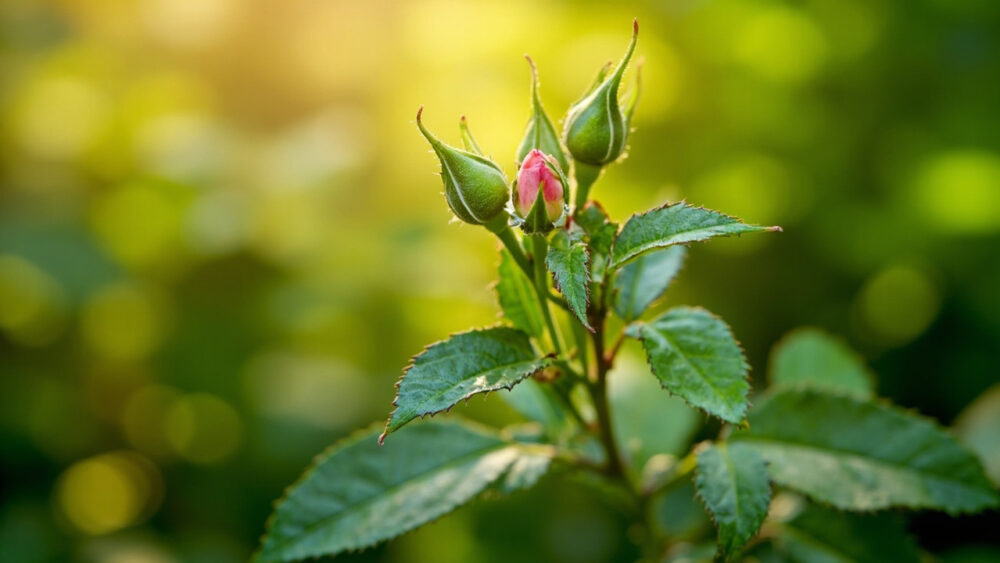
Nine times out of ten, roses not blooming comes down to light: the bush is getting less than six hours of direct sun, usually because a tree, fence, or neighboring shrub has grown up and started shading it since the year you planted it. The fix is either moving the rose or cutting back whatever is stealing its light. But that is only the most common answer, not the only one, and you need to know which cause you actually have before you spend a season chasing the wrong fix.
Most people blame fertilizer first. That guess is usually wrong, and in fact over-feeding with high-nitrogen fertilizer is one of the sneakier causes of a leafy, bloomless rose, not a cure for it. There is also one detail on the plant itself, where the new growth is happening and what shape it takes, that tells you almost immediately which of the five or six real causes you are dealing with.
Stick with me through the causes, the tell-apart guide, and the honest recovery odds, and at the bottom you will find a two-minute diagnosis checklist you can run right at the plant, save it before you head out to the garden.
Most Likely Causes, in Order
1. Not enough direct sun
Confirm it: stand at the rose midday and check the shadow pattern. If the bush gets less than six hours of unfiltered sun, or if a tree canopy has thickened over the last two or three years, this is almost certainly your cause. Roses that used to bloom and have gradually stopped are the classic sun-loss case.
Fix it: prune back whatever is casting the shade, or if that is not possible, plan to transplant the rose in early spring or fall when it is dormant, into a spot with six to eight hours of direct sun.
Light is the biggest lever, but timing your pruning wrong can silence blooms just as effectively.
2. Pruned at the wrong time or too hard
Confirm it: think back to your last pruning. If you cut a repeat-blooming rose hard in late summer or fall, you likely removed the wood that was about to set this year’s buds. On the plant, look for lots of thin, whippy new shoots with no flower buds forming at the tips.
Fix it: prune most repeat-blooming roses in late winter or very early spring, while dormant, cutting to healthy outward-facing buds. Once-blooming old garden roses and climbers should only be pruned right after their spring flush, never in fall.
Get the pruning calendar wrong twice in a row and you can talk yourself into believing the rose is simply “not a bloomer,” which is rarely true.
3. Too much nitrogen, not enough phosphorus and potassium
Confirm it: look at the plant’s overall shape. Lush, dark green, vigorous foliage with few or no buds is the signature of a nitrogen-heavy diet, especially if you have been feeding with a lawn fertilizer or a high-nitrogen general feed.
Fix it: switch to a fertilizer formulated for roses or blooming shrubs, with a lower first number and higher second and third numbers, and follow the product label rate. Ease off nitrogen-heavy feeds until buds return.
A rose that looks perfectly healthy and still refuses to flower is often eating too well in exactly the wrong way.
4. Underfeeding or depleted soil
Confirm it: this is the mirror image of cause three. Look for pale, thin foliage, weak stems, and a plant that seems to be surviving rather than growing, especially if it has not been fed in a year or more and is competing with nearby tree roots.
Fix it: feed with a balanced or bloom-formulated rose fertilizer starting in early spring as growth resumes, and again every four to six weeks through the main growing season, following label rates. Work compost into the soil surface each spring.
Feast or famine, either way the buds are the first thing a stressed rose gives up.
5. Underwatering or inconsistent watering
Confirm it: push a finger two inches into the soil near the root zone. If it is dry at that depth during the growing season, or if the rose has gone through a stretch of heat and drought without supplemental water, this is a strong candidate. Bud drop before opening, and buds that form but stall and brown at the tip, both point here.
Fix it: water deeply once or twice a week rather than lightly every day, aiming for about an inch of water reaching the root zone, and mulch two to three inches deep to hold moisture.
Water stress and heat stress often arrive together, which is where the next cause comes in.
6. Heat stress or a late cold snap
Confirm it: check your recent weather. Sustained temperatures above the mid 90s Fahrenheit can cause roses to stall and drop buds, while a late spring frost after new growth has started can blast the first flush entirely, leaving blackened or mushy new shoot tips.
Fix it: there is no fixing the weather itself. Keep the plant watered and lightly shaded during extreme heat, and expect blooming to resume once temperatures moderate, usually within two to four weeks.
Weather-related pauses are temporary, but the next cause is not something you wait out.
7. Pests or disease diverting the plant’s energy
Confirm it: look closely at leaves and buds for aphids clustered on new growth, chewed or skeletonized leaves, powdery white coating, or black spot with yellowing leaves dropping from the bottom up. A rose fighting a heavy infestation or disease will often abort buds to conserve energy.
Fix it: identify the specific pest or disease and treat with the appropriate cultural control first, removing affected leaves and improving airflow, and use a labeled fungicide or insecticidal product only as needed, following the label exactly.
Once you have ruled out or confirmed each cause on its own, the real skill is telling them apart when two look similar.
How to Tell the Causes Apart
Where the symptom shows up is your fastest clue. Sun and pruning problems show up as a general lack of buds across the whole plant. Water and heat stress show up as buds that form, then brown or drop before opening.
Nitrogen excess looks like too much of a good thing, dark leaves, thick stems, zero flowers. Underfeeding looks like the opposite, pale and thin everywhere.
Pests and disease are the exception, they announce themselves on the leaves first, old and new both, before the bloom problem even registers.
Once you have matched your symptom to a cause, the next honest question is what recovery actually looks like.
Will It Recover?
A rose that is not blooming because of sun, pruning timing, or fertilizer balance almost always recovers fully. Expect improvement within one growing season once you correct light or feeding, and pruning-related misses usually resolve by the very next spring flush.
Water and heat stress recover fastest of all, often within a few weeks of consistent moisture and moderating temperatures.
Pest and disease cases depend on how far things went. Caught early, the plant rebounds the same season. A rose that has been defoliated repeatedly by black spot for two or three years running is genuinely weakened, and while it will likely survive, expect a smaller, slower recovery and consider whether the spot itself is too damp and shaded to ever fully suit a rose.
The one case with no real fix is a rose planted in deep, permanent shade with no possibility of more light, at that point moving it is not a suggestion, it is the only path to blooms again.
How to Keep It From Happening Again
Give roses six to eight hours of direct sun from the start, and reassess every few years as trees and shrubs around them grow. Prune repeat bloomers in late winter, never in fall.
Feed on a schedule rather than by guessing, a rose-specific fertilizer in early spring and again every four to six weeks through the growing season, backing off by late summer so the plant can harden for dormancy.
Water deeply and consistently rather than in random bursts, and keep a three-inch mulch layer to buffer both moisture and soil temperature swings.
Walk your roses weekly during the growing season and catch pests and black spot while they are still small problems, not full-blown ones.
Diagnosis Checklist
- Stand at the rose midday and count hours of direct sun, if under six hours, suspect shade first.
- Check new growth for whippy thin shoots with no buds, if present and you pruned in fall, suspect pruning timing.
- Look at overall foliage color, if unusually dark green and lush with zero buds, suspect too much nitrogen.
- Look for pale, thin, weak growth, if present and feeding has lapsed, suspect underfeeding.
- Push a finger two inches into the soil, if dry and buds are browning or dropping, suspect underwatering.
- Check recent temperatures, if a heat spike or late frost hit right before bud drop, suspect weather stress.
- Inspect leaves and buds closely for aphids, powdery coating, or black spotting, if present, suspect pests or disease.
- Match your strongest symptom to its section above, confirm with the specific test, then apply that fix only.
Most bloomless roses are fixable, and the fix is usually simpler than it feels standing there frustrated.
Run the checklist once, make the one change it points to, and give the plant a full season to prove you right.