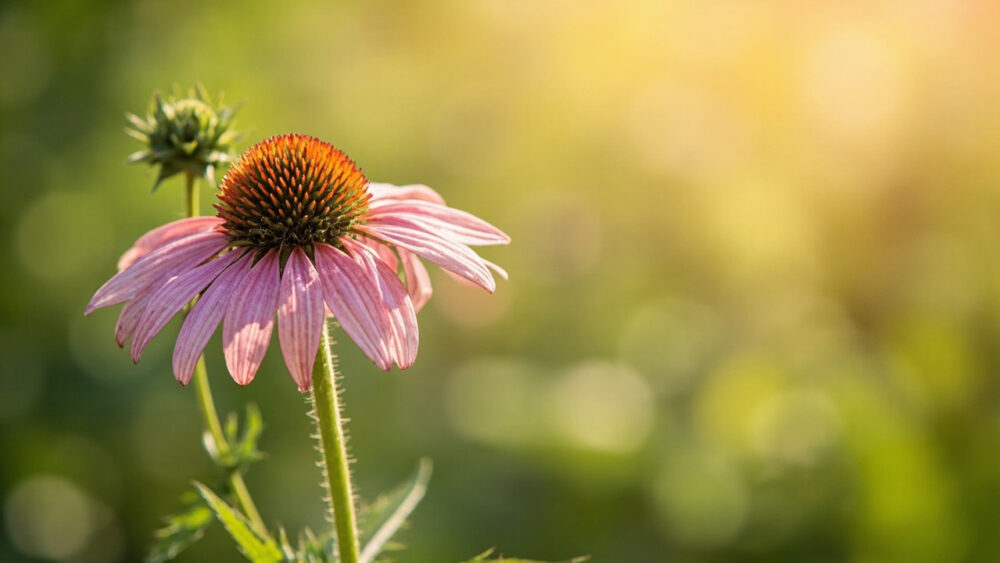
Coneflowers bloom from early summer into fall, typically starting sometime in June and running through September, sometimes into October in mild climates. That is an eight to sixteen week window, which is long by perennial standards. Most of that range depends on your zone, the weather that particular year, and one plant habit almost nobody deadheads correctly.
The exact start date shifts by climate and by how old the plant is. A first-year coneflower often blooms later and lighter than one that has been in the ground three years. There is also a specific mistake that quietly shortens the whole season, and a very common misread of “my coneflower stopped blooming” that has nothing to do with the plant being unhappy.
Scroll to the bottom for a save-able quick-reference card with the bloom window, the timing factors, and the fastest fixes for a coneflower that will not flower.
The Real Bloom Window, and Why It Is Longer Than People Expect
In most of the country, coneflower (Echinacea) starts budding in late spring and opens its first flowers in early to mid June. Peak bloom runs through July and August. A well-established plant will keep pushing new buds through September, and in zones 7 and warmer, into October.
That is not one continuous wave of color. It is a rolling succession: outer stems flower first, side shoots follow two to three weeks behind, and a healthy clump is never fully done until frost cuts it down.
Individual flowers last two to four weeks each before the petals drop and the center cone darkens. The plant as a whole outlasts any single bloom by a wide margin.
That succession is also exactly what you can manipulate to stretch the show even longer.
What Actually Controls the Timing
Three things move the start date: plant age, sun exposure, and spring weather. A first-year coneflower grown from a small nursery pot may not bloom heavily until its second summer, it is busy building roots first.
Sun exposure matters more than most people think. Coneflowers in full sun (six or more hours) bloom on schedule and heavily. In partial shade they bloom later, thinner, and often lean toward the light instead of standing upright.
A cold, wet spring delays everything by a couple of weeks since the plant is slower to break dormancy and put on growth. None of this is a sign of a sick plant, it is just the calendar shifting.
Age and light explain most of the variation, but they do not explain a plant that refuses to bloom at all.
Why Your Coneflower Might Not Be Blooming
If you have healthy green foliage and no flowers, the most common cause is too much shade, not too little water or fertilizer. Coneflowers are prairie natives bred for tough, sunny, average soil.
The second most common cause is a plant that is still establishing. If you planted it this spring, give it until next summer before judging it.
Overly rich soil or heavy nitrogen fertilizer is the third culprit. It pushes lush leaves at the expense of flowers, the opposite problem of what most struggling plants have.
If you assumed a non-blooming coneflower needs more feeding, that guess is usually backward, less nitrogen often fixes it faster than more.
Rule those three out and check the crown for rot or the leaves for heavy pest damage, but honestly, sun and patience solve most cases.
Once it is blooming the way it should, the next question is how to keep it going as long as possible.
How to Get More Blooms, and a Longer Season
Deadheading is the single biggest lever you have. Snip spent flower heads back to the next side bud or leaf set instead of letting them sit and go to seed. This redirects energy into new buds instead of seed production and can add several extra weeks of bloom.
Here is the part almost everyone gets wrong: cutting the entire plant back hard in midsummer, the way you might with some other perennials, usually delays the next flush rather than speeding it up. Selective deadheading of individual spent stems works better than a full haircut.
Leave the last round of fall flowers standing instead of deadheading them. The seed heads feed goldfinches and other birds through winter, and they also self-sow, which is how a single coneflower turns into a drift over a few seasons.
Dividing overcrowded clumps every three to four years also renews bloom vigor, an old, congested clump flowers less than a younger, divided one.
Feed lightly, water during dry stretches in the first year, and skip the rich fertilizer, this plant blooms best when it is not pampered.
Aftercare Through Fall and Into Next Year
As bloom slows in September and October, stop deadheading and let the last flowers mature into seed heads. This is not neglect, it is exactly what the plant and the local birds need going into winter.
Cut the dead stems back to a few inches above the crown in late fall or early spring, whichever fits your schedule. Either timing is fine for the plant’s health.
Coneflowers are drought-tolerant once established and rarely need winter protection through zone 3, they are among the toughest perennials you can plant.
Note for households with pets: coneflower is generally considered non-toxic, but any plant material eaten in quantity can upset a pet’s stomach, and if you notice vomiting, drooling, or lethargy after ingestion, call your veterinarian rather than waiting it out.
Everything above boils down to a handful of numbers and cues worth keeping on hand.
Coneflowers: Quick Reference
- Bloom window: early to mid June through September, sometimes into October in zones 7 and warmer.
- Individual flower lifespan: two to four weeks per bloom, with new buds opening in succession.
- Sun needs: full sun, six or more hours daily, for the heaviest and most on-time bloom.
- First-year plants: often bloom light or late while establishing roots, full display usually comes year two.
- To extend bloom: deadhead spent stems individually to the next bud rather than shearing the whole plant.
- Leave standing in fall: the last flush of seed heads feeds birds and self-sows for more plants next year.
- Not blooming: check shade first, then over-rich soil or heavy nitrogen, then simple establishment time.
Get the sun right and deadhead with a light hand, and coneflower will out-bloom almost anything else in the bed.
That is really all this plant asks for.