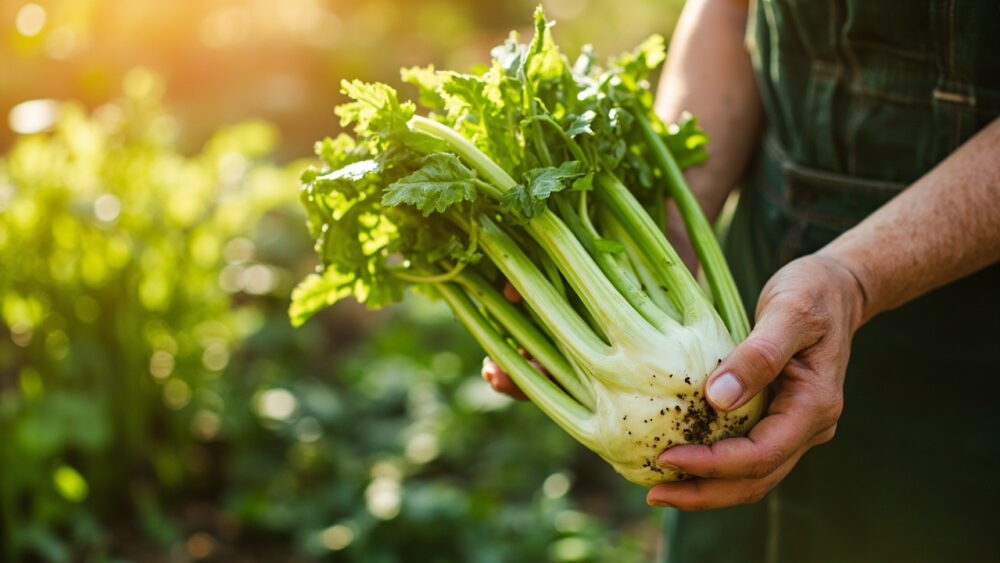
The right way to store celery is wrapped tight in foil, not a plastic bag, and kept in the crisper drawer of your fridge. Done that way, a head stays crisp for three to four weeks, sometimes longer. Most people wrap it wrong, and that single swap is why their celery goes limp in five days instead of five weeks.
There is a second mistake almost nobody sees coming: rinsing the whole head before you put it away. It feels responsible. It is exactly what turns crisp stalks into slimy ones by day four.
Stick around and I will also cover the freezer method most people botch, the real signs celery has turned versus the signs that just mean “trim and use it today,” and I will drop the full storage rundown into a save-able Celery at a Glance card at the bottom so you can pull it up next time you are standing in the kitchen with a grocery bag in your hand.
The Foil Method: How to Actually Do It
Skip the produce bag it came in. That thin plastic traps the ethylene gas celery gives off, and trapped ethylene is what fast-tracks wilting and yellowing.
Instead, wrap the whole head in aluminum foil, snug but not crushing the stalks. Foil breathes just enough to let excess moisture and gas escape while still holding humidity against the stalks.
Tuck the wrapped head into the crisper drawer, ideally the one set to high humidity if your fridge has that option. Don’t cut it, don’t wash it, don’t separate the stalks. Whole and wrapped is the move.
That part is simple enough, but how long it actually buys you depends on which method you pick.
How Long Celery Keeps, Method by Method
Foil-wrapped in the fridge, whole and unwashed, celery holds three to four weeks with the outer stalks still snapping when you bend them. Some people push it past a month, though texture starts softening after week three.
Left in its original plastic bag, expect five to ten days before it turns rubbery. That is the gap most people never realize they’re paying for.
On the counter, celery is done in two to three days, faster in a warm kitchen.
In the freezer, chopped and blanched celery keeps a solid ten to twelve months for cooking use, though it will never be crisp again once thawed.
Cured, meaning stored root-in with soil still attached in a cool root cellar around 32 to 40°F, a whole plant can hold for two to three months, but that only works if you grew it and dug it with roots intact, not for grocery-store celery.
Freezing sounds like the obvious long-term fix, but there is a prep step that makes or breaks whether frozen celery is usable at all.
Prep That Makes or Breaks the Batch
Do not wash celery before storing it whole. Water sitting in the crevices where stalks meet is what breeds the slime and rot that shows up a few days later. Wash it right before you use it, not before you store it.
If you are freezing celery, though, the rule flips. Chop it into the size pieces you’ll want for soups and stir-fries, then blanch in boiling water for two to three minutes, and cool it fast in ice water before bagging and freezing.
Skip the blanch and you’ll guess wrong about why the celery tastes bitter and turns mushy after thawing. Raw-frozen celery breaks down hard once thawed, losing structure and flavor together. Blanching stops the enzymes that cause that breakdown, and it’s the one step people cut to save five minutes and regret for the next ten months of soup season.
Good prep buys you time, but even perfect storage eventually runs out, and knowing when it has is its own skill.
The Signs Celery Has Actually Turned
If you assumed limp stalks mean it’s spoiled and needs to be tossed, that guess wastes a lot of decent celery. Limp just means dehydrated, and it’s fixable: stand the stalks in a glass of ice water for 30 to 60 minutes and most will firm back up enough to eat raw or cook with.
What actually means spoiled is different and unmistakable once you’ve seen it:
- Slimy film on the stalks that doesn’t wipe off, especially where stalks join at the base
- A sour, off smell instead of celery’s usual clean, grassy scent
- Dark, wet, mushy spots rather than dry browning at the cut ends
- Visible mold, which shows up fuzzy and gray or white, usually at the base first
Dry, browning cut ends with firm stalks above them are not spoilage, just trim an inch off and it’s fine.
Knowing the difference matters, but it only helps if you avoid the handful of mistakes that create spoilage in the first place.
The Mistakes That Ruin a Batch
Cutting before storing is the biggest one. Every cut end is an exposed surface losing moisture and inviting bacteria. Store the head whole and cut only what you need, when you need it.
Storing it near apples, pears, or bananas is another quiet killer. Those fruits pump out ethylene gas, and celery is sensitive to it, which speeds up yellowing and softening even inside the crisper drawer.
Leaving celery in a sealed produce bag traps moisture against the stalks with nowhere to go, which is a fast track to the slime problem above.
And washing before storage, mentioned earlier, deserves a second callout because it is genuinely the most common reason people think celery “just doesn’t keep” when the truth is they set it up to fail on day one.
Fix those four habits and celery stops being the vegetable that dies in your fridge before you get to use it.
Celery at a Glance
- Best method: wrap the whole, unwashed head in foil and store in the crisper drawer.
- Fridge life, foil wrapped: three to four weeks, sometimes longer, with outer stalks staying crisp for most of that.
- Fridge life, original bag: five to ten days before it turns rubbery.
- Counter life: two to three days, faster in a warm room.
- Freezer life: ten to twelve months if chopped and blanched two to three minutes first, texture will be soft on thaw.
- Wash timing: right before use, never before storage.
- Spoiled versus limp: limp fixes with an ice water soak, true spoilage means slime, mold, or a sour smell.
Wrap it whole, keep it dry, and cut only what you’re about to use.
Get those three habits right and celery will outlast almost everything else in your crisper drawer.