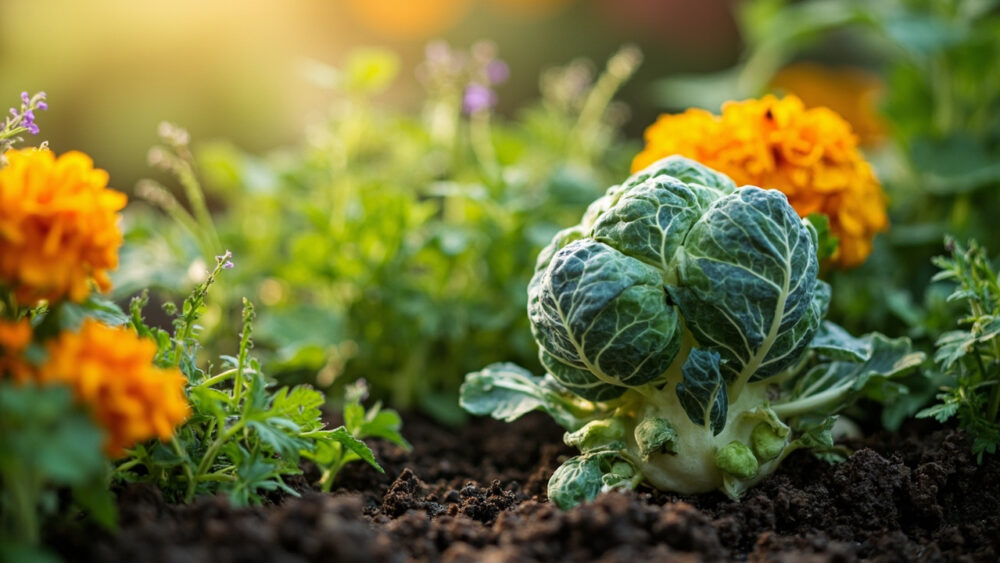
The best companion plants for brussels sprouts are aromatic herbs like dill and thyme, alliums like onions and garlic, and trap crops like nasturtiums, because they either confuse the cabbage moths and aphids that ruin your crop or pull those pests onto themselves instead. Skip anything in the strawberry or tomato family nearby, and never plant brussels sprouts next to other brassicas if you can avoid it, since crowding your cole crops together just concentrates every pest that wants them into one buffet line.
Most people get the layout wrong before they even plant, and it has nothing to do with which companion they picked. There is also a companion everyone assumes helps that actually does very little for brussels sprouts specifically, and one classic pairing that is more folklore than fact.
Stick around for the Brussels Sprouts at a Glance card at the bottom, it has the spacing, timing, and pest-watch cues saved in one place so you can pull it up on your phone standing in the garden.
Why Companion Planting Actually Matters Here
Brussels sprouts sit in the ground a long time, often 90 to 120 days from transplant to harvest. That is a long window for cabbage worms, aphids, and flea beetles to find them.
Companion planting works by either repelling those pests with strong scent, luring beneficial predator insects in to eat them, or sacrificing themselves as a decoy the pests prefer. It is not magic and it will not save a plant that is already infested, but it meaningfully cuts down how bad the infestation gets in the first place.
Here is what actually earns a spot in the bed with them.
Dill and Other Umbellifers (Fennel, Cilantro, Yarrow)
Dill flowers attract parasitic wasps and hoverflies, two of the best natural predators of aphids and cabbage worms. Let a few dill plants bolt and flower right in the brassica bed instead of cutting them back.
Fennel and cilantro do the same job when they flower, though fennel can inhibit some neighboring vegetables, so keep it toward the edge of the bed rather than wedged between plants.
The tiny flowers matter more than the herb itself here.
Onions, Garlic, and Chives
Alliums throw off a strong sulfur scent that confuses the cabbage moth’s ability to find brussels sprouts by smell. Plant a border of onions or a row of garlic between brassica plants and you disrupt that scent trail.
This is not a total force field. Moths can still find the plants, especially in a small garden, but the interference measurably reduces egg-laying pressure.
Alliums also take up little lateral root space, so they slot into gaps without stealing nutrients from your sprouts.
Nasturtiums as a Trap Crop
Aphids and some caterpillars genuinely prefer nasturtiums over brassicas. Plant them a few feet away, not right against the sprouts, and they pull pests off the crop you actually want to harvest.
Check the nasturtiums weekly. If they get overwhelmed with aphids, that is the trap working as designed, not a failure. Pull the worst leaves and let the rest keep sacrificing itself.
That is the honest mechanism behind trap crops, and it is worth knowing before you plant one expecting it to just repel bugs outright.
Thyme, Sage, and Rosemary
These woody, strongly scented herbs mask the smell brassicas give off, making it harder for cabbage moths and flea beetles to zero in on the bed. They also tend to attract pollinators and beneficial insects when in bloom.
Plant them at the bed’s edge rather than mixed directly among the sprouts, since their root systems and growth habit prefer drier, less-disturbed soil than what brassicas want.
Now for the pairing that gets recommended constantly and does almost nothing.
Marigolds: The Companion Everyone Assumes Helps More Than It Does
If you assumed marigolds are a universal pest shield, that guess is only half right. Marigolds are genuinely useful against nematodes in the soil and can deter some general pests, but they do very little specifically against cabbage moths or aphids, the two biggest threats to brussels sprouts.
Plant them if you like them or want nematode suppression elsewhere in the rotation. Just do not count on them as your primary brassica pest defense the way dill or alliums actually function.
Knowing what does not help matters just as much as knowing what does, and that brings us to what actively hurts.
What to Never Plant Near Brussels Sprouts
Other Brassicas Packed Too Close
Cabbage, kale, broccoli, and cauliflower share the exact same pests and diseases as brussels sprouts, cabbage worms, aphids, clubroot, and flea beetles included. Planting them all together does not spread risk, it concentrates it into one section of the garden that becomes irresistible to every brassica-specific pest in the area.
This is the mistake that ruins most attempts, not a bad companion choice but simply overcrowding the whole cole crop family into one bed with no scent-disrupting break plants between them. If you grow multiple brassicas, alternate them with alliums, herbs, or a non-related vegetable so the pests cannot walk straight from one victim to the next.
Rotate brassica plantings to a different bed section each year too, since clubroot spores persist in soil for years.
Crowding within the same family causes more damage than any single bad neighbor plant.
Strawberries
Strawberries and brassicas compete hard for the same soil nutrients and do not share beneficial pest relationships. Strawberries also stay low and shaded out by brussels sprouts’ tall, wide leaves, which stunts their fruiting.
Keep them in entirely separate beds.
Pole Beans and Other Climbing Legumes
Beans and brassicas generally do not thrive together. Beans prefer more neutral to slightly acidic soil and different nutrient ratios, and some gardeners report stunted growth in both crops when planted close.
Bush beans are less of a problem than pole beans, since pole varieties climb and shade the sprouts’ lower leaves, cutting light exactly when the plant needs full sun to bulk up those side buds.
Light competition is a quieter problem than pests, but it costs you just as much yield.
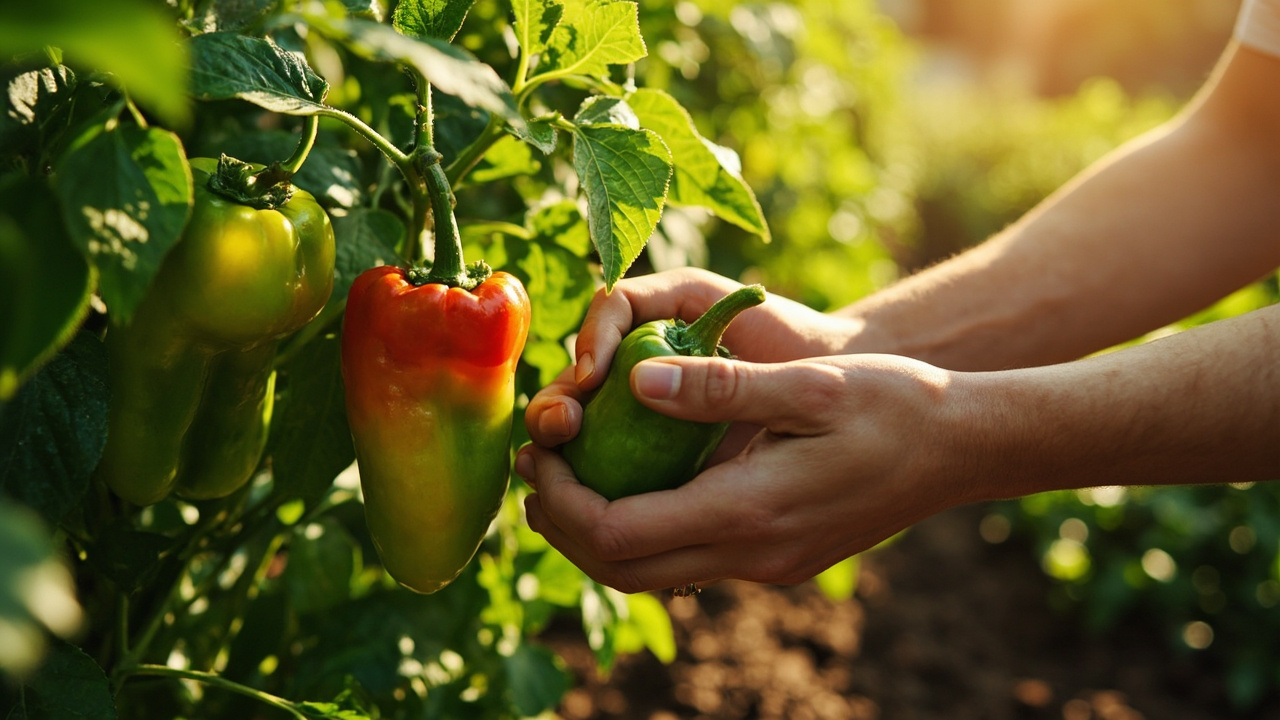
Tomatoes and Peppers
Nightshades and brassicas are not enemies in the dramatic sense some old companion charts suggest, but they compete for similar nutrients and occupy the garden during the same long season. Tomatoes especially get tall and can shade brussels sprouts just enough to slow their growth in a small bed.
Give both crops their own footprint rather than interplanting them tightly.
Laying Out the Bed So It Actually Works
Space brussels sprouts 18 to 24 inches apart in rows 24 to 36 inches apart. That spacing is non-negotiable for good airflow, since tight spacing invites the fungal issues that thrive in humid, still air between crowded plants.
Border the bed with a row of onions, garlic, or chives on the outer edge, tuck dill and cilantro at the corners where you will let them flower, and drop a couple of nasturtiums 3 to 4 feet away as a trap crop, not directly touching the sprouts.
Keep thyme, sage, and rosemary along the sunniest, driest edge of the bed rather than mixed into the damper soil brassicas prefer.
That layout handles the pest pressure, but there is one more myth worth killing before you commit to a plan.
The Companion Planting Myths That Do Not Hold Up
Myth: companion plants alone will stop cabbage worms entirely. They reduce pressure, they do not eliminate it. You will likely still need to hand-pick eggs and worms off leaves or use a cultural control like row covers during peak moth activity in early to midsummer.
Myth: any strong-smelling herb works the same. Not all scents disrupt the same pests, dill’s value is mostly about attracting predators, while alliums work through scent-masking, and they are not interchangeable.
Myth: companion planting fixes poor soil or bad timing. No neighbor plant compensates for brussels sprouts planted too late to mature before hard frost, or grown in compacted, nutrient-poor soil. Companions help around the edges of a plant that is otherwise set up correctly.
Get the fundamentals right first, then let the companions do their supporting work.
Brussels Sprouts at a Glance
- When to plant: transplant seedlings 2 to 4 weeks before your last spring frost for an early crop, or time transplants so harvest lands after several light frosts in fall, since cold sweetens the sprouts.
- Spacing: 18 to 24 inches between plants, 24 to 36 inches between rows, for airflow and full sun exposure.
- Best companions: dill, fennel, and cilantro for beneficial insects, onions, garlic, and chives for scent-masking, nasturtiums as a trap crop, thyme, sage, and rosemary along the bed edge.
- Never plant nearby: other brassicas crowded too close, strawberries, pole beans, and tomatoes or peppers sharing the same tight footprint.
- Watch for: small white or greenish caterpillars and clusters of aphids on the undersides of leaves, check weekly starting midsummer.
- Soil check: should feel moist an inch down but never waterlogged, brussels sprouts want consistent moisture through their long season.
- Harvest cue: sprouts firm and about an inch across, harvest from the bottom of the stalk upward as they mature.
Companion planting buys you real, measurable pest pressure relief, not a guarantee. Get the spacing and timing right first, then let dill, alliums, and nasturtiums do the rest of the work around them.