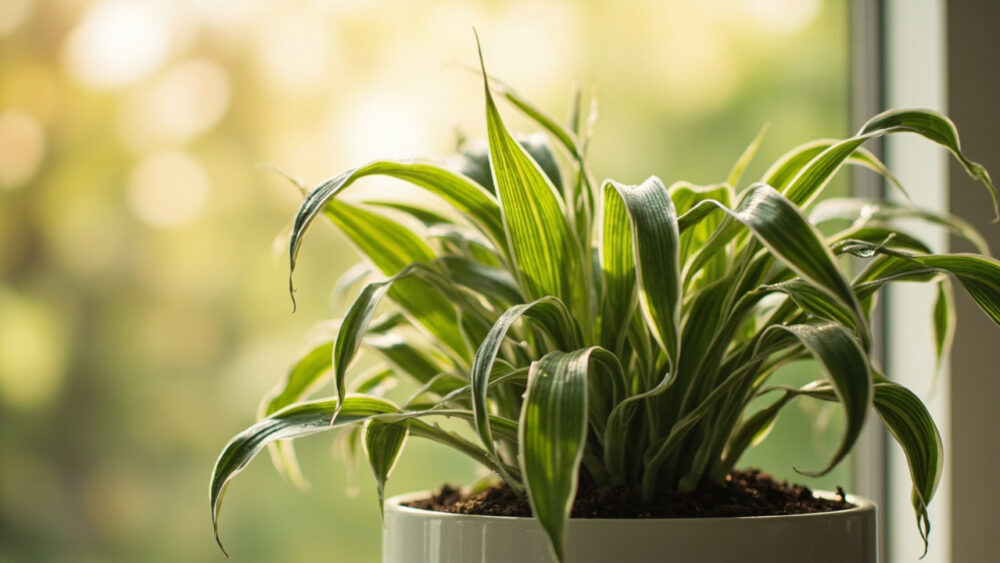
Water a spider plant about once every 7 to 10 days in spring and summer, and once every 2 to 3 weeks in fall and winter, letting the top inch or two of soil dry out between drinks. That is the honest starting number, not gospel, because light, pot size, and the air in your house all push that schedule around. This is one of the most forgiving houseplants you can own, but the way most people kill it is not the way they expect.
Here is the loop worth opening right now: the mistake that takes down more spider plants isn’t drought, it’s a rigid weekly calendar reminder that ignores what the soil is actually doing. There’s also a leaf sign almost everyone misreads as a watering problem when it’s usually something else entirely. And once you know the real schedule, the very next question you’ll have is about tap water and those brown tips, so we’ll get to that too.
Stick with this to the end and you’ll get a save-able Spider Plant at a Glance card with the whole routine boiled down to the numbers you actually need.
The Real Schedule, and What Changes It
In active growing season, spring through summer, most spider plants want water roughly every 7 to 10 days. In a bright room they may want it closer to every 5 to 7 days. In a dim corner, stretch that to 10 to 14.
Pot material matters more than people think. A plant in an unglazed terra cotta pot dries out noticeably faster than the same plant in plastic or glazed ceramic, sometimes needing water twice as often.
Root-bound plants, which spider plants become quickly, drink faster too because there’s more root and less soil to hold moisture. A spider plant crammed full of tubers can need water every 5 to 6 days even in mediocre light.
None of these numbers replace checking the actual plant, and that’s where most watering advice quietly falls apart.
Stop Guessing: The Finger Test, Pot Weight, and Leaf Cues
If you assumed a fixed schedule was the safe choice, that’s the guess that causes root rot and crispy tips in the same pot. Spider plants punish rigid calendars because indoor conditions shift week to week even when your reminder app doesn’t.
The finger test is still the most reliable free tool you own. Push a finger into the soil to the second knuckle. If it’s dry at that depth, water. If it’s still cool and damp, wait a few more days and check again.
Pot weight is the trick experienced growers use once they know a plant. Lift the pot right after a thorough watering and remember roughly how heavy it feels. A noticeably lighter pot means the soil has dried through and it’s time.
Leaves will also tell you something, but not what most people think. Slightly limp, softened leaves that perk back up within a day of watering usually mean the plant got a little too dry, not that anything is wrong long-term. Spider plants are dramatic about mild thirst and recover fast.
Once you know it’s actually time to water, how you do it matters almost as much as when.
How to Water a Spider Plant Properly
Water until it runs freely out the drainage holes, then let the pot sit for five minutes and dump any excess from the saucer. A shallow splash on top that never reaches the lower roots trains the plant to root shallow and stay perpetually thirsty at depth.
Room-temperature water is fine straight from the tap for most households. If your tap water is heavily softened or very high in fluoride and chlorine, the classic sign is brown, papery tips on otherwise healthy leaves; letting water sit out overnight or switching to filtered water usually clears this up over a few months.
Skip the saucer sitting in standing water. Roots sitting in a puddle for days are the single fastest route to rot, and it undoes every bit of good the finger test did for you.
Get the watering itself right and the next skill is reading what the plant does afterward.
Overwatered or Underwatered? How to Tell Them Apart
This is the sign everyone misreads. Both overwatering and underwatering can produce droopy, sad-looking leaves, so droop alone tells you nothing.
Underwatered leaves feel thin, look slightly folded or curled lengthwise, and perk up visibly within hours of a good soak. The soil will be bone dry at finger-depth and the pot will feel light.
Overwatered leaves feel soft, almost mushy, sometimes yellowing from the base or center of the plant rather than the tips. The soil stays wet or soggy days after you last watered, and you may notice a sour, swampy smell at the soil surface. That smell is your clearest tell, because limp leaves lie but rotting soil does not.
If you catch overwatering early, easing off and letting the pot dry out fully solves it. If roots have gone soft, dark, and mushy underneath, that’s rot, and it usually means repotting into fresh, dry soil and trimming away the damaged roots rather than just watering less.
Get through one full year with this plant and you’ll notice the schedule itself has to bend with the seasons.
Adjusting the Schedule Through the Year
Spring and summer are growth mode. Warmer air, longer light, and active roots mean the soil dries faster, so that 7 to 10 day rhythm is your baseline, checked with a finger, not assumed blindly.
Once fall arrives and daylight drops, growth slows and thirst drops with it. Stretch watering to every 2 to 3 weeks and expect it to feel almost neglectful compared to summer.
Winter is where overwatering deaths spike, because people keep watering on the summer schedule out of habit while the plant’s actual demand has dropped by half or more. Indoor heating dries the air but the soil underneath a dormant plant still holds water far longer than in July.
A spider plant near a heat vent or a drafty window is the exception, since dry blowing air can pull moisture out fast enough to need checking weekly even in January.
Match the season and the finger test does the rest of the work for you all year.
Spider Plant at a Glance
- Watering frequency: every 7 to 10 days in spring and summer, every 2 to 3 weeks in fall and winter, always checked against the soil rather than the calendar.
- How to check: finger test to the second knuckle, water when dry at that depth, lift the pot to learn its dry weight versus its watered weight.
- How to water: water thoroughly until it drains from the bottom, empty the saucer after five minutes, never let roots sit in standing water.
- Light needs: bright, indirect light is ideal, tolerates lower light but grows slower and needs water less often there.
- Overwatering signs: soft or mushy yellowing leaves, sour smell from wet soil, soil still soggy days after the last watering.
- Underwatering signs: thin, curling leaves and dry, light pot that perks back up within hours of a thorough soak.
- Brown leaf tips: usually a mineral or chlorine sensitivity from tap water, filtered or rested water often clears it up over a few months.
If you only remember one thing, let the soil, not the day of the week, tell you when to water.
Check before you pour, and this plant will forgive almost every other mistake you make.