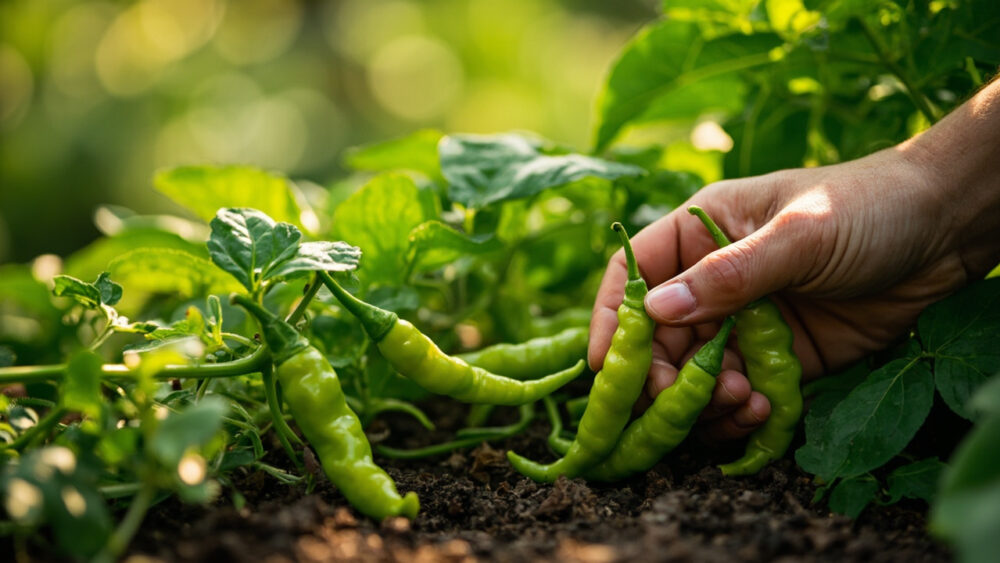
Growing shishito peppers is mostly about heat and patience: set transplants out two to three weeks after your last frost once soil hits at least 65°F, give each plant 18 to 24 inches of space in full sun, and keep them fed and watered evenly for 60 to 75 days until you start snapping off wrinkled, finger-length pods. That is the whole arc. The plants are forgiving compared to their hotter cousins, but there are a few places where people lose the season without realizing it.
The mistake that trips up most first-timers has nothing to do with watering or fertilizer. It is planting too early into cold soil, which stalls the roots for weeks and produces a stunted plant that never catches up. There is also a widely misread signal at harvest time that makes people think their shishitos have gone bad when they have actually done exactly what they are supposed to do.
And there is an honest answer coming about why some shishito plants suddenly turn fiery hot, because it happens, and it is not really the plant’s fault. Stick around for the Shishito Peppers at a Glance card at the bottom. It is built to save to your phone for the whole season.
When to Plant Shishito Peppers
Shishito peppers are warm-season plants through and through, and cold soil is their biggest enemy early on. Wait until nighttime temperatures are reliably staying above 55°F and soil temperature at a 4-inch depth is at least 65°F, ideally 70°F.
That usually lands two to three weeks after your last spring frost date. In zones 6 and 7, that is late May into early June. In zones 8 to 10, you can plant in April or even earlier.
If you start seed indoors, sow 8 to 10 weeks before your last frost, since shishitos are slow to germinate and slower to size up than tomatoes.
Get the timing wrong in one direction and the whole season pays for it.
Choosing the Spot and Prepping the Soil
Shishitos want at least 6 to 8 hours of direct sun and they will sulk in anything less, producing leggy plants with thin production. Pick your sunniest bed or the brightest spot on a patio.
Soil matters more than most people expect. Work in 2 to 3 inches of compost before planting and aim for well-drained soil with a pH between 6.0 and 6.8. Heavy clay that holds water around the roots invites rot fast.
Raised beds or large containers, 5-gallon minimum, work well if your native soil is dense or slow to drain. Peppers in general would rather be slightly dry than waterlogged.
Once the bed is ready, the next decision is how deep and how far apart to actually put the plants.
Planting Shishito Peppers Step by Step
1. Harden off transplants first
If you started seed indoors or bought nursery starts, give them 5 to 7 days outside in filtered sun before planting in full sun. Skipping this step causes sunscald and setback that can cost two weeks of growth.
2. Dig the hole and set the depth
Plant at the same depth the pepper was growing in its pot, unlike tomatoes, peppers do not want to be buried deeper along the stem. Set the root ball in and firm soil around it.
3. Space plants 18 to 24 inches apart
Rows should be 24 to 30 inches apart. Shishitos get bushy, 2 to 3 feet tall and nearly as wide, and crowding cuts airflow and invites fungal problems later.
4. Water in immediately
Give each new transplant a slow soak right after planting to settle soil around the roots and eliminate air pockets.
5. Stake or cage while plants are small
Shishitos load up with pods and can flop over under the weight by midsummer. A simple tomato cage or single stake set now saves you from a broken stem in August.
Once they are in the ground, the plant’s needs shift from setup to steady maintenance.
Watering and Feeding Through the Season
Consistency beats volume with shishitos. Water deeply once or twice a week, aiming for about 1 to 1.5 inches total per week, more during heat waves, less if you get regular rain.
Check soil an inch down with a finger before watering. If it is dry, water. If it is still damp, wait.
Feed at planting with a balanced fertilizer or compost, then side-dress or feed again every 4 to 6 weeks with something lower in nitrogen once flowering starts. Too much nitrogen late in the season gives you a jungle of leaves and very few peppers.
Mulch with 2 inches of straw or shredded leaves to hold moisture and keep soil temperature steady, since fluctuating moisture is what causes blossom drop and bitter, oddly shaped pods.
Here is where that heat question actually gets answered.
Why Some Shishitos Turn Hot, and Other Problems to Watch For
Shishitos are bred to be mild, but they are not incapable of heat. Drought stress is the number one reason a normally mild shishito plant suddenly produces pods with real bite.
If plants dry out repeatedly between waterings, or sit through a stretch of high heat with inconsistent moisture, capsaicin production increases and you get a genuinely spicy batch. It is not a disease and it is not permanent, it is the plant reacting to stress. Even watering usually settles it back down within a couple of weeks.
Beyond that, watch for these common issues:
- Blossom drop: caused by heat above 90°F, drought stress, or poor pollination. Keep soil moisture steady and it usually resolves on its own.
- Aphids and flea beetles: check the undersides of leaves. Insecticidal soap applied per the product label handles most infestations if caught early.
- Blossom end rot: a calcium and watering-consistency issue, not a soil deficiency alone. Even watering prevents most cases.
- Fungal leaf spots: from crowding and wet foliage. Good spacing and watering at the base instead of overhead go a long way.
Handle those and there is really only one thing left standing between you and dinner.
When and How to Harvest Shishito Peppers
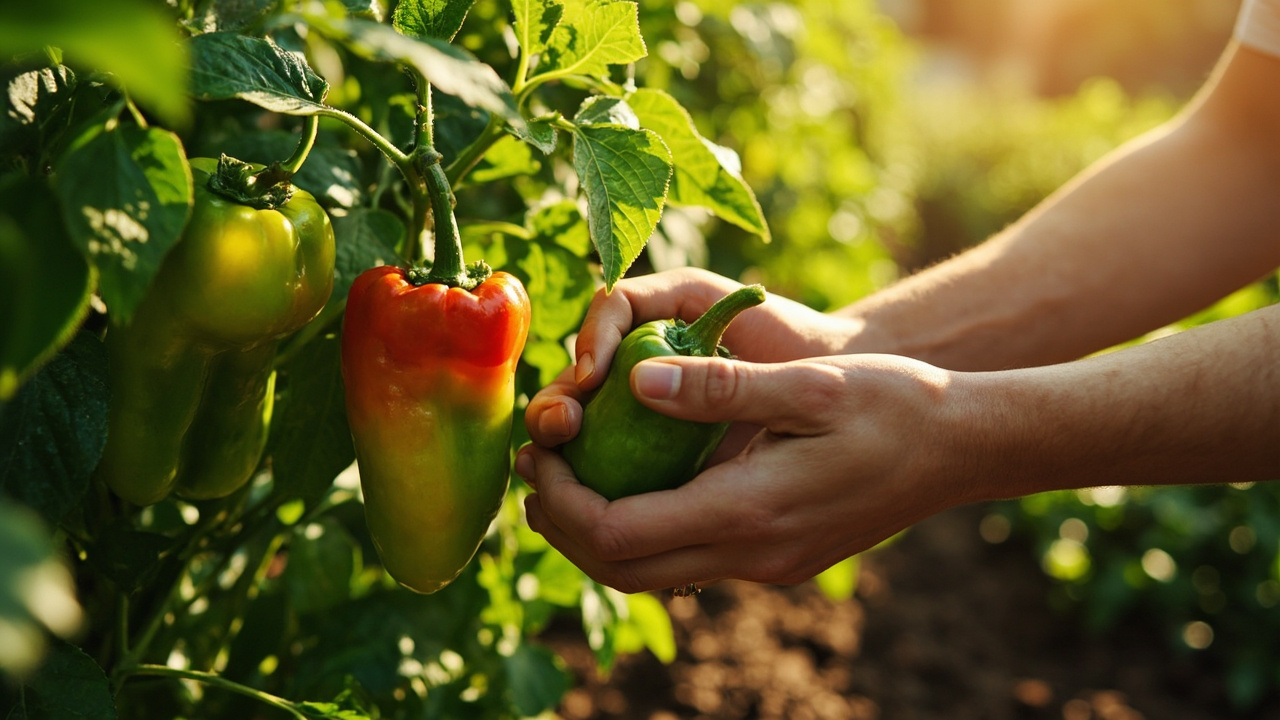
Shishitos are ready starting 60 to 75 days after transplanting, once pods reach 2.5 to 4 inches long and turn a deep, glossy green. Harvest while green for the classic mild flavor most people are growing this pepper for.
Here is the part everyone misreads: a wrinkled, crinkled skin on a green pod is completely normal and not a sign of a problem. Some of the best-tasting shishitos have that crinkled texture. It is not rot, it is not underwatering, it is just how the skin develops on this variety.
If you leave pods on the plant, they will eventually turn red and get noticeably hotter and sweeter at the same time, edible either way but a different pepper experience entirely.
Pick with scissors or a sharp twist rather than yanking, since the brittle stems snap plants at the base easily. Harvest every 2 to 3 days once production ramps up, because pods left too long on the plant slow down new flowering.
A well-tended plant will keep producing until the first fall frost, so steady picking is what keeps the harvest coming.
Shishito Peppers at a Glance
- When to plant: two to three weeks after last frost, once soil hits 65 to 70°F.
- Sun and spacing: full sun, 6 to 8 hours minimum, 18 to 24 inches between plants.
- Soil: well-drained, compost-enriched, pH 6.0 to 6.8.
- Watering: about 1 to 1.5 inches per week, consistent moisture matters more than amount.
- Feeding: balanced fertilizer at planting, lower-nitrogen feed every 4 to 6 weeks once flowering starts.
- Harvest window: 60 to 75 days after transplanting, pods 2.5 to 4 inches, glossy green, wrinkled skin is normal.
- Watch for: drought stress causing hot pods, blossom drop in extreme heat, aphids and flea beetles.
Keep the soil warm at planting and the moisture steady all summer, and shishitos more or less take care of themselves.
Everything else is just picking often enough to keep them coming.