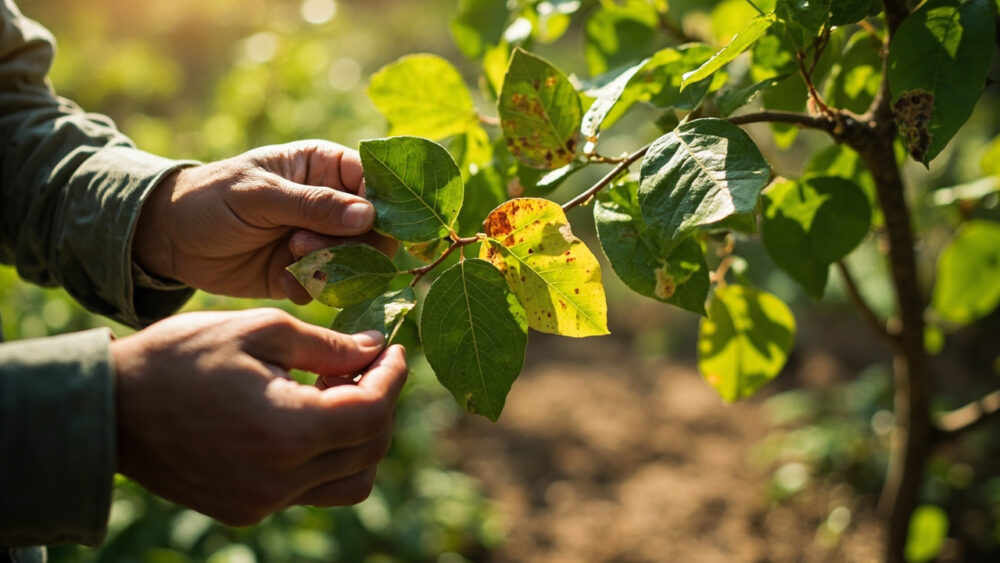
If your curry leaf tree has blotchy yellow leaves, black sooty patches, or leaves that curl and drop, the most likely cause is a psyllid or scale insect infestation, not a disease in the fungal sense. Curry leaf trees (Murraya koenigii) get more trouble from sap-sucking pests and root problems than from true pathogens, and the fix is usually insecticidal soap or neem oil applied to the undersides of the leaves, plus a hard look at the soil. Curry leaf tree diseases get blamed for a lot that is actually a bug problem or a watering problem wearing a disguise.
Here is the loop worth opening right now: most people see yellow leaves and reach for fertilizer, and that guess is wrong more often than it is right on this particular tree. The real tell is not the color of the leaf, it is where on the plant the damage starts and whether you can feel or see something on the leaf itself. That single detail is what separates a pest problem from a root problem from a genuine fungal issue, and it is the difference between a tree that bounces back in three weeks and one that is already gone.
Stick with this through the causes below, because the bottom of this page has a two-minute diagnosis checklist you can run standing right at the tree, and it will tell you which section actually applies to you.
Most Likely Causes, Ranked
1. Psyllid or Aphid Infestation
Confirm it: flip over new leaves and look for tiny pale insects, sticky residue, or leaves that are curled, puckered, and stunted at the growing tips. Curry leaf psyllids specifically cause thickened, distorted new growth that looks almost galled.
Fix it with insecticidal soap or horticultural oil, spraying the undersides thoroughly and repeating every 7 to 10 days for three rounds, since eggs hatch in waves. Follow the product label exactly on concentration and reapplication timing.
But the bugs are rarely the whole story, because they often show up on a tree that is already stressed.
2. Scale Insects and Sooty Mold
Confirm it: look for small brown or tan bumps stuck to stems and leaf undersides that do not brush off easily, plus a black, sooty film on top of leaves below the infestation.
The sooty mold itself is not attacking the plant directly, it is growing on scale honeydew, so treat the scale with horticultural oil applied to coat the insects, and the black film will fade on its own over a few weeks once the scale is gone.
If you wiped a leaf and your finger came away black and sticky, you already have your answer.
3. Overwatered Roots and Root Rot
Confirm it: pull the tree slightly at the base, check if the pot or soil smells sour or swampy, and look at older, lower leaves first, since root rot shows up there before it hits new growth. Soil that stays wet more than a couple inches down for days at a time is the giveaway.
Cut back watering and let the top 2 to 3 inches of soil dry between waterings. If roots are visibly black and mushy when you check them, trim the worst ones back to firm white root and repot into fresh, fast-draining soil.
Root rot is the one cause on this list that quietly kills the whole tree if you keep watering on a schedule instead of by feel.
4. Nutrient Deficiency (Nitrogen or Iron)
Confirm it: uniform pale yellow across whole leaves, starting with older leaves for nitrogen deficiency, or yellowing between dark green veins on new leaves for iron deficiency (interveinal chlorosis). No insects, no sticky residue, no curling.
Feed with a balanced fertilizer formulated for citrus or tropical trees, since curry leaf shares similar nutrient needs, and check soil pH, aiming for a slightly acidic to neutral range, since iron becomes unavailable in alkaline soil regardless of how much you feed.
This is the cause people assume first and the pests below actually cause more often, so rule out bugs before you buy fertilizer.
5. Cold Stress or Sudden Temperature Drop
Confirm it: leaf drop and blackened or blotchy leaf edges appearing suddenly after a cold night, especially below about 40°F, with the damage showing on the whole plant at once rather than spreading gradually from one area.
Move the tree indoors or to a sheltered spot when nights drop below the mid 40s, since curry leaf is tropical and has essentially no frost tolerance. Damaged leaves will not recover, but new growth from undamaged stems usually resumes once temperatures stabilize.
Cold damage is easy to mistake for disease because the timing lines up with a weather event you might not connect to the leaf, so check your recent overnight lows before assuming pests or fungus.
6. True Fungal Leaf Spot
Confirm it: distinct round or irregular brown spots with defined edges, sometimes with a yellow halo, usually appearing after extended wet or humid weather with poor air circulation. This is genuinely less common than the causes above.
Remove and discard affected leaves, improve air flow around the plant by pruning crowded interior branches, and avoid overhead watering that wets the foliage. A copper-based fungicide can help on stubborn cases if you follow the label instructions precisely.
Once you know which of these six matches what you are seeing, the next question is how to be sure you are not mixing up two of them at once.
How to Tell the Causes Apart
Where the damage starts tells you more than what the damage looks like. Pests show up on new growth and leaf undersides first, since that is where soft tissue and sap concentration are highest. Root rot shows up on older, lower leaves first, because the roots supporting them are failing.
Nutrient issues are symmetrical and gradual across the whole plant, while cold damage and fungal spot both tend to have sharp, sudden edges to the damage rather than a slow fade.
Sticky residue or a black film means an insect is involved somewhere, full stop, no matter what else is going on.
Once you have the right cause matched to the right pattern, the honest next question is whether the tree is actually going to make it.
Will It Recover?
Pest infestations have the best outlook. Catch scale or psyllids early and the tree usually fully recovers within a few weeks of consistent treatment, with new growth coming in clean.
Nutrient deficiencies and cold damage also recover well. Damaged leaves stay damaged, but new growth corrects itself once you fix feeding or move the plant somewhere warmer.
Root rot is the honest exception. Caught early, with firm white roots still present, repotting into dry, fast-draining soil saves most trees. If the root ball is mostly black, mushy, and foul-smelling, the tree is usually not salvageable, and starting a new one from a cutting or nursery plant is the faster path.
Fungal leaf spot rarely kills the tree outright but will keep recurring every wet season until you fix air circulation and watering habits.
Recovery odds are good across the board except one cause, which is exactly why prevention matters more here than on tougher plants.
How to Keep It From Happening Again
Water by feel, not by schedule. Stick a finger 2 inches into the soil and only water when it comes out dry, since curry leaf trees are far more tolerant of underwatering than overwatering.
Inspect the undersides of new leaves every couple of weeks, since catching psyllids or scale before the colony establishes is the difference between a five-minute spray and a month-long battle.
Keep the tree somewhere with good air movement, avoid wetting the foliage when you water, and bring it in or shelter it whenever nights threaten to drop into the 30s or low 40s.
Feed lightly during the active growing season with a citrus-formulated fertilizer rather than dumping in a heavy dose once and forgetting about it.
All of that takes ten minutes a week, and it heads off five of the six causes above before they start.
Diagnosis Checklist
- Check the undersides of new leaves for insects or sticky residue, and if found, treat as pest infestation.
- Wipe a leaf and check for black, sooty film, and if present, look for scale insects on nearby stems.
- Check soil moisture 2 inches down, and if consistently wet with a sour smell, suspect root rot and inspect the roots.
- Look at whether yellowing is uniform across the whole leaf or appears between veins, and if so, suspect a nutrient deficiency.
- Check recent overnight temperatures, and if a drop below the mid 40s lines up with sudden leaf drop or blackened edges, call it cold stress.
- Look for distinct round brown spots with defined edges after wet weather, and if present with no insects visible, treat as fungal leaf spot.
- If more than one sign is present at once, treat the pest or rot first, since either one will mask and worsen every other symptom.
Match the checklist to the tree in front of you and you already know more than most nursery labels tell you.
Fix the actual cause instead of the guess, and this tree earns its keep in the kitchen for years.